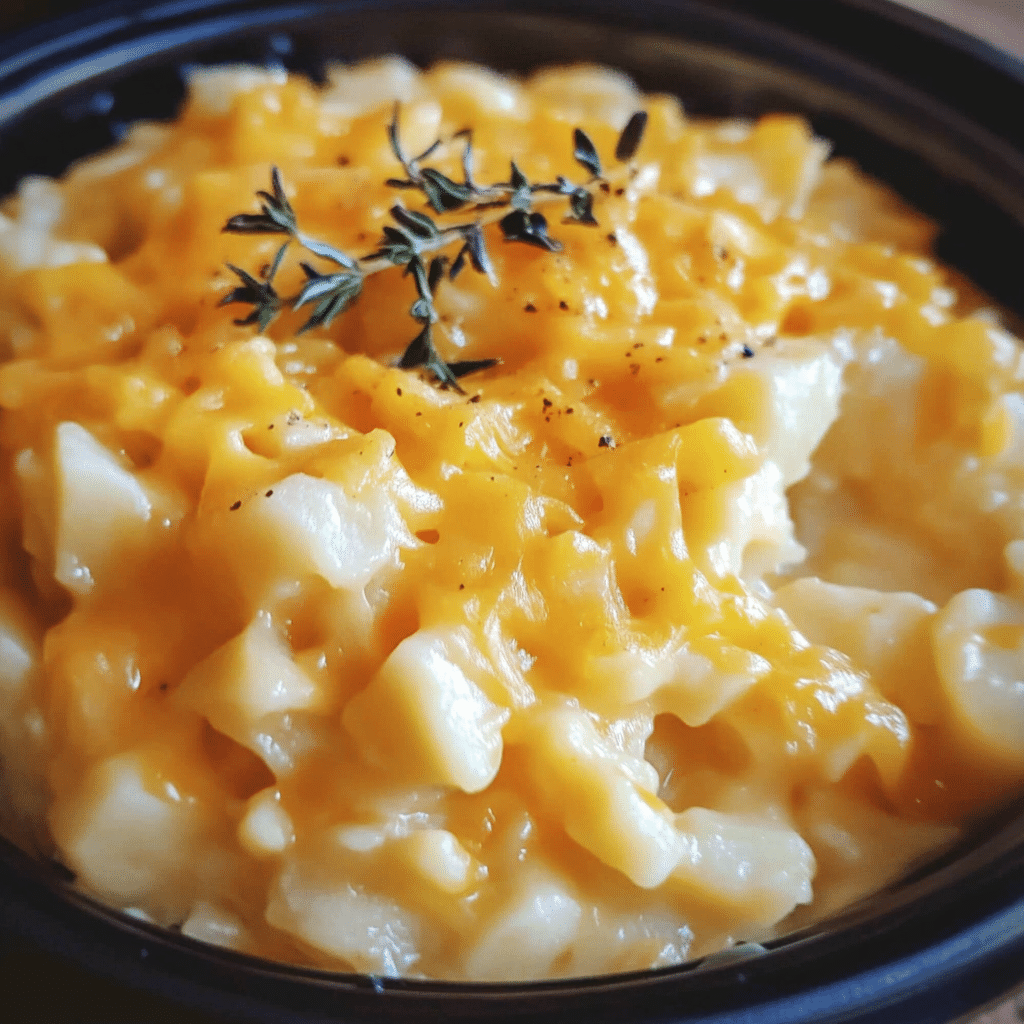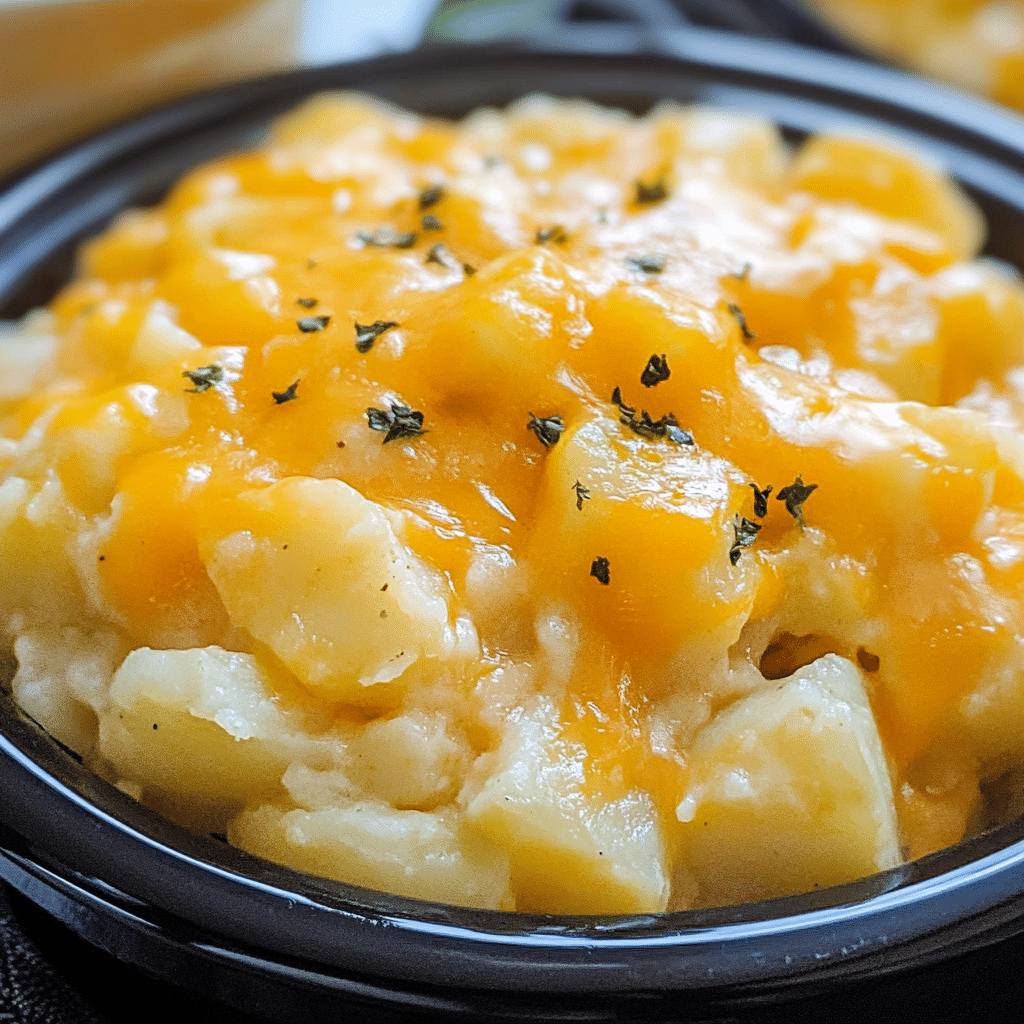
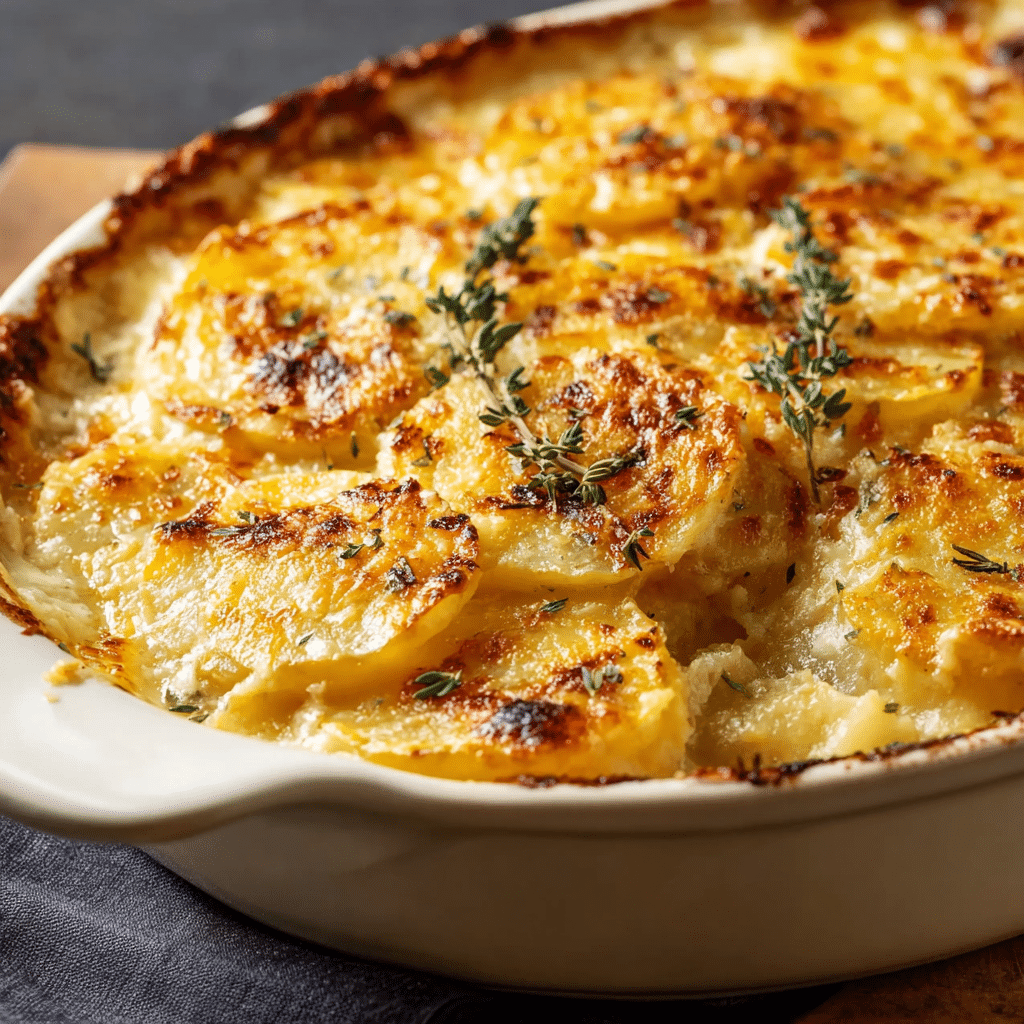
There are some dishes that feel like a warm hug on a plate, and cheesy scalloped potatoes are absolutely one of them. Thin slices of tender potatoes layered with onions, surrounded by a creamy, rich cheese sauce, and baked until golden and bubbly—this is the kind of comfort food that turns an ordinary meal into something memorable.
These Cheesy Scalloped Potatoes bring together everything we love about classic, homey cooking: simple ingredients, cozy flavors, and a creamy texture that makes every bite satisfying. Whether you’re serving them as a side dish for a holiday spread, a Sunday family dinner, or even as the star of the plate with a simple salad on the side, this recipe delivers pure comfort in every forkful.
What makes this dish special is its balance of richness and simplicity. You don’t need complicated techniques or fancy equipment. With just a bit of slicing, stirring, and layering, you can create a dish that looks impressive coming out of the oven but is actually very straightforward to make. The blend of potatoes, onions, cream, milk, and sharp cheddar creates a velvety sauce that seeps into every layer, so no bite feels dry or plain.
Once you bake these scalloped potatoes and see the golden top, smell the cheesy aroma filling your kitchen, and spoon out that first creamy layer, it’s hard not to fall in love. This is the kind of side dish that quickly becomes a tradition—requested at gatherings, remembered after meals, and repeated again and again.
Core Ingredients for Making the Recipe
To prepare these comforting Cheesy Scalloped Potatoes, you’ll need just a handful of simple, everyday ingredients—many of which you may already have in your kitchen. Each one plays an important role in creating the creamy texture and deep, cheesy flavor that makes this dish so satisfying.
Here’s what you’ll need:
Main Ingredients
- 2 pounds russet potatoes, peeled and thinly sliced
Russet potatoes are starchy and become tender and creamy in the oven, making them perfect for scalloped dishes. Thin, even slices help them cook through properly and layer beautifully. - 1 medium onion, thinly sliced
Onion adds a subtle sweetness and savory depth that keeps the dish from feeling heavy or one-note. As it bakes, the onion softens and practically melts into the potatoes. - 2 cups shredded sharp cheddar cheese
Sharp cheddar brings bold flavor and a gooey, satisfying cheese pull. Using freshly shredded cheese (rather than pre-shredded) helps the sauce melt smoothly. - 1 cup heavy cream
Heavy cream gives the sauce richness and body, ensuring every layer of potatoes is coated in luxurious creaminess. - 1 cup whole milk
Whole milk helps thin the cream just enough to keep the sauce from being overly thick, while still maintaining a silky texture.
Supporting Ingredients (Recommended for Best Flavor & Texture)
These ingredients enhance the sauce and help it cling to the potatoes:
- 3 tablespoons unsalted butter
Butter adds flavor and is used to start the roux (a mixture of fat and flour) that thickens the cheese sauce. - 3 tablespoons all-purpose flour
Flour helps create a smooth, velvety sauce that doesn’t separate in the oven. It thickens the cream and milk into a cohesive cheese sauce. - 2–3 cloves garlic, minced (optional but highly recommended)
Garlic infuses the sauce with a gentle, aromatic flavor that pairs perfectly with the cheddar and potatoes. - 1 teaspoon salt (or to taste)
Potatoes need salt to bring out their flavor. The cheese also adds saltiness, but a base level of seasoning is important. - 1/2 teaspoon black pepper
A touch of pepper balances the richness and adds a mild, pleasant kick. - 1/2 teaspoon dried thyme or 1 teaspoon fresh thyme leaves (optional)
Thyme adds an herby note that makes the dish feel a bit more elegant and layered in flavor. - 1/4 teaspoon paprika (optional, for sprinkling on top)
Paprika adds a hint of color and gentle warmth, making the finished dish look extra inviting.
These ingredients come together to create those classic, comforting flavors you expect from scalloped potatoes: creamy, cheesy, savory, and deeply satisfying.
Step-by-Step

While Cheesy Scalloped Potatoes look impressive coming out of the oven, the process to make them is surprisingly simple. It’s mostly about layering and letting the oven do the work. Here’s a detailed, step-by-step guide to help you get perfect results.
1. Prepare Your Baking Dish and Oven
Start by preheating your oven to 350°F (175°C).
Lightly grease a 9×13-inch baking dish with butter or a light spray of cooking oil. This helps prevent sticking and makes serving easier later. A glass or ceramic dish works especially well, as it distributes heat evenly and lets you see the beautiful layers.
2. Slice the Potatoes and Onion
Peel your 2 pounds of russet potatoes and slice them into thin rounds, about 1/8 inch thick. The best way to achieve even slices is to use a mandoline slicer, but a sharp knife and a bit of patience will do the job too. Aim for consistent thickness so the potatoes cook at the same rate.
Slice 1 medium onion into thin half-moons or rings. These will be tucked between layers of potatoes, adding flavor and moisture as they cook.
Set the sliced potatoes and onions aside while you prepare the cheese sauce.
3. Make the Creamy Cheese Sauce
In a medium saucepan, melt 3 tablespoons of unsalted butter over medium heat. Once the butter is melted and beginning to foam slightly, add 3 tablespoons of all-purpose flour.
Whisk the flour and butter together continuously for 1–2 minutes. You’re creating a roux, which helps thicken the sauce. It should look smooth and slightly bubbly but not browned. Cooking the roux briefly removes the raw flour taste.
Next, slowly pour in the 1 cup of whole milk, whisking constantly to avoid lumps. Once the milk is mostly incorporated and the mixture is smooth, add the 1 cup of heavy cream in a steady stream, continuing to whisk.
As the mixture warms, it will start to thicken slightly. At this point, stir in:
- 2–3 cloves minced garlic (if using)
- 1 teaspoon salt (adjust later if needed)
- 1/2 teaspoon black pepper
- 1/2 teaspoon dried thyme (or 1 teaspoon fresh thyme, if using)
Let the mixture gently simmer for a few minutes over medium-low heat, stirring often. It should become creamy and coat the back of a spoon.
Once you have a smooth base, reduce the heat to low and gradually add 2 cups shredded sharp cheddar cheese, a handful at a time. Stir after each addition until the cheese is fully melted and the sauce is smooth and glossy. Avoid boiling the sauce after adding the cheese, as high heat can cause it to separate.
Taste the sauce and adjust the seasoning if needed. Remember that the potatoes are mild and will benefit from a well-seasoned sauce.
4. Start Layering the Potatoes and Onions
In your prepared baking dish, create a base layer:
- Arrange a single, slightly overlapping layer of sliced potatoes across the bottom of the dish.
- Sprinkle a small amount of sliced onion over the potatoes.
You don’t need to be perfect; rustic layering works just fine. The goal is to distribute the potatoes and onions fairly evenly throughout the dish so each scoop has a mix of both.
5. Add the Cheese Sauce Between Layers
Ladle or pour a portion of the warm cheese sauce over the first layer of potatoes and onions, spreading it gently with the back of a spoon so it covers as much of the surface as possible. The sauce will seep down into the layers as it bakes, so it doesn’t need to be completely perfect.
Repeat the process:
- Add another layer of sliced potatoes.
- Top with more onions.
- Pour on more cheese sauce.
Continue layering until you’ve used all the potatoes and onions, finishing with a layer of potatoes on top. Pour the remaining cheese sauce over the final layer, spreading it to cover as much as possible.
If you’d like, you can reserve a small handful of shredded cheddar to sprinkle on top, adding an extra cheesy crust.
6. Add a Finishing Touch Before Baking
For a little color and a hint of smokiness, lightly sprinkle the top with paprika. You can also add a few extra thyme leaves on top for a pretty, herby finish.
Cover the baking dish loosely with aluminum foil. This helps the potatoes cook through without the top burning too early.
7. Bake Until Tender and Golden
Place the baking dish in your preheated oven and bake at 350°F (175°C) for about 45–55 minutes covered. During this time, the potatoes will soften, and the flavors will meld together.
After 45–55 minutes, carefully remove the foil and continue baking for another 20–25 minutes, or until:
- The potatoes are completely tender when pierced with a knife or fork.
- The top is golden, bubbly, and slightly crisp at the edges.
Total baking time is usually around 1 hour 10 minutes to 1 hour 20 minutes, depending on your oven and the thickness of the potato slices.
8. Let the Dish Rest Before Serving
Once your cheesy scalloped potatoes are gloriously golden and bubbling, remove the dish from the oven and let it rest for 10–15 minutes before serving.
This rest time is important. It allows the sauce to thicken slightly and the layers to set, making it easier to cut and serve neat portions. If you try to serve it immediately, it may seem too loose and hot to handle.
After resting, use a large spoon or spatula to scoop out generous servings, revealing the tender potato layers and creamy cheese sauce inside.
Flavor Variations and Creative Twists
One of the best things about Cheesy Scalloped Potatoes is how adaptable they are. While the classic version is already deeply comforting, small changes and additions let you reinvent the dish to suit different occasions, tastes, or moods.
Here are some fun and delicious ways to customize the basic recipe.
1. Add Smoky Depth with Bacon or Ham
For an extra-savory version, you can introduce a smoky, meaty element:
- Crispy bacon: Cook 6–8 slices of bacon until crisp, crumble them, and layer them between the potatoes and onions or sprinkle them on top before baking.
- Diced ham: Fold 1–1½ cups of diced ham into the potato layers for a more substantial dish that can easily stand as a main course with a side salad.
Both bacon and ham add saltiness and richness, making the dish taste even more indulgent.
2. Play with Different Cheeses
Sharp cheddar is classic, but mixing in other cheeses can transform the flavor:
- Gruyère: Adds a nutty, slightly sweet flavor that feels elegant and refined.
- Parmesan: Sprinkling grated Parmesan on top creates a golden, slightly crisp and intensely savory crust.
- Mozzarella: Melts into long, gooey strands, giving the dish extra stretchy cheesiness.
- Monterey Jack: Mild, creamy, and smooth—great for a more subtle cheese flavor.
You can substitute a portion of the cheddar with one of these or create your own cheese blend.
3. Herb-Infused Potatoes
If you enjoy fresh, aromatic notes in your food, herbs are your friend:
- Add chopped fresh parsley, chives, or thyme to the cheese sauce.
- Scatter fresh herbs between the potato layers.
Herbs add brightness and complexity, balancing the richness of the cream and cheese.
4. Garlic Lovers’ Version
If you’re a garlic fan, lean into it:
- Roast a head of garlic until soft and caramelized, then mash the cloves and stir them into the cheese sauce.
- Combine roasted garlic with the fresh minced garlic for deeper, sweeter flavor.
This variation gives the dish a rich, garlicky profile that pairs wonderfully with roast chicken, steak, or even simple green vegetables.
5. Add a Bit of Heat
For a mild kick:
- Add a pinch of red pepper flakes or a dash of cayenne pepper to the cheese sauce.
- Use a smoked cheddar or pepper jack cheese for some natural heat.
This subtle warmth keeps each bite interesting without overpowering the comforting nature of the dish.
How to Serve
Cheesy scalloped potatoes are versatile and fit easily into many different meals. They can be the comforting support act to a main dish—or, for some, the main attraction.
As a Side Dish
These potatoes make a perfect side for:
- Roast chicken, turkey, or beef
- Pork chops or ham
- Grilled sausages or steak
Their creamy, cheesy richness balances roasted or grilled meats beautifully. The mild potato flavor also pairs well with bold marinades and gravies.
As a Comforting Main
With a few additions like ham, bacon, or extra vegetables (such as sautéed mushrooms or spinach), these scalloped potatoes can easily become a main dish:
- Serve with a green salad dressed with a light vinaigrette for contrast.
- Add a side of steamed or roasted vegetables to complete the meal.
This makes a lovely dinner on a cool evening when you’re craving something cozy and filling.
Perfect for Gatherings
Cheesy scalloped potatoes are ideal for:
- Holiday meals (Thanksgiving, Christmas, Easter)
- Potlucks and family parties
- Sunday dinners
They can be assembled ahead, baked before serving, and they travel well if you’re taking them to someone else’s home. They also look beautiful served directly in the baking dish, with a golden top and hints of bubbling sauce around the edges.
Leftovers for the Next Day
If you’re lucky enough to have leftovers, they reheat wonderfully:
- Warm portions in the oven at a low temperature until heated through, or
- Reheat gently in the microwave, adding a splash of milk or cream if needed to loosen the sauce.
The flavors often deepen overnight, making the next-day servings just as delicious—if not even better.
Tips & Variations
A few simple details can make the difference between “good” scalloped potatoes and absolutely amazing ones. Here are some practical tips to help you get the best results every time.
Choose the Right Potatoes
- Russet potatoes are ideal because of their high starch content. They break down slightly during baking, which helps thicken the sauce and creates that creamy texture.
- You can also use Yukon Gold potatoes if you prefer a slightly firmer texture and buttery flavor. They hold their shape a bit better but are still wonderfully creamy.
Avoid waxy potatoes (like red potatoes), as they tend to stay firm and don’t provide the same velvety result.
Slice Evenly for Even Cooking
Try to slice the potatoes as evenly as possible. Very thick slices may remain firm in the center, while very thin slices might overcook.
If you don’t have a mandoline, aim for thin, uniform slices using a sharp knife. Taking a few extra minutes to slice well is worth it for even layers and consistent texture.
Don’t Rush the Sauce
When making the cheese sauce:
- Cook the butter and flour roux long enough to remove the raw flour taste, but don’t brown it.
- Add the milk and cream gradually, whisking to avoid lumps.
- Add the cheese over low heat to keep the sauce smooth and prevent splitting.
If the sauce looks too thick before baking, you can thin it slightly with a splash of extra milk. If it seems very thin, don’t worry—some of the liquid will absorb into the potatoes as they bake.
Season Generously
Potatoes need a good amount of seasoning. Taste the cheese sauce before you pour it over the layers:
- If it’s slightly under-salted at this stage, the final dish may taste bland.
- Keep in mind that cheddar adds saltiness, so adjust gradually.
You can also season the potato layers lightly with extra salt and pepper as you stack them, especially if your potatoes are very large.
Let It Rest Before Serving
Just like lasagna, scalloped potatoes benefit from a short rest time after baking:
- Let the dish sit for 10–15 minutes after removing it from the oven.
- This helps the sauce thicken and the layers set, making it easier to cut neat portions and ensuring the sauce doesn’t spill all over the plate.
Make-Ahead Tips
You can assemble the dish a few hours ahead:
- Layer the potatoes, onions, and sauce in the baking dish.
- Cover tightly and refrigerate.
- When ready to bake, let it sit at room temperature for about 20–30 minutes to take the chill off, then bake as directed (you may need a little extra baking time).
This is especially helpful on busy days or holidays when oven space and time are precious.
Final Thoughts
Cheesy Scalloped Potatoes are a celebration of simple ingredients transformed into something special. Thinly sliced potatoes, onion, cream, milk, and cheese—humble kitchen staples—come together to create a dish that feels both nostalgic and deeply satisfying.
This recipe shows that comfort food doesn’t have to be complicated or fussy. With a bit of slicing, a smooth cheese sauce, and time in the oven, you can create a side dish (or even a main) that brings warmth to the table and smiles to the people you serve.
Whether you’re making these potatoes for a holiday feast, a casual family dinner, or just because you’re in the mood for something cozy and cheesy, they’re the kind of recipe that becomes a favorite. It’s the dish people ask for again, the one they remember and associate with good meals and happy moments.
Every creamy, cheesy forkful is a reminder that sometimes the most comforting foods are the simplest ones—made with care, shared with others, and enjoyed slowly.
FAQ
Can I use a different type of potato for this recipe?
Yes, you can. While russet potatoes are ideal for their starchy texture and creaminess, Yukon Gold potatoes are another excellent choice. They have a naturally buttery flavor and hold their shape slightly better. Avoid very waxy potatoes, like red potatoes, as they tend to stay firm and don’t create the same creamy texture in the sauce.
Can I make Cheesy Scalloped Potatoes ahead of time?
Absolutely. You can assemble the entire dish a few hours in advance:
- Layer the potatoes, onions, and cheese sauce in the baking dish.
- Cover tightly with plastic wrap or foil and refrigerate.
- When ready to bake, let the dish sit at room temperature for about 20–30 minutes, then bake as directed.
You can also fully bake the dish, cool it, and reheat it gently in the oven before serving. If reheating, cover with foil to prevent the top from over-browning, and add a splash of milk or cream if it seems too thick.
How do I store leftovers?
Store leftover cheesy scalloped potatoes in an airtight container or cover the baking dish tightly with foil. Refrigerate for up to 3–4 days.
To reheat, use:
- The oven: Cover with foil and warm at a low temperature (around 300–325°F / 150–160°C) until heated through.
- The microwave: Heat individual portions on medium power, adding a small splash of milk or cream if needed to restore creaminess.
Can I freeze Cheesy Scalloped Potatoes?
Yes, you can freeze them, although the texture may change slightly:
- Let the dish cool completely after baking.
- Cut into portions and wrap each piece tightly in plastic wrap, then place in a freezer-safe bag or container.
- Freeze for up to 2–3 months.
To serve, thaw overnight in the refrigerator and reheat in the oven until hot and bubbly. Adding a bit of extra cheese on top before reheating can freshen up the dish.
Can I lighten the recipe by using lower-fat ingredients?
You can make some adjustments, though the texture will be less rich:
- Use half-and-half or a combination of milk and a smaller amount of cream instead of full heavy cream.
- Choose a reduced-fat cheddar cheese, keeping in mind that it may not melt quite as smoothly.
Avoid using only low-fat milk or skipping the cheese and butter entirely, as the sauce may become thin and lack the creamy consistency that makes scalloped potatoes so satisfying. The key is to find a balance that suits your preferences while still keeping the dish enjoyable.