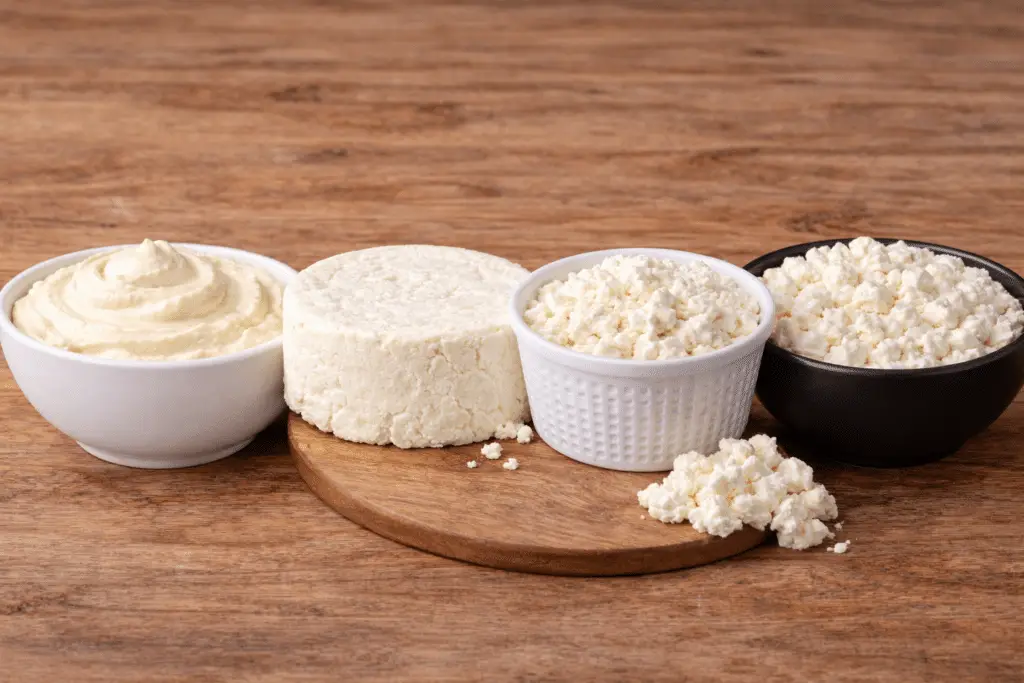

There’s something incredibly satisfying about watching milk slowly transform into soft, creamy curds right in your own kitchen. The gentle steam rising from the pot, the quiet stillness as the acid works its magic, and the shift from silky liquid to delicate solids feels almost like a culinary ritual.
From Milk to Magic: 4 Cheeses You Can Make at Home invites you to rediscover how simple ingredients can create rich, fresh cheeses with beautiful texture and clean flavor. With just milk, cream, and a splash of lemon juice or vinegar, you can craft four versatile cheeses that elevate everything from breakfast spreads to comforting dinners.
Why You Will Love These Recipes
• Made with everyday ingredients.
• No special equipment required.
• Fresh flavor without preservatives.
• Budget-friendly alternative to store-bought.
• Adjustable texture and thickness.
• Beginner-friendly and approachable.
• Perfect for both sweet and savory dishes.
Mascarpone
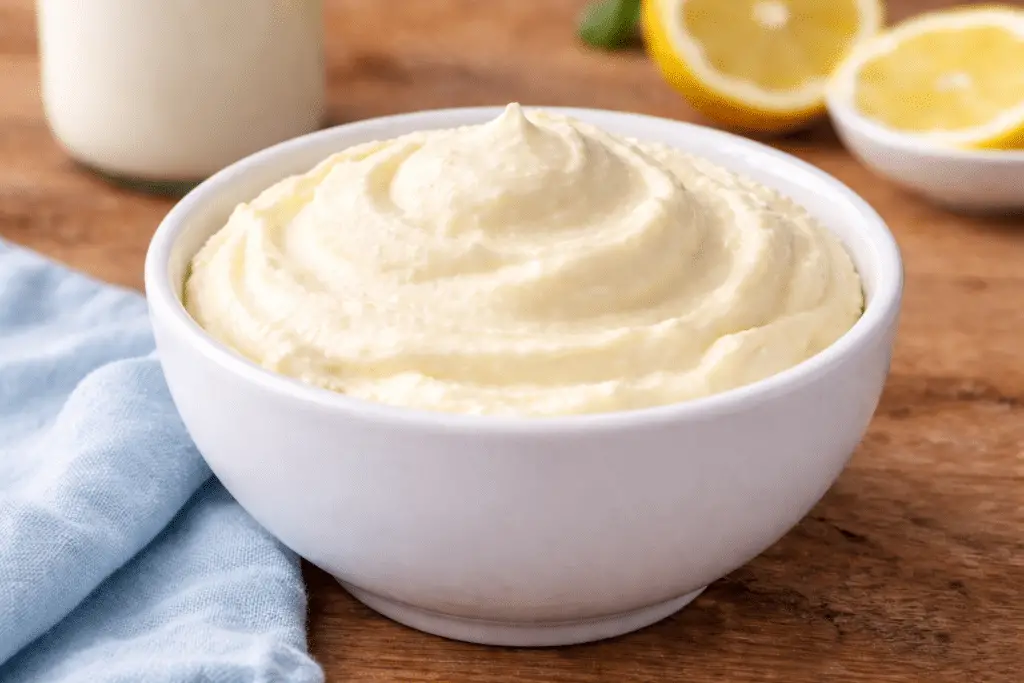
Mascarpone is luxuriously smooth, rich, and slightly sweet. Its velvety texture makes it ideal for desserts, creamy sauces, or simply spreading onto warm bread. Homemade mascarpone tastes noticeably fresher and lighter than packaged versions.
Ingredients
• 2 cups heavy cream – Provides the rich fat content needed for thick, creamy texture.
• 2 tablespoons lemon juice – Gently thickens the cream to form structure.
Instructions
- Pour the 2 cups heavy cream into a heavy-bottomed saucepan. Heat over medium heat, stirring gently to prevent scorching. Bring it to approximately 185°F (85°C). You’ll notice steam rising and small bubbles forming along the edges.
- Reduce the heat slightly and add 2 tablespoons lemon juice while stirring slowly. Maintain the temperature at 185°F for about 3 minutes. The cream will slightly thicken and begin coating the back of a spoon.
- Remove from heat and allow the mixture to cool naturally to around 140°F (60°C). Avoid stirring during this stage to preserve smoothness.
- Line a fine-mesh strainer with cheesecloth and place it over a bowl. Carefully pour in the mixture. Cover and refrigerate for 12–24 hours to allow the whey to drain.
- Transfer the thick mascarpone into an airtight container. The texture should be creamy, dense, and smooth.
Tips
• Use a thermometer for precise temperature control.
• Do not let the cream boil, as overheating can cause graininess.
• Drain closer to 24 hours for thicker mascarpone.
• Stir gently throughout heating to prevent scorching.
• Use full-fat heavy cream for best consistency.
Storage Tips
Store mascarpone in an airtight container in the refrigerator for up to 5 days.
Keep it in the coldest part of the fridge to maintain freshness.
Freezing is not recommended, as texture may become grainy after thawing.
Nutrition (Approximate per serving)
Calories: 200
Protein: 2g
Carbohydrates: 2g
Fat: 21g
Cream Cheese
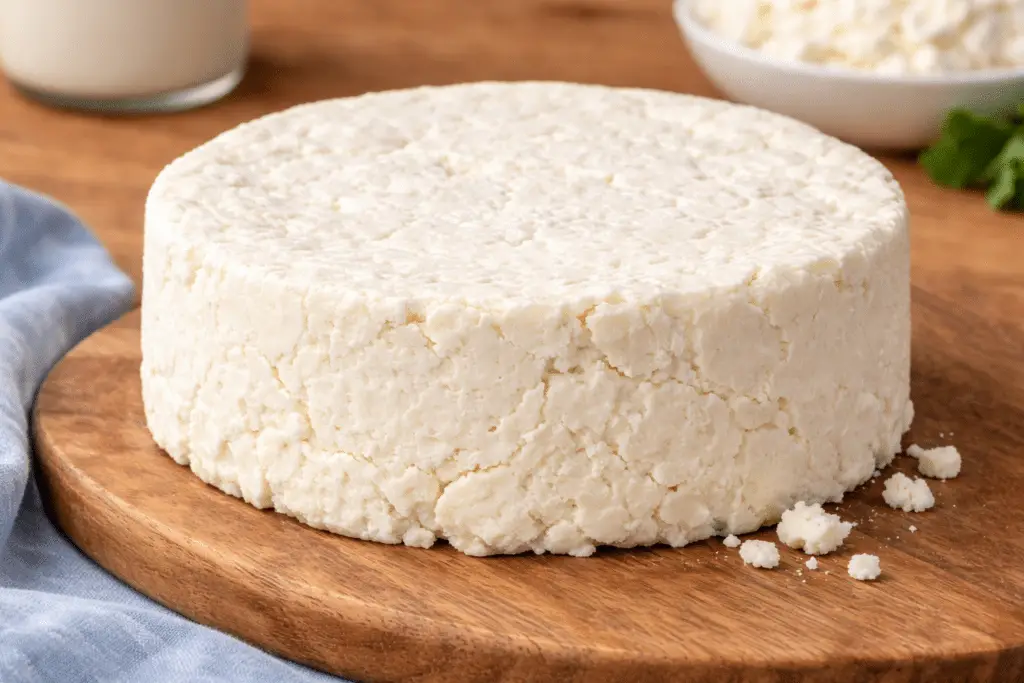
Homemade cream cheese is smooth, mildly tangy, and beautifully spreadable. It blends effortlessly into cheesecakes, frostings, or savory dips. The texture is fresh and clean, without stabilizers or additives.
Ingredients
• 8 cups whole milk – Forms the soft curds that create the base.
• 5 tablespoons lemon juice or vinegar – Separates curds from whey.
• ½ teaspoon salt – Enhances flavor and balances acidity.
Instructions
- Pour 8 cups whole milk into a large pot and heat slowly over medium heat. Stir occasionally to prevent sticking. Heat until steaming and just beginning to simmer (around 185–190°F).
- Turn off the heat and add 5 tablespoons lemon juice or vinegar. Stir gently for about 10 seconds, then allow it to sit undisturbed for 10 minutes until curds separate clearly from whey.
- Line a colander with cheesecloth and carefully pour the mixture through. Let it drain until cool enough to handle.
- Gather the cheesecloth and gently squeeze out excess whey. Avoid pressing too firmly if you prefer softer cream cheese.
- Transfer curds to a blender or food processor. Add ½ teaspoon salt and blend until completely smooth and creamy.
- Refrigerate for at least 2 hours to allow it to firm up into spreadable cream cheese.
Tips
• Avoid boiling the milk to prevent rubbery curds.
• Do not overstir after adding acid, as this breaks curds too small.
• Blend thoroughly for a smooth texture.
• Drain longer for thicker consistency.
• Chill fully before serving for best structure.
Storage Tips
Store in an airtight container in the refrigerator for up to 7 days.
Stir before use if slight separation occurs.
Freezing is not recommended due to texture changes.
Nutrition (Approximate per serving)
Calories: 120
Protein: 6g
Carbohydrates: 4g
Fat: 9g
Ricotta
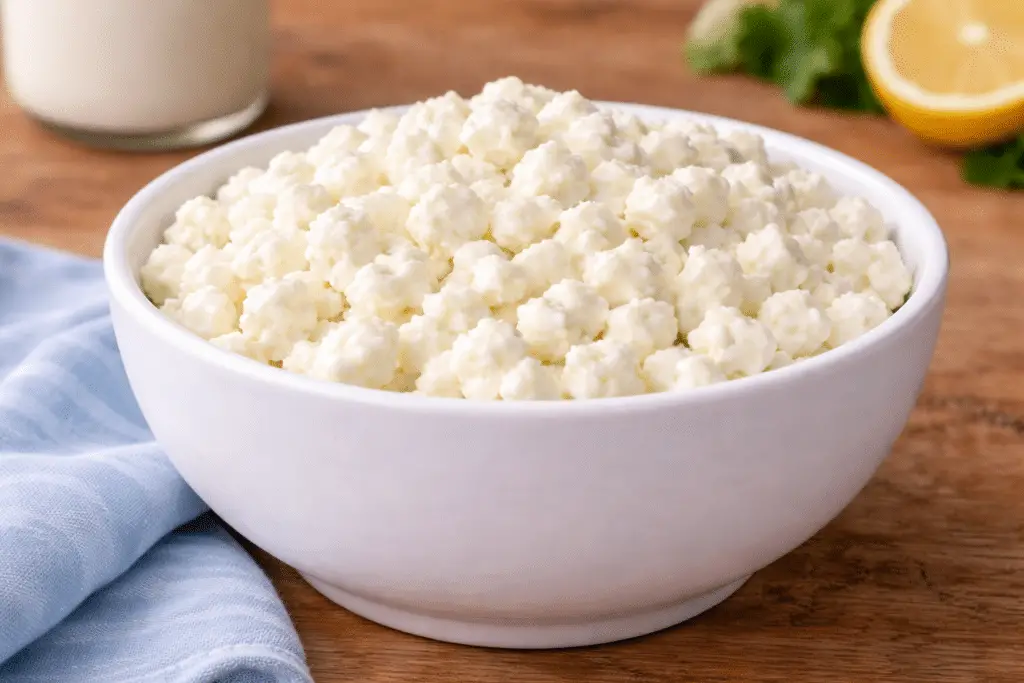
Ricotta is soft, airy, and delicately creamy with tender curds. Its mild flavor makes it incredibly versatile for both sweet and savory dishes. Fresh ricotta has a lighter texture and brighter dairy taste than most store-bought varieties.
Ingredients
• 8 cups whole milk – Produces soft, delicate curds.
• ½ teaspoon salt – Adds subtle seasoning.
• 3 tablespoons lemon juice or vinegar – Encourages curd separation.
Instructions
- Heat 8 cups whole milk with ½ teaspoon salt in a large pot over medium heat until it reaches about 185°F. The milk should be steaming with small bubbles forming around the edges.
- Remove from heat and add 3 tablespoons lemon juice or vinegar. Stir gently once or twice, then stop stirring to allow large curds to form.
- Let the mixture rest undisturbed for 10–20 minutes. You will see white curds floating in pale yellow whey.
- Carefully ladle the curds into a cheesecloth-lined strainer to prevent breaking them apart.
- Drain for 3–20 minutes depending on your desired thickness. Shorter draining results in creamier ricotta.
- Transfer to a container and refrigerate if not using immediately.
Tips
• Do not stir after adding acid to keep curds fluffy.
• Use gentle heat to avoid tough texture.
• Drain briefly for creamy ricotta or longer for firmer texture.
• Handle curds carefully to maintain softness.
• Use fresh milk for best flavor.
Storage Tips
Store ricotta in an airtight container for 3–5 days in the refrigerator.
Place a paper towel on top before sealing to absorb excess moisture.
Avoid freezing, as it may become crumbly.
Nutrition (Approximate per serving)
Calories: 150
Protein: 8g
Carbohydrates: 5g
Fat: 11g
Cottage Cheese
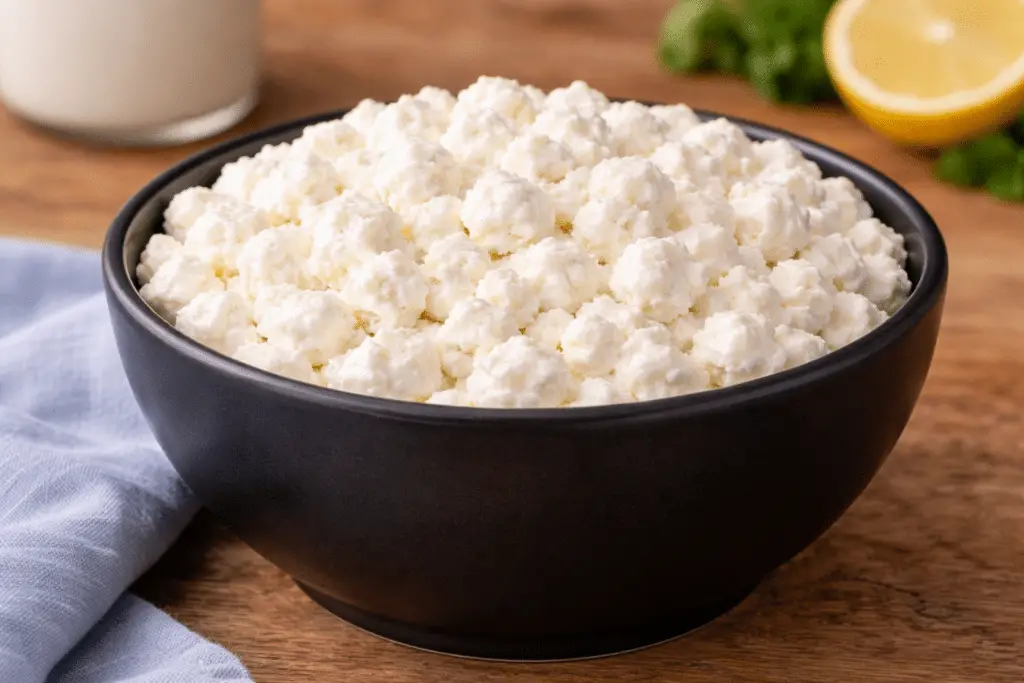
Cottage cheese features tender, juicy curds with a mild, slightly tangy flavor. When made fresh, it tastes clean and creamy, and you can easily control the curd size and richness. Adding the optional cream creates a softer, more indulgent texture.
Ingredients
• 8 cups whole milk – Forms firm yet tender curds.
• ⅓ cup white vinegar or lemon juice – Causes the milk to separate.
• ½ teaspoon salt – Enhances overall flavor.
• ¼ cup heavy cream (optional for a creamier style) – Adds richness and smoothness.
Instructions
- Pour 8 cups whole milk into a large pot and heat slowly to 190°F, just below boiling. Stir occasionally to prevent sticking.
- Remove from heat and stir in ⅓ cup white vinegar or lemon juice. Stir gently for 10–15 seconds, then allow it to sit for 10 minutes until large curds form.
- Pour into a cheesecloth-lined strainer and allow most whey to drain away.
- Rinse the curds gently under cold running water while still in the cheesecloth to remove excess acidity and cool them.
- Transfer curds to a bowl and break them into small pieces according to your preferred size.
- Stir in ½ teaspoon salt and the optional ¼ cup heavy cream. Mix gently to maintain texture.
- Chill for at least 1 hour before serving.
Tips
• Rinse curds to avoid overly sour flavor.
• Heat slowly to prevent tough curds.
• Drain longer for drier cottage cheese.
• Break curds gently to control texture.
• Chill before serving for best flavor.
Storage Tips
Store in an airtight container in the refrigerator for up to 5 days.
Stir gently before serving if liquid separates.
Freezing is not recommended due to texture changes.
From Milk to Magic: 4 Cheeses You Can Make at Home shows that homemade cheese doesn’t require complicated techniques—just patience, gentle heat, and simple ingredients. With these four fresh cheeses, you can transform everyday milk into something truly special.