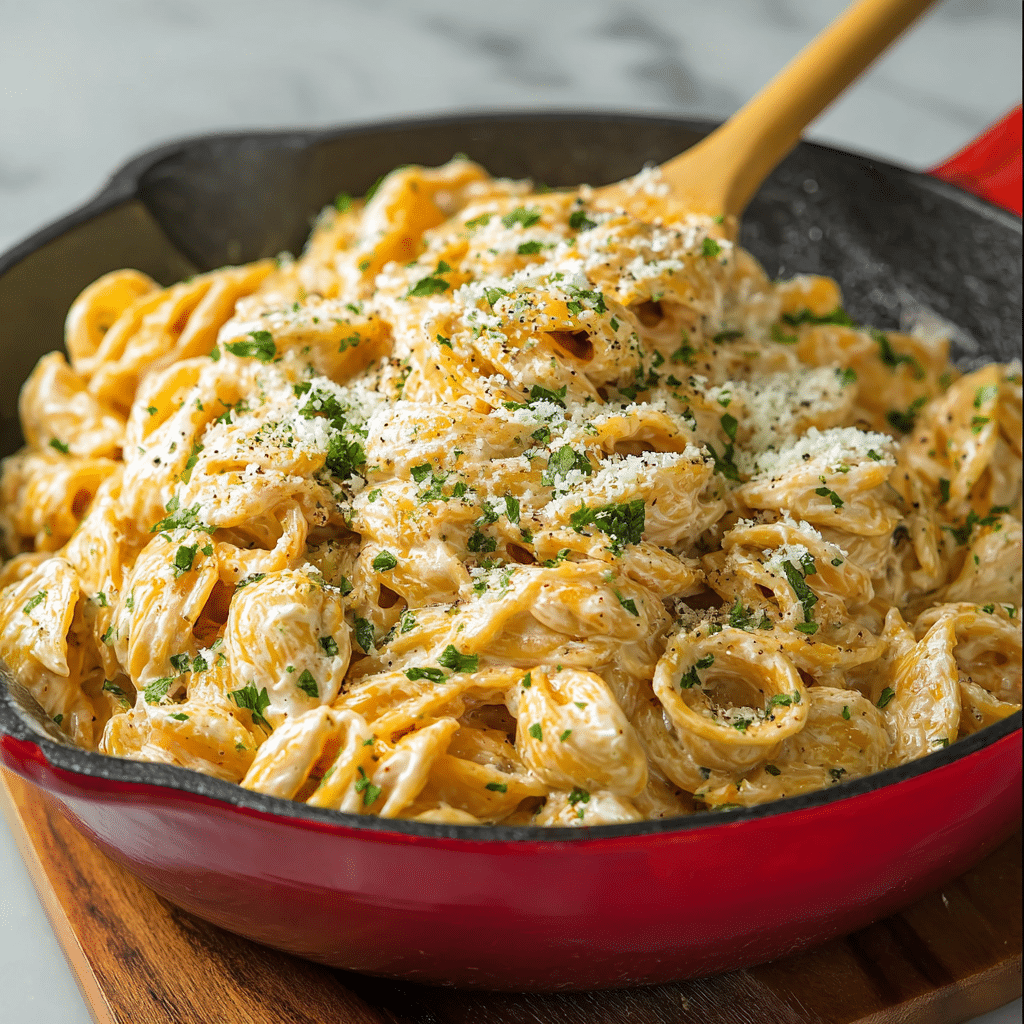
There’s something irresistibly comforting about a bowl of creamy pasta. It’s cozy, rich, and satisfying in a way that feels like a warm hug at the end of a long day. This Cream Cheese Pasta Sauce takes that comfort to the next level: it’s velvety, garlicky, and full of flavor, yet surprisingly simple to make.
Instead of relying on heavy cream alone, this sauce uses cream cheese to create a luscious, silky texture that clings beautifully to every strand of pasta. The result is a sauce that feels indulgent but is easy enough for any weeknight. With just a few basic ingredients, you can create a restaurant-worthy meal right in your own kitchen.
The heart of this recipe starts with a classic combination: butter, olive oil, and garlic. These simple ingredients build a flavorful base that sets the stage for the cream cheese to melt into a smooth, rich sauce. Whether you’re cooking for your family, a special date night, or just treating yourself, this Cream Cheese Pasta Sauce is the kind of recipe you’ll come back to again and again.
It’s versatile, comforting, and endlessly customizable. You can keep it simple and serve it as a creamy garlic pasta, or dress it up with vegetables, chicken, shrimp, or fresh herbs. However you choose to enjoy it, this sauce proves that great flavor doesn’t have to be complicated.
Core Ingredients for Making the Recipe
To prepare this rich and comforting Cream Cheese Pasta Sauce, you’ll need just a handful of simple, everyday ingredients. Each one plays a specific role in building flavor and creating that creamy, luxurious texture.
Here’s what you’ll need:
For the Sauce
2 tablespoons unsalted butter
1 tablespoon olive oil
4 cloves garlic, finely minced
8 ounces (225 g) cream cheese, softened and cut into cubes
1 1/2 cups milk or half-and-half (room temperature)
1/2 cup freshly grated Parmesan cheese
1/2 cup reserved pasta cooking water (as needed)
1 teaspoon salt, or to taste
1/2 teaspoon freshly ground black pepper
1/2 teaspoon Italian seasoning (optional)
1/4 teaspoon red pepper flakes (optional, for a gentle kick)
1–2 tablespoons freshly squeezed lemon juice (optional, for brightness)
2 tablespoons chopped fresh parsley or basil, for garnish
For the Pasta (Optional but Recommended)
12 ounces (340 g) pasta of your choice (fettuccine, penne, linguine, or spaghetti work beautifully)
Salt for the pasta water
These ingredients come together to create a sauce that is rich and smooth, with a subtle tang from the cream cheese and a savory depth from the garlic and Parmesan. The butter and olive oil form the foundation, while the milk and pasta water help achieve the perfect consistency—creamy but not heavy.
If you like a bolder flavor, the Italian seasoning and red pepper flakes add complexity and gentle heat. Fresh herbs and a splash of lemon juice brighten the sauce, making it taste fresh rather than overly rich.
Step-by-Step
Guide to Making the Recipe
This Cream Cheese Pasta Sauce comes together quickly, making it perfect for busy evenings. The key is to work in gentle stages: building flavor with garlic, melting the cream cheese slowly, and adjusting the consistency with milk and pasta water.
Here’s a step-by-step guide:
- Cook the pasta (if using).
Bring a large pot of salted water to a boil. Add your pasta and cook according to the package instructions until al dente. Before draining, reserve about 1 cup of the starchy cooking water and set it aside. Drain the pasta and keep it warm. - Prepare your ingredients.
While the pasta cooks, finely mince the garlic and cut the cream cheese into cubes. Grate the Parmesan cheese and keep your milk or half-and-half at room temperature to help it blend smoothly into the sauce. - Create the flavor base.
In a large skillet or saucepan, heat the olive oil and butter over medium heat. Allow the butter to melt completely and begin to foam slightly. Once the butter is melted, add the minced garlic. - Sauté the garlic gently.
Cook the garlic for 1–2 minutes, stirring frequently. You want it to become fragrant and just lightly golden around the edges—not browned or burned. This step infuses the butter and oil with rich garlic flavor. - Add the cream cheese.
Reduce the heat to medium-low. Add the cubed cream cheese to the pan. Using a wooden spoon or silicone spatula, stir slowly as the cream cheese begins to soften and melt. At first, it may look lumpy or separated—that’s normal. - Loosen the mixture with milk.
Gradually pour in the milk or half-and-half, about 1/4 cup at a time, whisking or stirring constantly. As you add the milk, the cream cheese will continue to melt and blend into a smooth, creamy sauce. Keep the heat on medium-low to prevent scorching. - Season the sauce.
Once the mixture is mostly smooth, add the salt, black pepper, Italian seasoning (if using), and red pepper flakes. Stir well to combine. Taste the sauce and make small adjustments to the seasoning as needed. - Stir in the Parmesan cheese.
Add the grated Parmesan cheese and stir until it melts completely into the sauce. The Parmesan will thicken the sauce slightly and add a deep, savory flavor. - Adjust the consistency with pasta water.
If the sauce feels too thick, begin adding the reserved pasta cooking water a little at a time—about 2 tablespoons per addition. Stir well after each addition until you reach your desired consistency: silky, pourable, and able to coat the pasta without feeling heavy. - Brighten the flavor (optional but recommended).
For a touch of brightness, stir in 1–2 tablespoons of freshly squeezed lemon juice. This doesn’t make the sauce sour; instead, it balances the richness and makes the flavors pop. - Combine the sauce and pasta.
Add the cooked pasta directly into the pan of sauce. Toss gently with tongs or a large spoon until every strand or piece of pasta is generously coated. If needed, add a bit more pasta water to keep the sauce loose and glossy. - Finish with fresh herbs.
Turn off the heat and sprinkle chopped fresh parsley or basil over the pasta. Toss again lightly so the herbs are distributed throughout the sauce. - Serve and enjoy.
Serve the Cream Cheese Pasta immediately while it’s warm and silky. Top with extra Parmesan, freshly ground black pepper, and more herbs if you like.
With these simple steps, you’ll have a creamy, garlicky pasta dish that tastes like it came from your favorite restaurant—but was made in your own kitchen with ordinary ingredients.
Flavor Variations and Creative Twists
One of the best things about this Cream Cheese Pasta Sauce is just how versatile it is. Think of it as a delicious blank canvas you can customize to match your mood, your cravings, and whatever ingredients you already have in your kitchen.
Here are some fun ideas to transform the basic sauce into something new every time you make it:
- Herb Lover’s Cream Cheese Pasta
Swap the Italian seasoning for a generous mix of fresh herbs like basil, parsley, chives, and oregano. Stir some of the herbs into the sauce and sprinkle more on top before serving. The fresh, green flavor brightens the creamy sauce and makes it feel light and summery. - Garlicky Alfredo-Style Cream Cheese Pasta
Increase the garlic to 6–7 cloves and add an extra 1/4 cup of Parmesan. The result is a rich, Alfredo-style sauce with a deep garlic profile. Serve with fettuccine and a side of steamed broccoli for a classic combination. - Spicy Cream Cheese Pasta
Love a little heat? Add 1/2–1 teaspoon of red pepper flakes instead of just a pinch. You can also stir in a spoonful of chili paste or a dash of hot sauce. The creaminess of the sauce softens the spice, giving you a warm, lingering heat that’s satisfying but not overwhelming. - Cream Cheese Spinach Pasta
Add 2–3 cups of fresh baby spinach to the sauce once it’s smooth and seasoned. Stir until the spinach wilts completely and turns vibrant green. This version feels hearty, comforting, and just a little bit more wholesome. - Cream Cheese Mushroom Pasta
Before adding the garlic, sauté sliced mushrooms in the olive oil and butter until they release their moisture and turn golden. Then add the garlic and proceed with the recipe. The mushrooms bring a savory, earthy flavor that pairs beautifully with the creaminess of the sauce. - Lemon Herb Cream Cheese Pasta
Double the lemon juice and add lemon zest for a more pronounced citrus flavor. Garnish with lots of fresh parsley and a sprinkle of black pepper. This bright, tangy version is perfect with grilled chicken or roasted vegetables. - Cream Cheese Chicken Pasta
Stir in cooked, shredded, or cubed chicken breast toward the end of cooking. Let it warm through in the sauce before adding the pasta. This turns the dish into a heartier, protein-packed meal that’s great for family dinners. - Cream Cheese Shrimp Pasta
Sauté cleaned shrimp in butter and olive oil until just pink and cooked through, then remove and set aside. Prepare the sauce as written, then add the shrimp back to the pan right before tossing with the pasta. The creamy garlic sauce complements the sweetness of the shrimp beautifully. - Veggie-Packed Cream Cheese Pasta
Add cooked vegetables like peas, roasted bell peppers, asparagus, or broccoli florets. Fold them into the sauce for color, texture, and extra nutrition. This is also a great way to use up leftover roasted vegetables. - Bacon or Pancetta Cream Cheese Pasta
Cook chopped bacon or diced pancetta until crispy, then remove with a slotted spoon and use some of the rendered fat in place of, or in addition to, the butter. Sprinkle the crispy bits on top before serving. This adds smoky, salty crunch that pairs wonderfully with the creamy sauce.
With these variations, a single simple recipe can become a whole collection of delicious meals. You’ll never run out of ways to enjoy your Cream Cheese Pasta Sauce.
How to Serve
This Cream Cheese Pasta Sauce is wonderfully flexible when it comes to serving. It can be the star of the plate or the perfect compliment to a variety of sides and mains.
Here are some serving ideas to inspire you:
Simple and Classic
Serve the creamy pasta as is, topped with extra Parmesan cheese, freshly ground black pepper, and a sprinkle of chopped parsley. Pair it with a crisp green salad dressed with a light vinaigrette to balance the richness of the sauce.
With Protein
If you want a more substantial meal, serve the pasta alongside or topped with grilled chicken, baked salmon, sautéed shrimp, or even roasted sausages. The creamy sauce acts as a luxurious base that ties everything together.
With Vegetables
Round out the meal with roasted or steamed vegetables. Broccoli, green beans, asparagus, zucchini, or carrots all work beautifully. The contrast between the creamy pasta and the slightly crisp vegetables creates a satisfying balance of textures.
Garlic Bread on the Side
A slice of warm garlic bread or a soft dinner roll is perfect for scooping up any extra sauce left on the plate. The combination of creamy pasta and buttery bread feels indulgent and comforting—ideal for a cozy night in.
As a Side Dish
This Cream Cheese Pasta can also work as a side dish. Serve smaller portions alongside grilled steak, roasted chicken, or a holiday roast. The creamy, mild flavors complement more robust main dishes without overpowering them.
For Entertaining
When serving guests, garnish the pasta with a generous shower of Parmesan, a drizzle of olive oil, and a few fresh herb leaves on top. A squeeze of lemon over each portion right before serving adds a chef-style finishing touch that feels elegant and thoughtful.
Tips & Variations
Making a great Cream Cheese Pasta Sauce is all about small details. A few simple tips can help you get perfect results every time you cook it.
Choose the Right Cream Cheese
Use full-fat cream cheese for the best texture and flavor. It melts more smoothly and gives the sauce a luxurious richness. Low-fat versions can work but may be less creamy and slightly grainy.
Let Ingredients Come to Room Temperature
If possible, take the cream cheese and milk out of the refrigerator a little while before cooking. Room temperature ingredients blend more easily and help you avoid lumps in the sauce.
Melt Gently
Keep the heat at medium-low while melting the cream cheese and blending in the milk. High heat can cause the sauce to separate or scorch. Gentle heat allows everything to come together into a smooth, velvety mixture.
Use Freshly Grated Parmesan
Grating Parmesan from a block rather than using pre-shredded cheese makes a big difference. Freshly grated cheese melts more smoothly and gives a stronger, cleaner flavor.
Adjust the Consistency
Don’t hesitate to use that reserved pasta cooking water. It’s starchy and perfect for loosening the sauce while helping it cling to the pasta. Add it little by little until the sauce is as thick or thin as you like.
Season Gradually
Salt is important in creamy sauces, but it’s easy to overdo it—especially with Parmesan, which is naturally salty. Start with a smaller amount of salt, taste, and adjust slowly.
Add Lemon Carefully
Lemon juice brightens the sauce, but a little goes a long way. Stir in a small amount, taste, and only then decide if you want more. This keeps the flavor balanced and prevents the sauce from becoming too tangy.
Serve Right Away
Creamy sauces are best served immediately. As the pasta sits, it will continue to absorb the sauce and thicken. If it thickens too much before serving, just add a splash of warm pasta water or milk and toss gently.
Storing and Reheating
If you have leftovers, store the pasta in an airtight container in the refrigerator for up to 3 days. When reheating, add a little milk or water to loosen the sauce, then warm gently on the stove or in the microwave, stirring occasionally.
Final Thoughts
Cream Cheese Pasta Sauce is the kind of recipe that reminds us how comforting and satisfying simple cooking can be. With just a few everyday ingredients—butter, olive oil, garlic, cream cheese, and milk—you can create a dish that feels special, indulgent, and completely homemade.
It doesn’t rely on complicated techniques or hard-to-find ingredients. Instead, it celebrates the basics: slow-melted cream cheese, fragrant garlic, and the gentle richness of butter and Parmesan. Whether you’re a beginner in the kitchen or an experienced home cook, this recipe fits easily into your rotation.
It’s also incredibly adaptable. You can keep it plain and cozy for a quick weeknight dinner, or dress it up with herbs, vegetables, or proteins when you want to impress someone—or simply treat yourself. Every time you make it, you can tweak it slightly and discover a new favorite version.
Most importantly, this Cream Cheese Pasta Sauce delivers what we all look for in comfort food: warmth, satisfaction, and that quiet moment of joy when you take the first bite and feel the stress of the day melt away.
FAQ
Can I use low-fat cream cheese in this recipe?
Yes, you can use low-fat cream cheese, but the sauce may be slightly less rich and creamy. Full-fat cream cheese gives the best texture and flavor. If using low-fat, make sure to melt it gently and whisk well to help it become smooth.
Can I use water instead of milk?
Milk or half-and-half is recommended for a creamy, flavorful sauce. Using water will thin the sauce but won’t provide the same richness. If you don’t have milk, you can use a combination of pasta cooking water and a bit of extra butter or Parmesan to improve the flavor.
What kind of pasta works best with this sauce?
This sauce pairs well with many types of pasta. Long shapes like fettuccine, linguine, or spaghetti are classic choices, but short shapes like penne, rigatoni, or fusilli also work beautifully because the sauce clings to their ridges and hollows.
Can I make this sauce ahead of time?
You can prepare the sauce ahead of time and store it in the refrigerator for up to 3 days. When reheating, warm it gently over low heat and add a little milk or pasta water to smooth it out. For the best texture, it’s ideal to combine the sauce and pasta just before serving.
Can I add vegetables or protein to the sauce?
Absolutely. This Cream Cheese Pasta Sauce is a great base for adding cooked chicken, shrimp, mushrooms, spinach, peas, or roasted vegetables. Simply stir them into the sauce near the end of cooking so they can heat through before you add the pasta.
Why is my sauce lumpy?
If the cream cheese was too cold or the heat too high, the sauce may become lumpy. To fix it, lower the heat and whisk vigorously while adding warm milk or pasta water a little at a time. In most cases, the lumps will smooth out as you continue to stir gently.
Can I freeze this sauce?
Cream cheese-based sauces can sometimes change texture when frozen and thawed, becoming slightly grainy. It’s possible to freeze it in an airtight container for up to 1–2 months, but the texture may not be as silky when reheated. If you do freeze it, reheat slowly and whisk in a bit of fresh milk to improve the consistency.
Can I make this recipe without Parmesan cheese?
Yes, you can omit the Parmesan if needed, though it adds a lovely depth of flavor. Without it, you may want to adjust the seasoning with a bit more salt, pepper, or herbs to keep the sauce flavorful.
Can I make this sauce gluten-free?
The sauce itself is naturally gluten-free, as long as all your ingredients (like the cream cheese and Parmesan) are certified gluten-free. To keep the whole dish gluten-free, simply serve the sauce over gluten-free pasta.
How can I make the sauce lighter?
To lighten the sauce, you can use low-fat cream cheese, low-fat milk, and reduce the amount of butter slightly. Keep in mind that the sauce will be less rich, but it can still be delicious and satisfying. Balancing the dish with plenty of vegetables also helps it feel lighter overall.
With these answers and tips, you’ll have all the guidance you need to make, customize, and enjoy Cream Cheese Pasta Sauce whenever the craving for something warm, creamy, and comforting strikes.