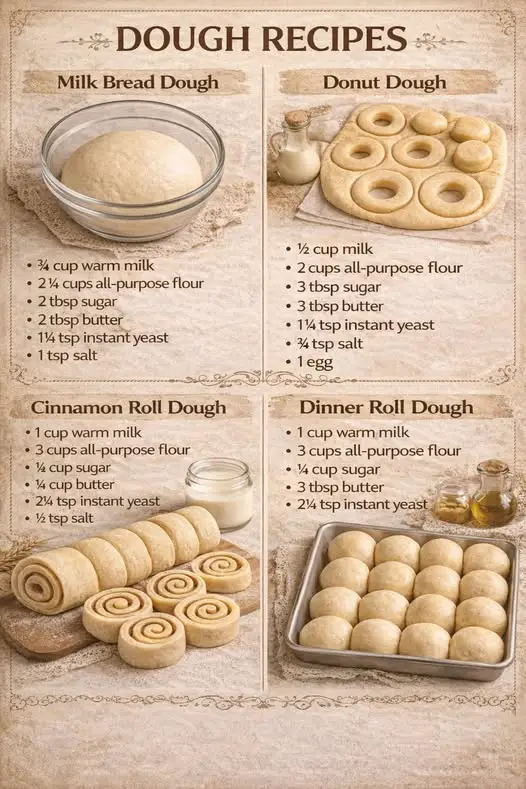
In this article, you’ll learn four easy dough recipes made at home using basic ingredients and straightforward methods. These doughs are perfect for beginners, yet reliable enough for experienced home bakers. Each recipe follows a similar process, helping you build confidence while understanding how yeast, flour, milk, and fat work together. Whether you want soft milk bread, tender donuts, rich cinnamon rolls, or fluffy dinner rolls, these doughs will become your go-to basics.
Why You’ll Love These Easy Dough Recipes
These recipes are designed to be practical, flexible, and beginner-friendly.
First, they rely on simple pantry ingredients you likely already have at home. There’s no need for bread flour, special enhancers, or expensive equipment. Second, each dough follows a clear, predictable method that helps you understand what the dough should look and feel like at every stage. Third, the texture of these doughs is soft and forgiving, making them ideal for shaping, rolling, and baking.
Most importantly, once you master these doughs, you can reuse the techniques for dozens of other recipes. They are not just recipes—they are foundations you can build on.
Milk Bread Dough
Understanding the Ingredients
Milk bread dough is known for its soft, pillowy texture and mild sweetness. Each ingredient plays an important role.
Warm milk activates the yeast while adding richness and tenderness to the crumb. The milk should be warm to the touch but never hot, as excessive heat can kill the yeast. All-purpose flour provides structure while keeping the bread light and soft. Sugar feeds the yeast and adds a subtle sweetness that enhances flavor without overpowering the bread. Butter enriches the dough, giving it a tender bite and a pleasant aroma. Instant yeast allows the dough to rise efficiently, and salt balances the sweetness while strengthening the gluten.
Instructions
Begin by pouring the warm milk into a large mixing bowl. Add the sugar and instant yeast, stirring gently until fully dissolved. At this stage, the yeast will begin activating, which is essential for proper rising.
Next, add the flour and salt to the bowl. Use a spoon or your hands to mix until a shaggy dough forms. The dough may look slightly rough at first, which is completely normal. Add the butter and begin kneading. Kneading can be done by hand on a lightly floured surface or directly in the bowl.
Continue kneading for 8 to 10 minutes until the dough becomes smooth, elastic, and soft. If the dough feels sticky, add a small amount of flour, one tablespoon at a time. If it feels too dry, add a teaspoon of milk.
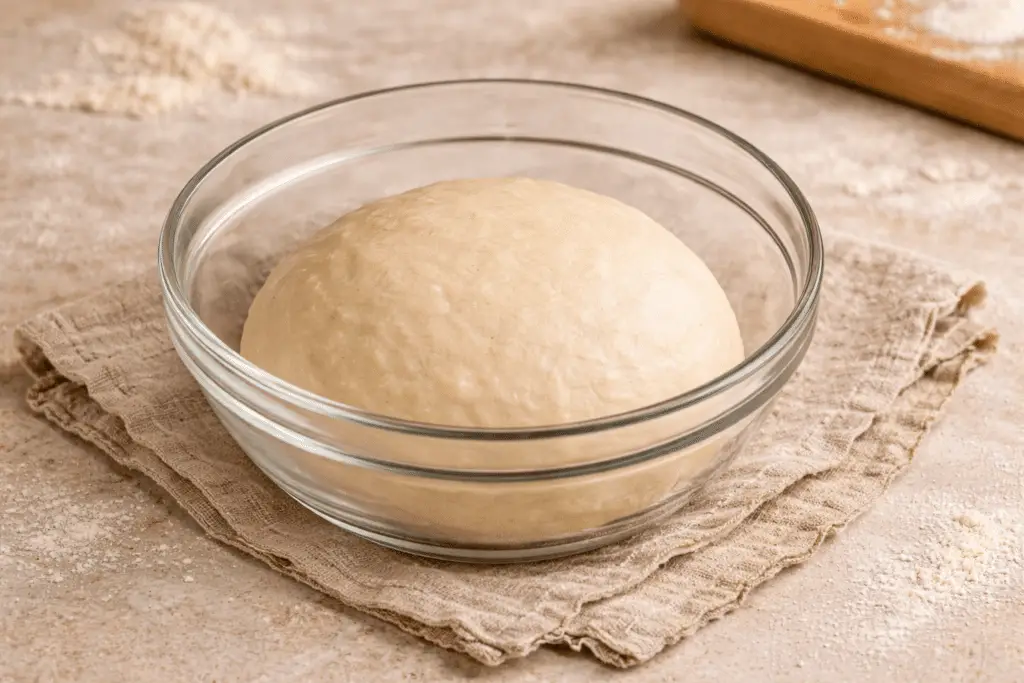
Once kneaded, shape the dough into a ball and place it in a lightly greased bowl. Cover and let it rise in a warm area until doubled in size. This usually takes about one hour. When properly risen, the dough will feel airy and spring back slowly when pressed.
At this point, the milk bread dough is ready to be shaped and baked.
Donut Dough
Understanding the Ingredients
Donut dough is slightly richer than bread dough, which gives donuts their soft, tender interior. Milk provides moisture and softness, while flour creates structure. Sugar adds sweetness and helps the yeast ferment. Butter enhances flavor and texture, making the donuts tender rather than bread-like. The egg is crucial—it adds richness, color, and a soft crumb. Instant yeast provides lift, and salt balances all flavors.
Instructions
Start by mixing the milk, sugar, and yeast in a bowl until well combined. Allow this mixture to sit briefly so the yeast begins activating. Add the egg and softened butter, stirring until the mixture is smooth and cohesive.
Gradually add the flour and salt, mixing until a soft dough forms. Transfer the dough to a lightly floured surface and begin kneading. Donut dough should be soft and slightly elastic but not sticky.
Knead the dough for about 10 minutes. As you knead, the dough will become smoother and easier to handle. If the dough sticks to your hands, lightly dust with flour, but avoid adding too much, as this can make the donuts dense.
Place the dough in a greased bowl, cover, and allow it to rise until doubled. This resting period allows the gluten to relax and the yeast to create air pockets, resulting in light and fluffy donuts.
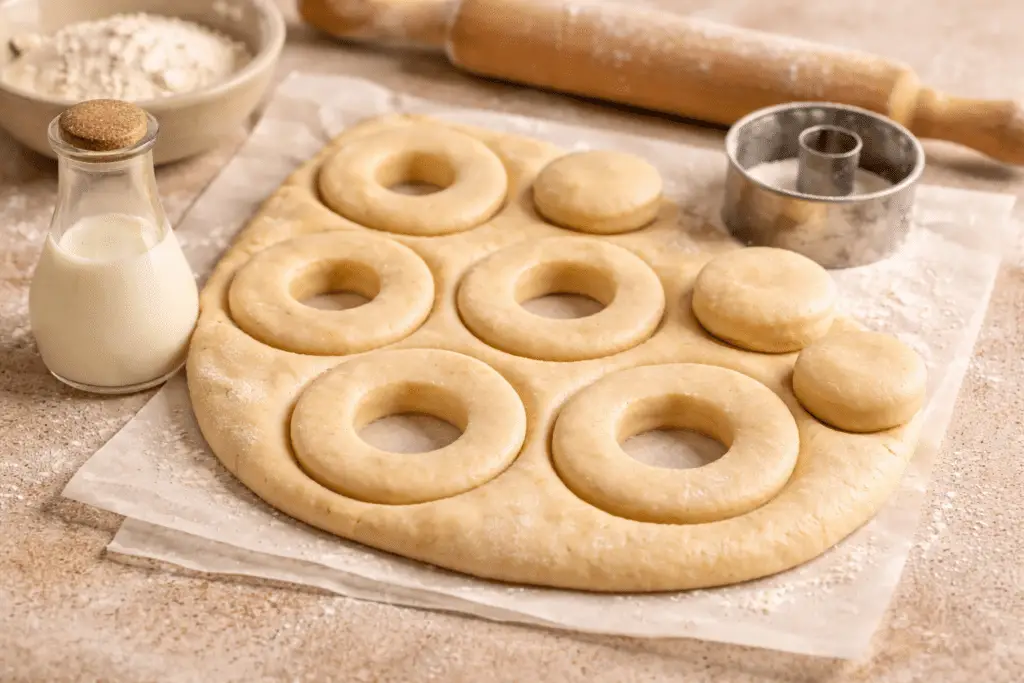
Once risen, the dough is ready to be rolled out and shaped.
Cinnamon Roll Dough
Understanding the Ingredients
Cinnamon roll dough is designed to be soft, rich, and flexible enough to roll without tearing. Warm milk activates the yeast and creates a tender crumb. Flour forms the structure needed to hold the filling. Sugar lightly sweetens the dough and supports fermentation. Butter adds richness and softness. Instant yeast ensures consistent rising, while salt balances sweetness and enhances flavor.
Instructions
Begin by mixing warm milk, sugar, and yeast in a bowl until fully combined. Add the flour, salt, and butter, mixing until the dough starts coming together.
Turn the dough onto a floured surface and knead for 8 to 10 minutes. The dough should feel smooth and elastic, with a soft but sturdy texture. Proper kneading is important here, as it allows the dough to stretch easily when rolled.
Place the dough in a greased bowl, cover, and allow it to rise until doubled in size. This slow rise develops flavor and makes the dough easier to shape.
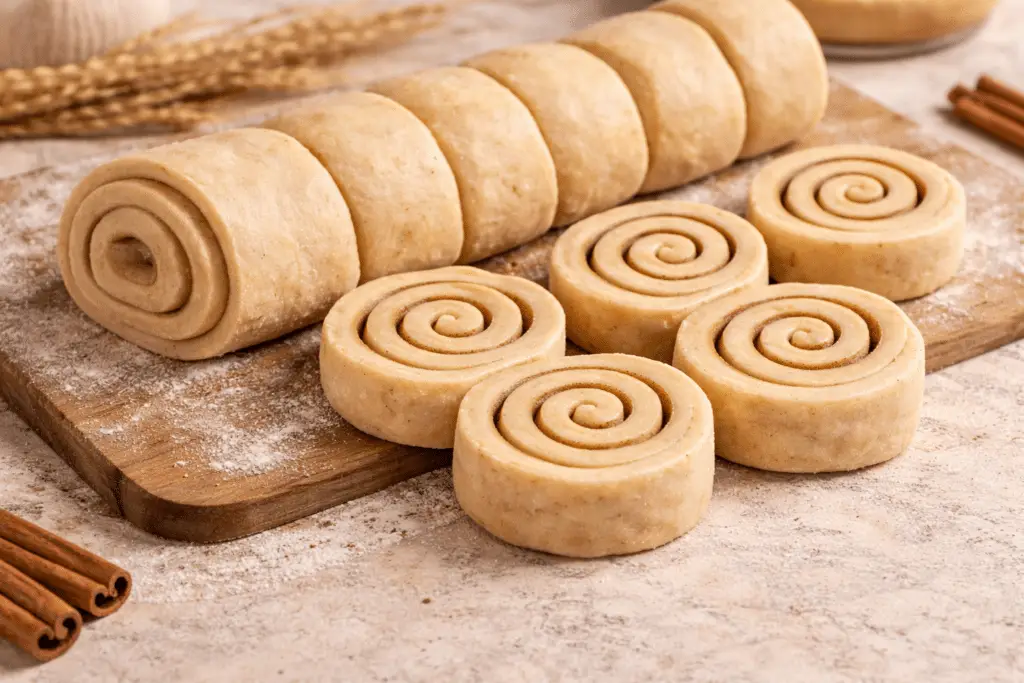
After rising, gently deflate the dough and roll it into a rectangle. At this stage, it’s ready to be filled with cinnamon sugar and shaped into rolls.
Dinner Roll Dough
Understanding the Ingredients
Dinner roll dough is light, fluffy, and slightly sweet. Milk provides softness, while flour creates structure. Sugar adds gentle sweetness and feeds the yeast. Butter adds richness and keeps the rolls tender. Instant yeast ensures reliable rising, and salt balances flavor.
Instructions
In a large bowl, combine warm milk, sugar, and yeast until dissolved. Add the flour, butter, and salt, mixing until a soft dough forms.
Knead the dough until smooth and stretchy, about 8 to 10 minutes. The dough should be soft but not sticky. Proper kneading ensures fluffy rolls with good structure.
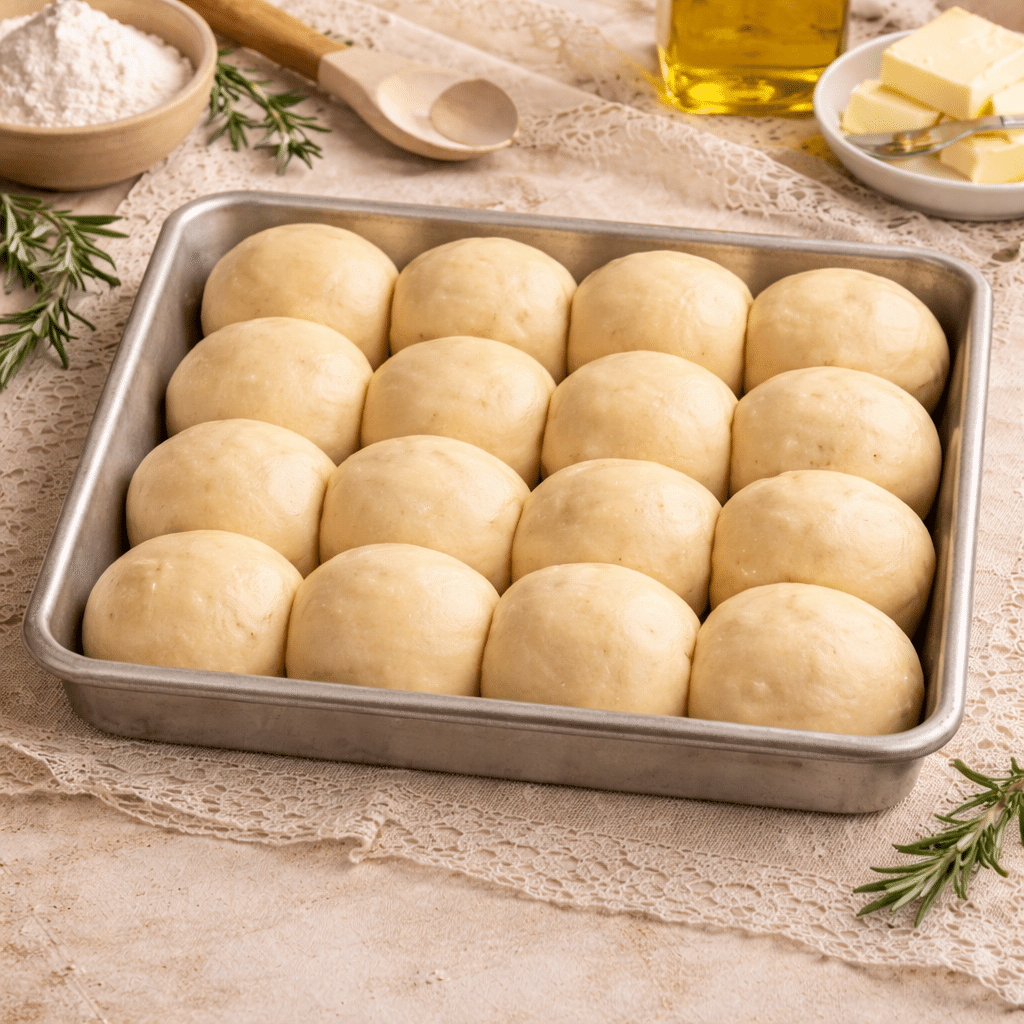
Once kneaded, shape the dough into a ball and place it in a greased bowl. Cover and let it rise until doubled. After rising, divide the dough into equal portions and shape into rolls.
Arrange the rolls on a baking tray and allow them to rise again until puffy and light.
One Dough Variation for All Recipes
To make these doughs healthier, replace up to half of the all-purpose flour with whole wheat flour. Whole wheat absorbs more liquid, so add extra milk as needed to maintain a soft dough texture.
Frequently Asked Questions (FAQ)
How do I know when my dough is kneaded enough?
Properly kneaded dough will feel smooth, elastic, and slightly springy when pressed.
Can I make these doughs ahead of time?
Yes. After the first rise, refrigerate the dough for up to 24 hours.
Why didn’t my dough rise properly?
This usually happens if the yeast is old or the liquid was too hot.
Can I freeze these doughs?
Yes. Freeze after the first rise for up to two months.