There’s something timeless about a French baguette. That crackly, golden crust. The soft, airy interior with irregular holes. The aroma that fills the kitchen as it bakes. While baguettes are often associated with artisan bakeries and years of experience, the truth is that you can make an excellent baguette at home with just a few basic ingredients and the right technique.
This recipe focuses on simplicity and method. Using only flour, water, yeast, sugar, and salt, you’ll learn how to create a baguette with a crisp crust and a light, chewy crumb—perfect for sandwiches, soups, or tearing apart while still warm.
This is a complete, from-scratch baguette recipe designed for home bakers, with detailed explanations to help you understand not just how to make it, but why each step matters.
What Makes a French Baguette Special?
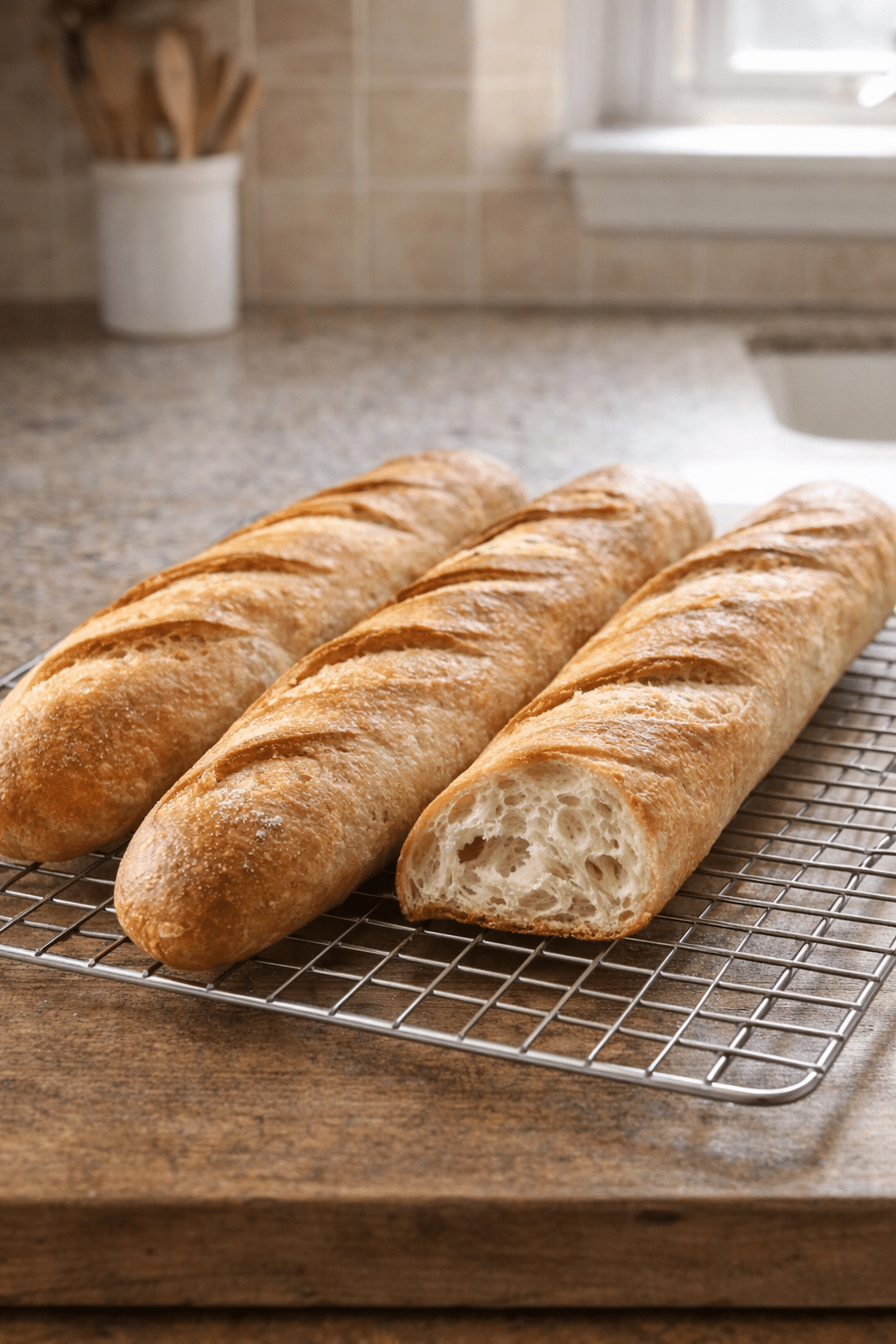
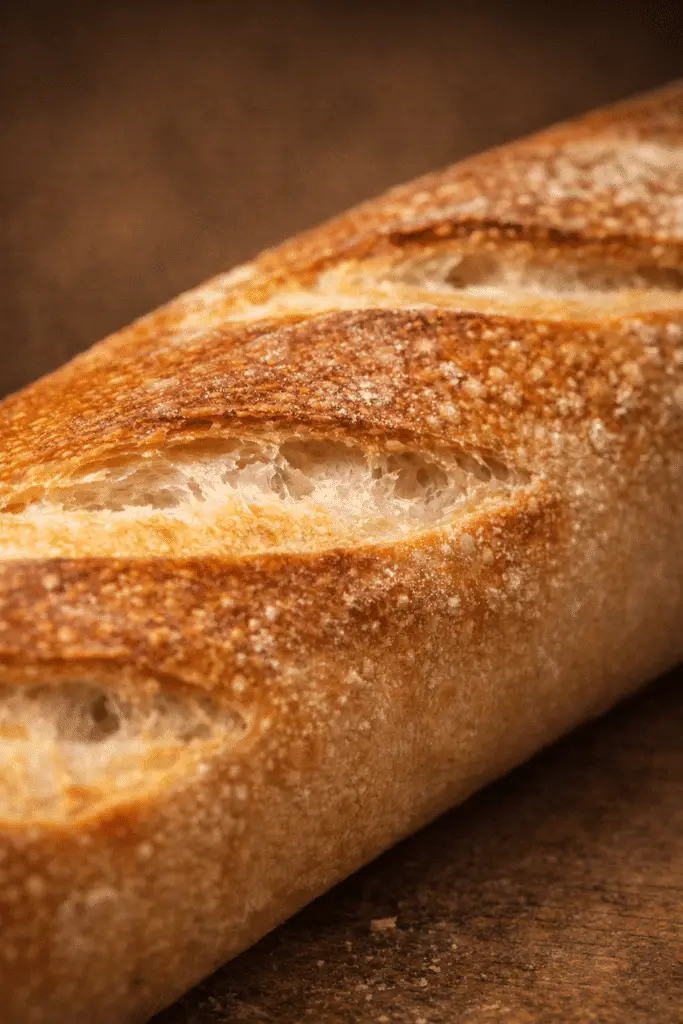
A traditional baguette is defined by contrast. The exterior should be deeply golden and crisp, while the inside remains moist, elastic, and full of air pockets. Achieving this balance depends on three main factors:
- High hydration dough for an open crumb
- Proper fermentation to develop flavor and structure
- Steam during baking to create a crisp crust
Even with a simplified ingredient list, technique is everything.
Ingredients You’ll Need
This recipe uses the exact ingredients provided, keeping it accessible and pantry-friendly.
- 3 cups all-purpose flour
- 1 cup warm water
- 2 teaspoons sugar
- 2 teaspoons yeast
- 2 teaspoons salt
Note: The water should be warm, not hot—comfortable to the touch. Water that’s too hot can weaken yeast activity.
How to Make French Baguette at Home
Step 1: Activate the Yeast
In a large bowl, combine the warm water, sugar, and yeast. Stir gently and let the mixture sit for 5–10 minutes until it becomes foamy on top. This step confirms that your yeast is active and ready to work.
Step 2: Mix the Dough
Add the flour and salt to the yeast mixture. Stir with a spoon or dough scraper until a rough, sticky dough forms. At this stage, the dough will look shaggy and uneven—that’s exactly what you want.
Avoid adding extra flour too early. A slightly sticky dough is key to achieving the airy interior typical of a baguette.
Step 3: Knead Lightly
Turn the dough out onto a lightly floured surface. Knead for about 6–8 minutes, just until the dough becomes smoother and elastic. It should still feel soft, not stiff.
Unlike enriched breads, baguette dough benefits from gentle handling. Over-kneading can tighten the crumb.
Step 4: First Rise (Bulk Fermentation)
Shape the dough into a ball and place it in a lightly greased bowl. Cover with a towel or plastic wrap and let it rise in a warm place for 1 to 1½ hours, or until doubled in size.
This first rise develops flavor and structure. A longer rise equals better taste.
Shaping the Baguette
Step 5: Divide and Pre-Shape
Once risen, gently turn the dough out onto a floured surface. Divide it into two equal portions for classic baguette size.
Gently shape each portion into a loose rectangle, then roll lightly into a log. Cover and let rest for 10–15 minutes. This rest relaxes the gluten, making final shaping easier.
Step 6: Final Shape
Flatten each log gently, then roll it lengthwise into a tight cylinder, sealing the seam with your fingers. Taper the ends slightly to create the traditional baguette shape.
Place the shaped dough seam-side down on a parchment-lined baking tray.
Step 7: Second Rise
Cover the baguettes lightly and let them rise for 30–45 minutes, until slightly puffy but not over-inflated. Over-proofing can cause the loaves to collapse in the oven.
Scoring and Baking
Step 8: Preheat the Oven
Preheat your oven to 450°F (230°C). Place an empty metal pan on the bottom rack—this will be used to create steam.
Step 9: Score the Dough
Using a sharp knife or razor blade, make 3–4 diagonal slashes across each baguette. These cuts control expansion and help create the classic look.
Step 10: Create Steam
Just before baking, pour hot water into the empty pan at the bottom of the oven. The steam helps the dough expand fully and creates a crisp, blistered crust.
Step 11: Bake
Bake the baguettes for 20–25 minutes, until deeply golden brown. The crust should feel firm and sound hollow when tapped.
For extra crispness, crack the oven door slightly for the last 5 minutes to let excess moisture escape.
Cooling the Bread
Remove the baguettes from the oven and let them cool on a wire rack for at least 20 minutes. Cutting too early releases steam and can make the crumb gummy.
As they cool, you’ll hear the crust crackle—this is a sign of a well-baked baguette.
Texture and Flavor Expectations
- Crust: Thin, crisp, and golden
- Crumb: Light, chewy, and slightly irregular
- Flavor: Mild, wheaty, with subtle yeast notes
The small amount of sugar helps with browning without making the bread sweet.
Serving Ideas
French baguettes are incredibly versatile:
- Slice and serve with butter or olive oil
- Use for sandwiches or paninis
- Pair with soups and stews
- Turn into garlic bread or bruschetta
- Serve alongside cheese and charcuterie
Fresh baguette is best enjoyed the same day it’s baked.
Storage Tips
- Store at room temperature, loosely wrapped, for up to 24 hours
- Refresh day-old baguette in a 350°F (175°C) oven for 5–7 minutes
- Freeze baked baguettes for up to 1 month; reheat directly from frozen
Avoid airtight containers—they soften the crust too much.
Common Problems and Solutions
Baguette is too dense
- Dough may have been too dry or under-proofed
- Avoid adding excess flour and allow full rises
Crust isn’t crispy
- Not enough steam during baking
- Increase oven temperature or steam exposure
Loaves spread instead of rising
- Over-proofed dough or weak shaping
- Shorten the second rise slightly
Frequently Asked Questions
Can I use bread flour instead of all-purpose?
Yes. Bread flour will give a slightly chewier crumb, which many people prefer.
Do I need a baguette pan?
No. A baking tray and parchment paper work perfectly.
Why is steam important?
Steam delays crust formation, allowing the bread to expand fully before setting.
Final Thoughts
Making a French baguette at home is less about fancy ingredients and more about patience and technique. With just flour, water, yeast, sugar, and salt, you can create bread that’s crisp on the outside, tender on the inside, and deeply satisfying.
Once you understand the process, this recipe becomes incredibly repeatable—and incredibly rewarding. Whether you’re baking for a family meal or simply for the joy of fresh bread, this homemade French baguette proves that classic bakery results are absolutely achievable in your own kitchen.
Print
French Baguette Recipe
Ingredients
3 cups all-purpose flour
1 cup warm water
2 teaspoons sugar
2 teaspoons yeast
2 teaspoons salt
Instructions
In a large bowl, combine the warm water, sugar, and yeast. Stir gently and let the mixture sit for 5–10 minutes until it becomes foamy on top. This step confirms that your yeast is active and ready to work.
Add the flour and salt to the yeast mixture. Stir with a spoon or dough scraper until a rough, sticky dough forms. At this stage, the dough will look shaggy and uneven—that’s exactly what you want.
Avoid adding extra flour too early. A slightly sticky dough is key to achieving the airy interior typical of a baguette.
Turn the dough out onto a lightly floured surface. Knead for about 6–8 minutes, just until the dough becomes smoother and elastic. It should still feel soft, not stiff.
Unlike enriched breads, baguette dough benefits from gentle handling. Over-kneading can tighten the crumb.
Shape the dough into a ball and place it in a lightly greased bowl. Cover with a towel or plastic wrap and let it rise in a warm place for 1 to 1½ hours, or until doubled in size.
This first rise develops flavor and structure. A longer rise equals better taste.
Once risen, gently turn the dough out onto a floured surface. Divide it into two equal portions for classic baguette size.
Gently shape each portion into a loose rectangle, then roll lightly into a log. Cover and let rest for 10–15 minutes. This rest relaxes the gluten, making final shaping easier.
Flatten each log gently, then roll it lengthwise into a tight cylinder, sealing the seam with your fingers. Taper the ends slightly to create the traditional baguette shape.
Place the shaped dough seam-side down on a parchment-lined baking tray.
Cover the baguettes lightly and let them rise for 30–45 minutes, until slightly puffy but not over-inflated. Over-proofing can cause the loaves to collapse in the oven.
Preheat your oven to 450°F (230°C). Place an empty metal pan on the bottom rack—this will be used to create steam.
Using a sharp knife or razor blade, make 3–4 diagonal slashes across each baguette. These cuts control expansion and help create the classic look.
Just before baking, pour hot water into the empty pan at the bottom of the oven. The steam helps the dough expand fully and creates a crisp, blistered crust.
Bake the baguettes for 20–25 minutes, until deeply golden brown. The crust should feel firm and sound hollow when tapped.
For extra crispness, crack the oven door slightly for the last 5 minutes to let excess moisture escape.