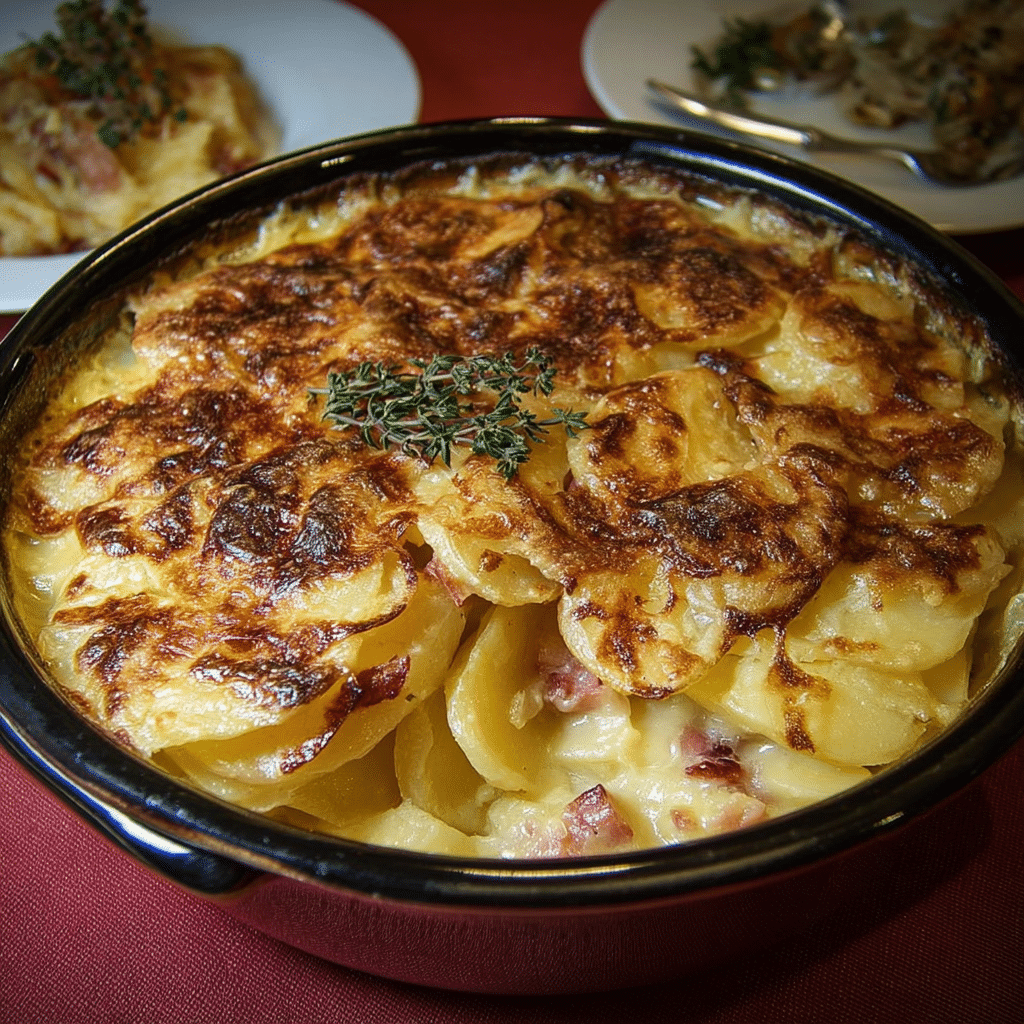
Tartiflette is the kind of dish that makes winter evenings feel instantly warmer.
Originating in the French Alps, this hearty casserole combines tender potatoes, sweet onions, smoky bacon lardons, and rich Reblochon cheese, all baked together until bubbling and golden. It’s rustic mountain comfort food at its best—simple ingredients layered in a way that feels luxurious and deeply satisfying.
If you love cheesy potato gratins or baked mac and cheese, Tartiflette is like their Alpine cousin: bolder, smokier, and even more indulgent. The star of the dish is Reblochon, a soft-rind cow’s milk cheese with a creamy center and a distinctive nutty flavor that melts into the potatoes and bacon, coating everything in a velvety, savory sauce.
Despite its impressive flavor, a traditional Savoyard Tartiflette doesn’t require complicated techniques. With a few basic pantry ingredients and a baking dish, you can have a bubbling, golden casserole on the table in a little over an hour. It’s ideal for casual dinners with friends, cozy family meals, or any day when you want something comforting that feels a bit special but doesn’t keep you in the kitchen all day.
Core Ingredients for Making the Recipe
To prepare this traditional Savoyard Tartiflette in a quick and easy way, you’ll need just a handful of hearty, flavorful ingredients.
Main Ingredients
- Potatoes – 1 kg
Waxy or all-purpose potatoes (like Yukon Gold, Charlotte, or similar) are best. They hold their shape while becoming tender and creamy. - Reblochon cheese – 450 g
This is the heart of Tartiflette. Use a whole round or two smaller halves. If you can’t find Reblochon, you can substitute a similar soft cheese (more on that in the variations section), but the authentic flavor comes from Reblochon. - Smoked bacon lardons – 200 g
Use thick-cut smoked bacon or pancetta, cut into small strips or cubes. The smokiness perfumes the entire dish. - Onions – 200 g
About 2 medium onions, thinly sliced. They add sweetness and depth once they’re slowly cooked with the bacon.
Pantry Ingredients & Seasoning
These simple additions transform the dish from good to unforgettable:
- Butter – 1–2 tablespoons (for greasing the dish and helping the onions caramelize)
- Garlic – 1–2 cloves, finely chopped or grated (optional but delicious)
- Dry white wine – about 80–100 ml (⅓–½ cup)
A Savoyard or other dry white wine deglazes the pan and adds acidity to balance the richness. - Crème fraîche or heavy cream – 100–150 ml (about ½ cup)
Not strictly necessary in all traditional versions, but it makes the dish extra creamy and luxurious. - Salt and freshly ground black pepper
To season the potatoes and balance the smokiness. - Optional: a pinch of nutmeg or a few fresh thyme leaves
These bring a subtle aromatic note that works beautifully with potatoes and cheese.
Step-by-Step

1. Prepare the Potatoes
- Wash and peel (or not)
- Scrub the potatoes well. You can peel them for a smoother texture or leave the skins on for a rustic feel and extra nutrients.
- Slice the potatoes
- Cut them into slices about 4–5 mm thick (roughly ¼ inch).
- Try to keep the slices even so they cook at the same rate.
- Pre-cook the potatoes
Tartiflette is best when the potatoes are tender but not falling apart. Pre-cooking ensures the dish bakes evenly and quickly.- Place the slices in a large pot of cold salted water.
- Bring to a gentle boil and cook for 8–10 minutes, until just tender when pierced with a knife but not breaking apart.
- Drain carefully and let them steam-dry in the colander for a few minutes. This helps them absorb the flavors later without turning watery.
2. Cook the Bacon and Onions
- Brown the lardons
- In a large skillet or frying pan, cook the smoked bacon lardons over medium heat.
- Stir occasionally until they render some fat and become lightly golden and crisp around the edges.
- Add onions and butter
- Add the sliced onions to the pan. If the bacon hasn’t released much fat or the pan looks dry, add 1 tablespoon of butter.
- Cook the onions and bacon together over medium-low heat for about 10–12 minutes, stirring from time to time.
- The onions should soften, become translucent, and start to caramelize slightly.
- Add garlic and deglaze with wine
- Stir in the finely chopped garlic and cook for about 1 minute until fragrant.
- Pour in the white wine and scrape the bottom of the pan to dissolve any browned bits; these are packed with flavor.
- Let the wine simmer for a few minutes until it reduces by about half and no longer smells strongly alcoholic.
- Season the mixture
- Add a good grind of black pepper and a small pinch of salt (go easy—bacon and cheese will add saltiness later).
- If using, sprinkle in a pinch of nutmeg or some thyme leaves.
Set this mixture aside; it will form a flavorful layer in the Tartiflette.
3. Prepare the Reblochon
- Trim and slice
- Take the Reblochon cheese out of the fridge so it softens slightly.
- You can keep most of the rind—this is traditional and melts into the dish, giving extra flavor.
- Cut the cheese into two horizontal disks (like opening a burger bun) or into several thick wedges, depending on how you want to lay it on top.
- Decide on rind style
- Some cooks place the cheese rind-side up, so it browns beautifully on the surface.
- Others prefer rind-side in, letting the creamy center ooze more visibly on top. Either way works; it’s mostly a matter of presentation and preference.
4. Assemble the Tartiflette
- Butter the dish
- Preheat your oven to 200°C (390°F).
- Lightly grease a medium baking dish (around 20×30 cm / 8×12 in) with butter.
- First layer of potatoes
- Spread half of the pre-cooked potato slices in the bottom of the dish in an even layer.
- Season with a little salt and pepper.
- Add bacon and onions
- Spoon the bacon–onion mixture evenly over the potatoes.
- Make sure every corner gets some of that flavor; this is the heart of the dish.
- Drizzle with cream
- Pour about half of the crème fraîche or cream over the bacon and onions.
- It will slowly seep down and mix with the potatoes during baking, creating a rich sauce.
- Second layer of potatoes
- Arrange the remaining potato slices on top, overlapping slightly like roof tiles.
- Season again with a little salt and pepper.
- Top with Reblochon
- Place the Reblochon halves or wedges on top of the potatoes.
- Traditional style: arrange them rind-side up, covering most of the surface; as the cheese melts, it will flow between the potatoes.
- Drizzle the remaining cream around the cheese and over some of the potatoes.
5. Bake Until Golden and Bubbling
- Bake the Tartiflette
- Place the dish in the preheated oven.
- Bake for 20–25 minutes, or until:
- The cheese is fully melted and bubbling,
- The top is beautifully golden, and
- You can see the edges sizzling slightly.
- Finish with a bit of color (if needed)
- If the cheese isn’t browning as much as you’d like, you can switch the oven to a higher heat or broil/grill setting for 2–3 minutes at the end.
- Watch carefully to prevent burning; Reblochon browns quickly once it starts.
- Rest before serving
- Remove the Tartiflette from the oven and let it sit for about 5–10 minutes.
- This brief rest allows the bubbling cheese and cream to thicken slightly, making it easier to serve neat portions.
Flavor Variations and Creative Twists
The traditional Savoyard Tartiflette is already rich and satisfying, but you can adapt it based on what you have or the flavors you prefer. Here are some ideas to keep in mind:
1. Extra-Creamy Tartiflette
For an even more indulgent version:
- Increase crème fraîche or cream to 200 ml (about ¾ cup).
- Add a small handful of grated Gruyère or Comté to the potato layers for extra cheesiness, keeping Reblochon on top.
- Use a slightly deeper baking dish so the sauce doesn’t overflow in the oven.
2. Tartiflette with Leeks
Leeks add sweetness and a gentle onion flavor:
- Replace half the onions with 2 leeks, cleaned and sliced.
- Sauté them with the bacon and onions until soft.
- This version is particularly nice if you prefer a milder, more delicate taste.
3. Mushroom Tartiflette
For an earthy twist:
- Add 200–250 g sliced mushrooms (button, cremini, or wild mushrooms) to the pan after the bacon releases its fat.
- Cook until they release their moisture and begin to brown before adding the onions.
- Mushrooms pair beautifully with cheese and make the dish feel even more substantial.
4. Lighter (Relatively!) Tartiflette
If you’d like to trim the richness without losing the soul of the dish:
- Use light crème fraîche or a mix of cream and milk.
- Cook the bacon until quite crisp, then drain most of the fat before adding onions.
- Reduce the cheese slightly (use around 350 g Reblochon instead of 450 g), and add more herbs like thyme or chives to keep the flavor vibrant.
5. No-Wine Version
If you prefer to cook without alcohol:
- Replace the white wine with chicken or vegetable broth and 1–2 teaspoons of lemon juice or cider vinegar for brightness.
- The deglazing step remains important—you want those browned flavors from the pan in your dish.
How to Serve Tartiflette
Tartiflette is a complete meal in itself—rich, filling, and comforting—but a few simple sides help balance its richness and complete the Alpine experience.
Classic Serving Ideas
- With a Crisp Green Salad
A bowl of mixed salad leaves dressed with a sharp vinaigrette (olive oil, vinegar or lemon, mustard, salt, pepper) cuts through the creaminess and refreshes the palate between bites. - With Cornichons and Pickles
Small tart pickles and pickled onions are traditional accompaniments in the Alps. Their sharp acidity contrasts perfectly with the smoky, cheesy potatoes. - With Crusty Bread
A rustic baguette or country loaf is wonderful for mopping up the cheesy sauce left in the dish. - With White Wine from Savoie
If you enjoy wine, a dry white from the same region—such as Apremont or Roussette—is a natural pairing. Any crisp, acidic white wine works well.
Presentation Tips
- Serve Tartiflette straight from the baking dish, family-style, at the center of the table.
- Garnish with a few fresh thyme sprigs or chopped parsley to add a pop of color.
- For individual portions, you can assemble and bake the dish in small gratin dishes or ramekins—perfect for dinner parties or cozy date nights.
Tips & Helpful Advice
1. Choosing the Right Potatoes
- Waxy or all-purpose varieties (like Charlotte, Yukon Gold, Nicola) are ideal.
- Avoid very starchy potatoes (like Russets) if possible; they can break apart and become floury rather than creamy.
2. Balancing Saltiness
Reblochon and bacon are both salty, so be light-handed when seasoning the potatoes and onion mixture. It’s better to under-salt initially and adjust at the table.
3. Controlling Richness
This dish is meant to be rich, but you can control how heavy it feels by:
- Reducing cream slightly.
- Serving smaller portions with a large salad.
- Including pickles or a sharp salad dressing to cut through the cheese.
4. Avoiding Greasiness
If your bacon releases a lot of fat:
- Spoon out some of the excess before adding onions. You want enough to cook and flavor the onions, but not so much that the final dish feels greasy.
5. Make-Ahead Tips
- You can parboil the potatoes and cook the bacon–onion mixture a few hours ahead.
- Assemble the dish shortly before baking, or assemble completely and refrigerate (tightly covered) for up to 6–8 hours.
- If baking from chilled, add an extra 5–10 minutes in the oven and cover loosely with foil if the top browns too quickly.
Final Thoughts
Traditional Savoyard Tartiflette is a reminder that some of the most comforting dishes come from the harshest climates. High in the French Alps, where winters are long and snow is deep, people learned to turn simple ingredients—potatoes, cheese, preserved pork—into meals that nourish both body and spirit.
This quick and easy version stays true to that spirit. It doesn’t ask for complex techniques or delicate timings, just a bit of chopping, layering, and baking. The reward is a bubbling dish of tender potatoes soaked in smoky, cheesy sauce—a meal that invites everyone to sit a little longer at the table, talk, laugh, and maybe go back for “just one more spoonful.”
Whether you serve it on a cold winter night, at a casual dinner with friends, or as the centerpiece of a weekend meal, Tartiflette is the kind of recipe that quickly becomes a tradition. Once you’ve tried it, it’s hard not to imagine a snowy mountain outside your window—even if you’re nowhere near the Alps.
FAQ
Can I use another cheese if I can’t find Reblochon?
Yes. While Reblochon gives the most authentic flavor, you can substitute similar soft, washed-rind cheeses such as Raclette, Mont d’Or, or a mild Brie/Camembert-style cheese. Even a combination of soft cheese on top and some grated Gruyère inside works well. The key is a cheese that melts smoothly and has good flavor.
Do I have to pre-cook the potatoes?
Pre-cooking is strongly recommended for an even, tender texture and shorter baking time. If you use raw potatoes, you’ll need to bake much longer (40–50 minutes or more), and there’s a risk that the cheese over-browns before the potatoes are fully cooked.
Can Tartiflette be made ahead and reheated?
Yes. You can bake the dish, let it cool, then refrigerate. Reheat covered with foil at 180°C (350°F) until hot in the center, then uncover for a few minutes to re-crisp the top. The texture will still be delicious, though the cheese won’t be as molten as when freshly baked.
Is Tartiflette gluten-free?
Generally, yes—if you use gluten-free bacon and wine (most wines are naturally gluten-free) and don’t serve it with bread. Always check labels if you’re cooking for someone with celiac disease or gluten sensitivity.
Can I omit the bacon for a vegetarian version?
You can. The dish won’t be traditional, but it can still be delicious. Replace bacon with sautéed mushrooms, caramelized onions, or a mix of vegetables. To keep some smoky depth, you might add a pinch of smoked paprika or use a smoked cheese in addition to Reblochon.
Can I freeze Tartiflette?
Freezing is possible but not ideal. Potatoes can change texture slightly when frozen, and the cream may separate when thawed. If you do freeze leftovers, wrap them tightly and thaw in the fridge before reheating gently in the oven. It will still taste good, but it’s at its very best fresh from the oven.
Enjoy your Traditional Savoyard Tartiflette—a quick, easy way to bring a little taste of the French Alps to your own kitchen.