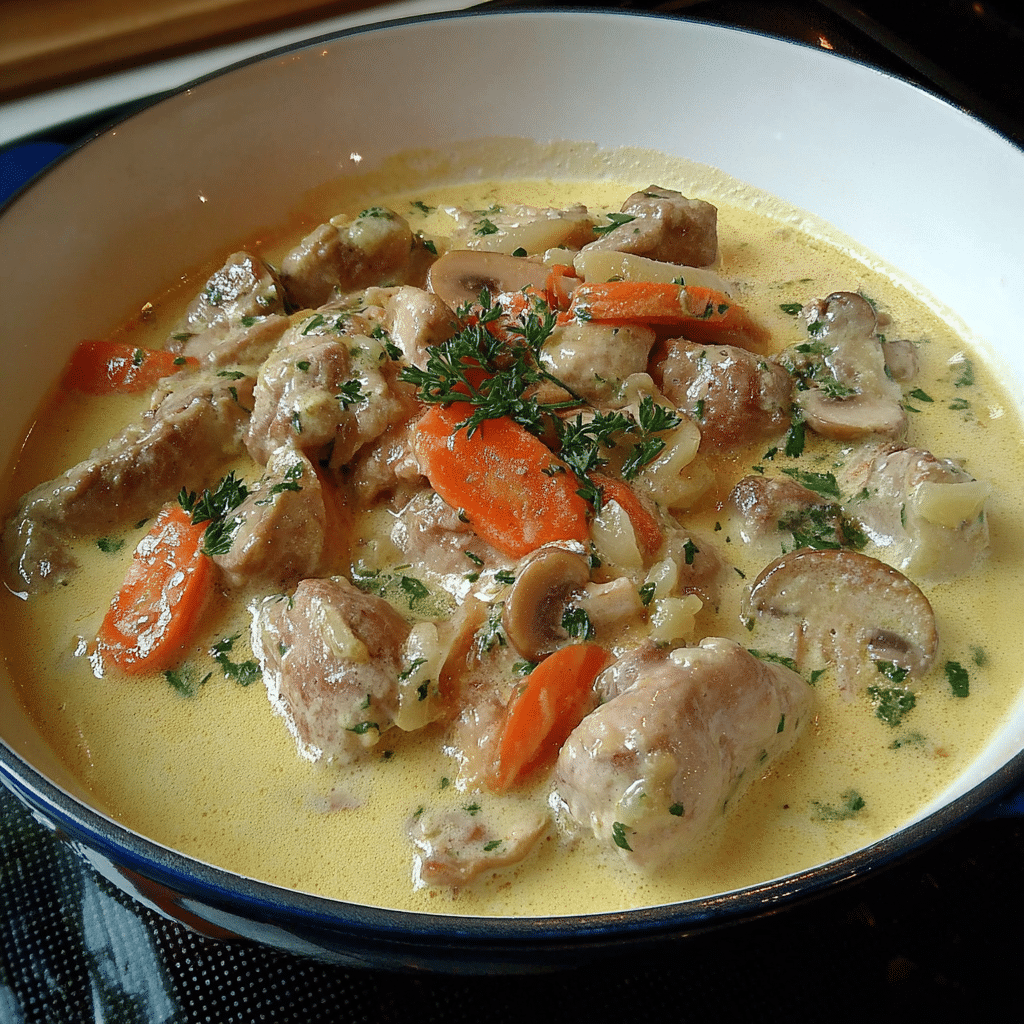
Veal blanquette, or blanquette de veau, is one of those classic French dishes that proves comfort food can be elegant.
Instead of a dark, winey stew, this blanquette is all about lightness: pale, meltingly tender veal simmered gently in a fragrant broth, then wrapped in a silky, ivory-colored cream sauce brightened with lemon. Each bite is mild, delicate, and rich without ever feeling heavy.
Traditionally served with rice, potatoes, or buttered noodles, veal blanquette is the kind of dish you bring to the table in a steaming casserole or deep serving bowl, letting the aroma of stock, herbs, and butter fill the room. It’s ideal for chilly evenings, Sunday family lunches, or any time you want to serve something that feels special yet deeply comforting.
What makes this dish particularly beautiful is the technique. The veal is never browned; instead, it’s simmered gently so the meat stays pale and tender, and the cooking liquid stays clear and light. A simple roux thickens the broth, cream and egg yolk enrich it, and sautéed mushrooms and pearl onions add sweetness and texture. It’s a recipe that values patience and gentleness more than complicated tricks.
Yet despite its refined reputation, veal blanquette is surprisingly accessible. With a bit of time and attention, you can create a restaurant-quality French classic right in your own kitchen.
Core Ingredients for Making the Recipe
To prepare this tender, creamy veal blanquette, you’ll need a few simple but important components: good-quality veal, aromatic vegetables, a bouquet of herbs, and the classic French liaison of egg yolk and cream.
Here’s what you’ll need:
For the Veal and Cooking Broth
2 1/2 pounds (about 1.1 kg) veal shoulder or breast, cut into large cubes (about 1 1/2 inches)
1 small veal bone or beef marrow bone (optional but adds flavor)
1 medium onion, peeled and studded with 2–3 whole cloves
2 medium carrots, peeled and cut into large chunks
1 small leek, cleaned and cut into 2–3 pieces (white and light green parts only)
2 celery stalks, cut into chunks
1 bouquet garni (a small bundle of fresh parsley stems, a bay leaf, and a few sprigs of thyme tied with kitchen string)
8–10 whole black peppercorns
1–2 teaspoons salt (to taste; you’ll adjust later)
Cold water, enough to cover the meat by several inches
For the Vegetable Garnish
8–10 small pearl onions (or 1 small regular onion, cut in wedges)
8 ounces (225 g) button mushrooms or small cremini mushrooms, cleaned and halved or quartered
2 tablespoons butter
1 tablespoon olive oil
Salt and pepper to taste
A squeeze of lemon juice (to keep mushrooms pale and bright)
For the Sauce (Roux and Liaison)
4 tablespoons unsalted butter
4 tablespoons all-purpose flour
3–4 cups (720–960 ml) strained cooking broth from the veal
1/2 cup (120 ml) heavy cream or crème fraîche
2 egg yolks
Juice of 1/2 lemon (or to taste)
Salt and freshly ground white or black pepper, to taste
For Finishing and Serving
2–3 tablespoons chopped fresh parsley
Cooked white rice, buttered egg noodles, or steamed new potatoes
Extra lemon wedges (optional)
Step-by-Step
Guide to Making the Recipe
Veal blanquette is made in stages: gently poaching the meat, preparing the vegetable garnish, building the velvety sauce, and finally bringing everything together into one harmonious dish.
Poaching the Veal and Making the Broth
Place the veal cubes and the bone (if using) into a large, heavy-bottomed pot. Cover with cold water, making sure the meat is submerged by at least 2 inches.
Set the pot over medium heat and slowly bring the water just to a gentle simmer. As it heats, a gray foam will rise to the surface. Skim this foam carefully with a spoon or ladle and discard it. This step helps keep your broth clear and clean-tasting.
Once the liquid is barely simmering and most of the foam has been removed, add the studded onion, carrot chunks, leek pieces, celery, bouquet garni, peppercorns, and the first teaspoon of salt.
Lower the heat so the liquid remains at a soft, gentle simmer—barely bubbling. Cover the pot, leaving the lid slightly ajar, and cook for 1–1 1/4 hours, or until the veal is very tender but not falling apart. Stir once or twice during cooking and skim any additional foam or fat that collects on top.
When the veal is tender, remove the pot from the heat. Using a slotted spoon, carefully lift the veal pieces into a bowl and cover to keep warm. Discard the onion studded with cloves, the bouquet garni, and the other large vegetables (they’ve given their flavor to the broth).
Strain the broth through a fine sieve into a clean pot or large bowl. You should have around 4–5 cups of fragrant, pale veal stock. If there’s more, you can reduce it a bit later; if there’s less, don’t worry—the recipe is flexible. Set the strained broth aside and skim off any excess fat from the surface.
Preparing the Vegetable Garnish
While the veal simmers, you can prepare the mushrooms and pearl onions so they’re ready to finish the dish.
If using fresh pearl onions, blanch them briefly in boiling water for 30–60 seconds, then plunge into cold water. Slip off the skins and trim the root end, keeping them mostly whole.
In a large skillet, melt 2 tablespoons of butter with 1 tablespoon of olive oil over medium heat.
Add the pearl onions and sauté gently for 6–8 minutes, stirring occasionally, until they begin to soften and take on just a hint of golden color. You want them tender but not deeply browned.
Add the mushrooms to the skillet. Season with a small pinch of salt and pepper. Cook for another 6–8 minutes, stirring often, until the mushrooms release their juices and then reabsorb them, becoming tender and lightly colored.
Squeeze in a few drops of lemon juice to keep the mushrooms from darkening too much. Taste and adjust the seasoning. Turn off the heat and set the mixture aside. These vegetables will be stirred into the sauce at the end, adding texture and sweetness.
Building the Roux and Velvety Sauce
In a clean large pot (you can use the one you poached the veal in after rinsing it), melt 4 tablespoons of butter over medium heat.
Sprinkle in the 4 tablespoons of flour, whisking constantly to form a smooth paste. This is your roux. Cook it gently for 2–3 minutes, stirring all the time, until it loses the raw flour smell but doesn’t take on much color. You want it to stay pale to keep the blanquette sauce light and creamy.
Slowly begin to add the strained veal broth, about 1/2 cup at a time, whisking thoroughly after each addition to avoid lumps. At first the mixture will be very thick, then it will loosen as more liquid is incorporated. Continue until you’ve added about 3–4 cups of broth and have a smooth, glossy sauce.
Bring this sauce to a gentle simmer and cook for about 10 minutes, stirring occasionally. It will thicken to a texture that lightly coats the back of a spoon. If it becomes too thick, add a bit more broth or water; if it’s too thin, let it simmer longer to reduce slightly.
Taste the sauce and season with salt and pepper. The flavor should be delicate but well-rounded, with a soft richness from the veal stock and butter.
Preparing the Liaison (Egg Yolk and Cream Mixture)
In a small bowl, whisk together the egg yolks and the 1/2 cup of cream (or crème fraîche) until smooth.
Turn the heat under the sauce to low so it is no longer bubbling. To avoid scrambling the eggs, you need to temper the liaison. While whisking the egg-cream mixture constantly, slowly drizzle in a ladleful of the hot sauce. This gently warms the yolks.
Repeat with a second ladle of sauce, whisking all the time. The liaison should now be warm and ready to join the pot.
Pour the tempered liaison into the main pot of sauce, whisking constantly. Keep the heat low and cook for another 2–3 minutes, stirring, just until the sauce thickens slightly more and takes on a beautiful, silky sheen.
Important: do not let the sauce boil once the egg yolks are added. Gentle heat keeps it smooth and creamy; boiling can cause it to curdle.
Finishing the Veal Blanquette
Add the reserved veal cubes to the pot of sauce, along with any juices they released while resting. Stir gently to coat the meat without breaking it apart.
Fold in the sautéed mushrooms and pearl onions. Let everything warm together over low heat for 5–10 minutes, just until heated through. Taste again and adjust seasoning with more salt and pepper if necessary.
Squeeze in the juice of half a lemon, stir, then taste. The lemon should brighten the flavor and cut through the richness without making the sauce obviously sour. Add more lemon juice drop by drop if you like a slightly sharper note.
Just before serving, sprinkle in a handful of chopped fresh parsley for a burst of color and freshness.
Your veal blanquette is now ready: delicate pieces of veal nestled in a creamy, pale sauce with tender mushrooms and pearl onions.
Flavor Variations and Creative Twists
While veal blanquette is a classic that doesn’t need much changing, there’s still plenty of room to adapt it to your taste or to what you have in the kitchen.
A Touch of White Wine
For a slightly more aromatic sauce, replace 1 cup of the water when you begin cooking the veal with dry white wine. Let the wine simmer briefly with the veal and vegetables to evaporate any harsh alcohol notes. The final sauce will have a gentle acidity and floral aroma.
Herb Variations
The traditional bouquet garni uses parsley, thyme, and bay. You can play with herbs depending on the season:
Add a sprig of tarragon to the bouquet for a delicate anise note.
Use a small piece of celery root instead of regular celery for deeper earthiness.
Finish with chives or chervil instead of parsley for a more refined flavor.
Different Meats
Blanquette is most famous in its veal version, but the same technique works with other meats:
Chicken blanquette: use bone-in chicken thighs and legs, simmered gently and then removed from the bone.
Turkey blanquette: a good way to use turkey thighs or leftover roasted turkey (add the cooked turkey only at the end to avoid overcooking).
Pork blanquette: mild cuts like pork shoulder can be treated similarly, though cooking time may need a bit longer.
Vegetable Additions
To add more color and nutrition, you can include other tender vegetables:
Small cubes of parsnip or turnip simmered with the veal for a subtly sweet note.
Lightly cooked green peas, added at the very end, for pops of color and freshness.
Slices of blanched green beans stirred through just before serving.
Lighter or Richer Sauce
For a lighter dish, reduce the amount of cream and replace it with more broth or a splash of milk. For a more decadent version, you can add an extra spoonful of butter at the very end and use crème fraîche instead of cream for a subtle tang.
How to Serve
Veal blanquette is wonderfully versatile in how you serve it.
Fresh from the stove and still steaming, it’s ideal ladled over a bed of fluffy white rice. The rice catches every drop of the creamy sauce and offers a soft, neutral base that lets the delicate flavors shine.
For a more rustic presentation, serve the blanquette with buttered egg noodles or tagliatelle. The wide strands of pasta hold onto the sauce beautifully, and each forkful brings a mix of veal, mushrooms, and cream.
If you prefer something simple and earthy, pair the dish with boiled or steamed new potatoes tossed in butter and parsley. They soak up the sauce but give a firmer bite.
Serve the veal blanquette in a warm, shallow dish or wide bowl, with plenty of sauce around the meat. Garnish with more chopped parsley or a few delicate lemon zest strips for a fresh look.
On the side, consider crisp green vegetables: steamed green beans, a simple green salad with light vinaigrette, or sautéed spinach. Their freshness balances the richness of the sauce.
And of course, a slice of good crusty bread is never out of place—perfect for swiping the last streaks of sauce from the plate.
Tips & Variations
One of the best tips for a successful veal blanquette is to treat everything gently. This isn’t a fast, high-heat dish; it’s about coaxing tenderness and preserving delicate flavors.
Choose the Right Cut of Veal
Opt for shoulder, breast, or another stewing cut with a bit of fat and connective tissue. These cuts stay moist during slow cooking and become beautifully tender. Very lean cuts can dry out or become stringy.
Keep the Simmer Gentle
Boiling the veal vigorously can toughen the meat and cloud the broth. Aim for a gentle simmer—just a few lazy bubbles breaking the surface. This slow cooking keeps both meat and broth refined.
Skim the Foam
Taking the time to skim foam off the top at the beginning gives you a clearer broth and a cleaner-tasting sauce. It’s a small effort with a big payoff.
Don’t Rush the Sauce
When making the roux, cook it long enough to remove the raw flour taste, but avoid browning. When adding the broth, whisk steadily and patiently—this is where you build that smooth, velvety texture.
Be Careful with the Liaison
Egg yolks and cream give the sauce its luxurious body, but they’re delicate. Always temper the yolks with some hot sauce first, and never let the sauce boil after adding them. If you’re unsure, keep the pot on the lowest heat or even off the heat while you stir the liaison in.
Adjust Seasoning at the End
Because the broth reduces and the flavors concentrate, it’s wise to season lightly at the beginning and adjust at the end. Check for salt, pepper, and acidity: sometimes an extra pinch of salt and a squeeze of lemon are what make the dish sing.
Make-Ahead Tip
You can cook the veal and prepare the broth a day ahead. Store the meat and strained broth separately in the refrigerator. The next day, skim off any fat that has solidified on the broth and proceed with the roux, sauce, and liaison. Add the veal and vegetables and warm everything through before serving. This can actually deepen the flavor and makes the dish easier to manage for entertaining.
Final Thoughts
Veal blanquette is a true celebration of quiet, thoughtful cooking.
It doesn’t rely on strong spices or heavy browning; instead, it lets gentle simmering, good ingredients, and classic technique do the work. The result is a dish that feels both nostalgic and elegant—comforting enough for a family meal, refined enough for guests.
It reminds us that sometimes the most satisfying dishes are the ones built slowly, layer by layer. A handful of simple ingredients—a few vegetables, some herbs, veal, and cream—are transformed into a complete meal that feels like a warm embrace.
Whether you’re discovering veal blanquette for the first time or revisiting a beloved classic, this recipe brings the essence of traditional French home cooking into your kitchen. Serve it on a chilly evening, share it with people you care about, and enjoy every tender, creamy bite.
FAQ
Can I make veal blanquette ahead of time?
Yes. In fact, making it in stages can be very convenient. You can cook the veal and strain the broth one day in advance. Keep the veal and broth refrigerated separately. The next day, prepare the sauce, add the veal and vegetables, and warm gently before serving. Because the liaison with egg yolks is delicate, it’s best to add the yolks and cream shortly before serving, not a day ahead.
Can I substitute chicken for veal?
Absolutely. Chicken blanquette is a popular variation. Use bone-in chicken thighs and legs, simmer them gently in the same way, then remove the meat from the bones and cut into chunks before returning to the sauce. Cooking time may be shorter—check for doneness after about 35–40 minutes of simmering.
Can I use store-bought stock instead of making the broth?
You can, but much of the charm of blanquette comes from the gentle poaching of the veal and the homemade broth it creates. If you prefer to simplify, you may simmer the veal in low-sodium chicken or veal stock instead of water, still adding the vegetables and bouquet garni. Just be careful with salt, as commercial stocks can be salty.
How can I reheat leftover veal blanquette?
Reheat slowly and gently. Transfer the leftovers to a saucepan or skillet and warm over low heat, stirring occasionally, until just hot. Avoid boiling, as high heat can cause the creamy sauce to split and the veal to dry out. If the sauce has thickened too much in the fridge, stir in a spoonful of water, broth, or cream while reheating.
Can I freeze veal blanquette?
You can freeze it, but the texture of the cream and egg yolk sauce may change slightly after thawing, sometimes becoming a bit grainy. If you plan to freeze, it’s best to freeze the veal and broth before adding the liaison. When you’re ready to serve, thaw, reheat the veal and broth, then proceed with the roux, cream, and egg yolks to finish the sauce fresh.
Can I lighten the recipe?
To make a lighter version, use a smaller amount of cream and replace part of it with milk or extra broth, and reduce the butter slightly. You’ll still have a creamy sauce, just a bit less rich. You can also serve the blanquette with plenty of vegetables and a smaller portion of starch to balance the meal.
Enjoy bringing this tender, creamy, and delicate traditional French dish to your table—your own veal blanquette, full of warmth and quiet elegance.