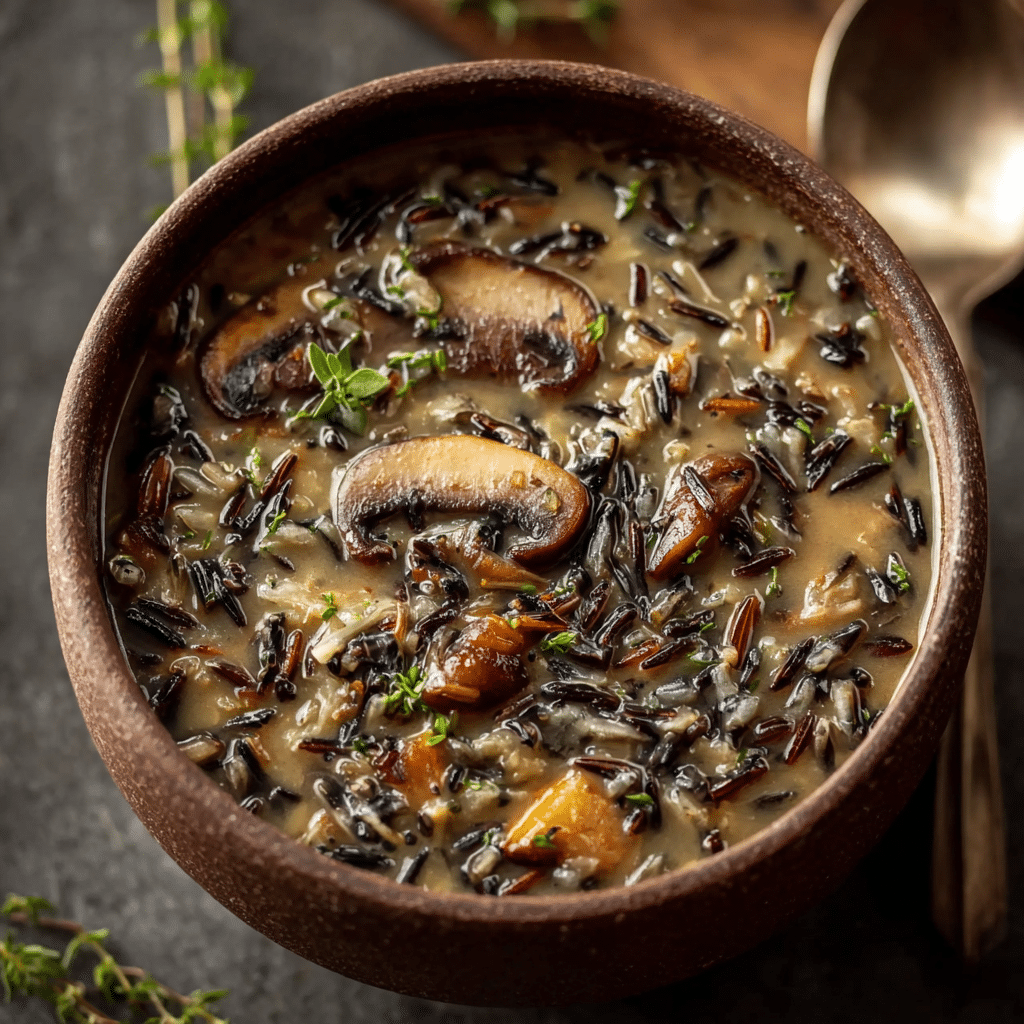
There’s something incredibly comforting about a bowl of soup that feels both rustic and luxurious at the same time. Wild Rice and Mushroom Soup is exactly that kind of dish—a cozy, earthy, deeply flavored soup that tastes like it came straight from a woodland retreat.
The nutty chew of wild rice, the savory depth of sautéed mushrooms, and the gentle sweetness of onions and garlic come together in a silky, aromatic broth. It’s hearty enough to stand alone as a meal, yet elegant enough to serve as a starter for a special dinner.
Unlike quick soups that rely on shortcuts, this recipe celebrates slow, steady simmering. Wild rice needs time to soften and bloom, and that cooking time allows the flavors to develop into something rich and layered. Every spoonful offers contrasting textures—the soft vegetables, the tender mushrooms, and the satisfying bite of wild rice.
Whether you’re curled up on a cold evening, preparing a cozy weekend lunch, or planning a simple yet impressive meal for guests, Wild Rice and Mushroom Soup delivers comfort in a bowl. It’s the kind of recipe you’ll cook once and then crave again and again.
Core Ingredients for Making the Recipe
To prepare this warm and nourishing Wild Rice and Mushroom Soup, you’ll be using simple ingredients that work together to create deep flavor and a satisfying texture. Here’s what you’ll need:
For the Soup
- 2 tablespoons olive oil
- 1 tablespoon butter (optional, for extra richness)
- 1 medium onion, diced
- 2 cloves garlic, minced
- 2 carrots, peeled and diced
- 2 celery stalks, diced
- 8 ounces mushrooms, sliced (such as cremini or button; you can mix varieties)
- 1 cup wild rice, rinsed
- 6 cups vegetable or chicken broth
- 1 cup water (optional, if you prefer a slightly lighter broth)
- 1 teaspoon dried thyme (or 1 tablespoon fresh thyme leaves)
- 1 teaspoon dried rosemary, lightly crushed
- 1 bay leaf
- 1/2 teaspoon smoked paprika (optional, for a subtle smoky note)
- 1–1½ teaspoons salt, or to taste
- 1/2 teaspoon freshly ground black pepper, or to taste
- 1–2 teaspoons soy sauce or tamari (or a splash of Worcestershire sauce) for extra umami
- 1/2 cup heavy cream or half-and-half
- For dairy-free: use 2/3 cup full-fat coconut milk instead
- 2 tablespoons chopped fresh parsley (plus more for garnish)
Optional Garnishes
- Extra chopped fresh parsley, thyme, or chives
- Freshly grated Parmesan or a sprinkle of nutritional yeast (for a cheesy note)
- Crushed red pepper flakes for a gentle heat
- A squeeze of lemon juice for brightness
- Crusty bread, toasted baguette slices, or garlic bread on the side
Each ingredient plays a role: the olive oil and butter create a flavor base, the onion, carrot, and celery form the classic aromatic trio, the mushrooms bring earthiness, and the wild rice adds body and character. The herbs and soy sauce deepen the flavor, while the cream makes everything feel lush and cozy.
Step-by-Step

This soup comes together in a few simple stages: building flavor with aromatics, toasting the wild rice, simmering until tender, and finally finishing with cream and herbs.
1. Prepare Your Ingredients
Before you begin cooking, take a few minutes to prep everything:
- Dice the onion, carrots, and celery.
- Mince the garlic.
- Slice the mushrooms.
- Rinse the wild rice under cold water until the water runs clearer.
Having everything ready makes the cooking process smoother and more enjoyable.
2. Sauté the Aromatics
In a large heavy-bottomed pot or Dutch oven, heat the olive oil over medium heat. If you’re using butter, add it now and let it melt gently.
Add the diced onion, carrots, and celery to the pot. Cook, stirring occasionally, for about 5–7 minutes, until the vegetables begin to soften and the onion turns translucent. You’re not trying to brown them heavily here; instead, you want them sweet and tender, forming a flavorful base for the soup.
Stir in the minced garlic and cook for another 30–60 seconds, just until fragrant. Be careful not to let the garlic burn, as that can make it taste bitter.
3. Brown the Mushrooms
Add the sliced mushrooms to the pot. At first, they will release moisture and look wet. Keep cooking, stirring occasionally, for about 7–10 minutes, until most of the liquid has evaporated and the mushrooms begin to brown.
This step is important: browning the mushrooms intensifies their flavor and adds a rich, savory depth to the soup. If the pot looks too dry at any point, you can drizzle in a little extra olive oil.
4. Toast the Wild Rice
Stir the rinsed wild rice into the pot, coating it with the oil and vegetable mixture. Let it toast for 1–2 minutes, stirring frequently. This gentle toasting step wakes up the rice’s nutty aroma and helps build even more flavor.
5. Add Broth, Herbs, and Seasoning
Pour in the broth (and the extra cup of water, if using). Add the dried thyme, dried rosemary, bay leaf, smoked paprika (if using), salt, and black pepper.
Add the soy sauce or tamari as well. This small splash brings a deep savory note that makes the broth taste more complex and “slow-cooked,” even though you aren’t using bones or long reductions.
Stir everything together, scraping the bottom of the pot to release any browned bits—that’s pure flavor.
6. Simmer Until the Wild Rice Is Tender
Bring the soup just to a gentle boil over medium-high heat, then immediately reduce the heat to low or medium-low so that the liquid simmers softly.
Cover the pot partially (leaving the lid slightly ajar) and let the soup simmer for about 45–55 minutes, stirring occasionally.
Wild rice takes longer to cook than white or brown rice. You’ll know it’s ready when:
- The grains have split open and curled slightly.
- They’re tender but still pleasantly chewy in the center.
If the liquid level gets lower than you like while the rice is cooking, you can add a bit more broth or water, then adjust the seasoning later.
7. Finish with Cream and Fresh Herbs
Once the wild rice is cooked to your liking, remove the bay leaf. Taste the soup and adjust the salt and pepper if needed.
Reduce the heat to low and stir in the heavy cream (or coconut milk, for a dairy-free version) along with the chopped fresh parsley. Let the soup warm gently for 3–5 minutes, but avoid boiling it after adding the cream. Boiling can cause dairy to split and change the texture.
At this stage, you can also adjust the thickness:
- If you like a thicker, creamier soup, let it simmer a little longer uncovered, or mash a few spoonfuls of cooked vegetables and rice against the side of the pot to naturally thicken the broth.
- If you prefer a lighter, brothier soup, stir in a bit more broth or hot water and re-adjust the seasoning.
8. Serve and Enjoy
Your Wild Rice and Mushroom Soup is now ready to serve. Ladle it into bowls, garnish with extra herbs, a twist of black pepper, and any optional toppings you like. Serve hot with crusty bread or a side salad for a simple, satisfying meal.
Flavor Variations and Creative Twists
One of the most appealing things about this Wild Rice and Mushroom Soup is how flexible it is. You can easily adapt it to fit different tastes, seasons, and dietary styles. Here are some ideas to make the recipe your own:
1. Make It Extra Creamy
If you love ultra-creamy soups, you can:
- Increase the heavy cream to 3/4 cup or even 1 cup.
- Stir in a few tablespoons of cream cheese or mascarpone at the end for a velvety finish.
- For a dairy-free version, use more coconut milk or a rich, unsweetened cashew cream.
2. Add More Vegetables
Boost the nutrition and color by adding:
- Spinach or kale: Add a few handfuls of chopped greens right at the end of cooking. Let them wilt for 2–3 minutes before serving.
- Peas: Stir in frozen peas in the last 5 minutes of cooking for a touch of sweetness and bright green color.
- Parsnips or turnips: Dice them and sauté with the carrot and celery for a slightly sweet, earthy undertone.
3. Protein-Packed Version
To make the soup even more filling, you can add protein:
- Shredded chicken: Stir in cooked shredded chicken during the last 10–15 minutes of simmering.
- White beans or chickpeas: Add a drained can during the last 10 minutes. They make the soup heartier and add fiber.
- Sausage: Brown some sliced or crumbled sausage at the beginning, remove it, and then proceed with the vegetables in the same pot. Add the sausage back toward the end.
4. Herb and Flavor Boosts
Fancy a different flavor profile? Try these variations:
- Lemony Herb Version: Add the zest of half a lemon and a squeeze of juice at the end, plus extra fresh parsley and thyme. The citrus brightens the richness of the soup.
- Smoky Forest Flavor: Use smoked paprika, a dash of liquid smoke, or some smoked salt. Add a few sliced shiitake mushrooms for an even stronger umami punch.
- Miso Twist: For a subtle depth, stir in 1–2 teaspoons of white miso paste at the end of cooking, after removing from direct heat. It must be added gently so you don’t boil it; this keeps its delicate flavor.
5. Grain Substitutions
If you enjoy the recipe but want to change up the grain:
- Use a wild rice blend (wild rice mixed with long grain brown or white rice). Just be aware that cooking times may be slightly shorter depending on the blend.
- Try farro or barley for a different chewy texture and a rustic feel. Cooking times will differ, so check the package instructions and adjust.
How to Serve
Wild Rice and Mushroom Soup is very flexible when it comes to serving. It can be the star of the table or a comforting supporting dish.
- As a main course: Serve generous bowls of soup with a side of crusty bread, garlic toast, or warm rolls. Add a simple green salad tossed with a light vinaigrette for a complete meal.
- As a starter: Ladle smaller portions into bowls or mugs if you’re serving a multi-course dinner. The soup’s earthy flavor pairs beautifully with roasted chicken, grilled fish, or a hearty vegetarian main.
- For lunch: Pack it in a thermos or heat-and-serve container. The wild rice and mushrooms make it satisfying enough to keep you full through the afternoon.
- For cozy gatherings: Serve the soup in small cups or jars at a winter party or holiday gathering. Garnish each portion with herbs and a sprinkle of Parmesan or nutritional yeast for a beautiful touch.
This soup tastes wonderful fresh off the stove, but it also develops even more flavor after resting, making it ideal for meal prep or next-day lunches.
Tips & Variations
A few practical tips will help you get the best results every time you make this recipe:
Choose Good Mushrooms
Cremini and button mushrooms are easy to find and work perfectly. For a more intense flavor, you can:
- Mix in some shiitake mushrooms.
- Use a handful of reconstituted dried mushrooms (like porcini). Just strain and add their soaking liquid to the broth for extra flavor.
Don’t Rush the Browning
The step where you cook the mushrooms until they brown is crucial. If you stop when they’re still pale and watery, you’ll miss out on a lot of flavor. Allow enough time for the moisture to evaporate and the edges to deepen in color.
Be Patient with Wild Rice
Wild rice takes longer to cook than other rice varieties—often 45–55 minutes. Start checking for doneness at around 40 minutes, but don’t be surprised if it needs the full time. You’re aiming for grains that have split open yet still feel pleasantly chewy, not hard in the center.
Adjust the Consistency
Soups are very forgiving. If yours feels too thick after the rice is cooked, simply stir in more hot broth or water a little at a time until you reach your preferred consistency. If it’s too thin, let it simmer uncovered for a few extra minutes to reduce and concentrate.
Make It Ahead
This soup is an excellent make-ahead recipe:
- Cook it fully, let it cool, and refrigerate it overnight. The flavors will deepen, and the soup will thicken slightly as the rice absorbs more liquid.
- When reheating, add a splash of broth or water and warm gently over low to medium heat. Add a little extra cream or coconut milk if you want to restore its silky texture.
Season at the End
Because the soup simmers for a while and reduces a bit, it’s wise to go light on the salt initially. Taste and adjust the salt and pepper toward the end of cooking, especially after adding cream, as that can mellow the flavor.
Final Thoughts
Wild Rice and Mushroom Soup is one of those recipes that feels timeless. It’s simple yet sophisticated, hearty but not heavy, and deeply flavorful without being complicated.
With just a handful of wholesome ingredients—onions, garlic, carrots, celery, mushrooms, wild rice, broth, and herbs—you create something that feels like it’s been simmering in a cozy kitchen all afternoon. Every bite offers contrast: the earthy chew of wild rice, the tender vegetables, the silky broth, and the creamy finish.
It’s the kind of soup you turn to when you need warmth on a cold day, when you’re feeding friends who love good homemade food, or when you want a comforting meal that still feels nourishing and balanced.
Once you make it, you’ll find yourself coming back to this recipe whenever you’re in the mood for a bowl of calm, cozy, homemade comfort.
FAQ
Can I use a wild rice blend instead of 100% wild rice?
Yes, you can use a wild rice blend. Just keep in mind that many blends contain long grain white or brown rice, which cook faster than pure wild rice. Start checking the rice for doneness earlier—around 30–35 minutes—and adjust the cooking time as needed. The texture will be slightly different, but still delicious.
Can I make this soup dairy-free or vegan?
Absolutely. To make the soup dairy-free:
- Replace the butter with more olive oil.
- Use full-fat coconut milk or a rich, unsweetened plant-based cream instead of heavy cream.
To make it fully vegan:
- Use vegetable broth instead of chicken broth.
- Check that your soy sauce or tamari is vegan.
The result will still be rich, comforting, and full of flavor.
Can I substitute another grain for wild rice?
Yes, though the character of the soup will change. You can use:
- Brown rice, which will cook faster (usually 30–40 minutes).
- Farro or barley, which add a pleasantly chewy texture.
Adjust cooking times according to the grain you choose and keep an eye on the liquid level.
How do I store and reheat leftovers?
Let the soup cool to room temperature, then transfer it to an airtight container.
- Refrigerator: Store in the fridge for up to 3–4 days.
- Freezer: You can freeze the soup for up to 2–3 months.
When reheating, do it gently over low to medium heat on the stove. Add a splash of broth or water if it has thickened too much. If it looks a bit dull after freezing and reheating, a fresh sprinkle of herbs and a small splash of cream or coconut milk can revive the flavor and texture.
Can I freeze Wild Rice and Mushroom Soup?
Yes, this soup generally freezes well, especially if you use vegetable broth and skip very high amounts of dairy. If you plan to freeze it:
- You can leave out the cream initially, freeze the soup, and then stir in the cream after thawing and reheating for the best texture.
- Cool the soup completely before transferring it to freezer-safe containers, leaving some space at the top for expansion.
Thaw overnight in the refrigerator and reheat gently.
Can I make this soup in a slow cooker or Instant Pot?
Yes, with small adjustments:
- Slow cooker:
- Sauté the onion, carrot, celery, garlic, and mushrooms in a pan on the stove first for best flavor.
- Transfer to the slow cooker, add the wild rice, broth, herbs, and seasonings.
- Cook on Low for 6–7 hours or High for about 3–4 hours, until the rice is tender.
- Stir in the cream and fresh parsley at the end, just before serving.
- Instant Pot:
- Use the Sauté function to cook the aromatics and brown the mushrooms.
- Add wild rice, broth, herbs, and seasonings.
- Seal and cook on High Pressure for about 30–35 minutes, then allow a natural release for 10–15 minutes.
- Stir in cream and fresh parsley after opening, using the Sauté function on Low if needed to warm everything through (but don’t boil after adding cream).
With a bit of patience and a pot on the stove (or a helpful slow cooker/Instant Pot), you can enjoy a steaming bowl of Wild Rice and Mushroom Soup that feels like a hug from the inside out—rich, earthy, and deeply satisfying.Réflexion en cours
ChatGPT peut faire des erreurs. Envisagez de vérifier les informations importante