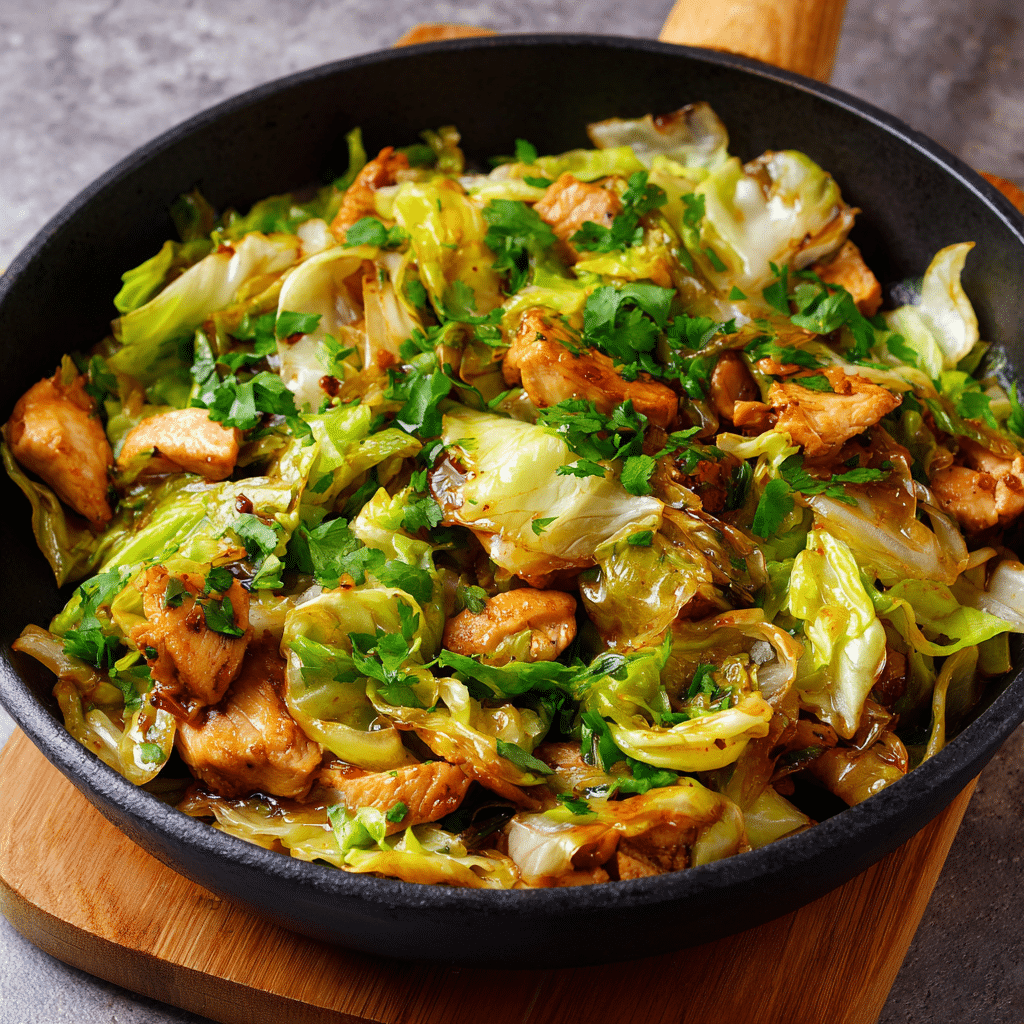
Sometimes the best dinners are the ones that come together in one pan with simple ingredients—and still taste like you ordered from your favorite takeout place. Chinese Chicken Cabbage Stir-Fry is exactly that kind of recipe: quick, colorful, full of flavor, and surprisingly light.
This dish brings together tender strips of chicken, crisp-tender cabbage, sweet bell pepper, and aromatics like garlic and onion, all coated in a savory stir-fry sauce. It’s the kind of meal that feels satisfying without being heavy, perfect for busy weeknights when you want something comforting but don’t want to spend hours in the kitchen.
What makes this stir-fry special is the balance of textures and flavors. The chicken is juicy, the cabbage adds a pleasant crunch, and the sauce wraps everything in a harmonious mix of salty, slightly sweet, garlicky, and gently spicy notes. It’s a complete meal when served over rice or noodles, but it’s also delicious on its own if you’re aiming for a lighter, low-carb option.
Whether you’re new to stir-frying or already love making Asian-inspired dishes at home, this Chinese Chicken Cabbage Stir-Fry will quickly become one of those “make again” recipes. It uses everyday ingredients, cooks in under 30 minutes once everything is prepped, and is easy to adjust to your taste.
Core Ingredients for Making the Recipe
To prepare this flavorful Chinese Chicken Cabbage Stir-Fry, you’ll start with simple, accessible ingredients. You already have the base: chicken, cabbage, bell pepper, onion, and garlic. From there, a few pantry staples transform everything into a restaurant-style dish.
For the Stir-Fry
- 1 pound boneless, skinless chicken breasts, sliced into thin strips
- 4 cups green cabbage, shredded (about ½ small head of cabbage)
- 1 bell pepper, sliced into thin strips (any color – red, yellow, or orange add sweetness)
- 1 medium onion, thinly sliced
- 3 cloves garlic, minced
- 1–2 teaspoons fresh ginger, grated or finely minced (optional but highly recommended)
- 2–3 tablespoons vegetable oil (such as canola, sunflower, or peanut oil), divided
- 2 green onions (scallions), sliced (for garnish, optional)
- 1 teaspoon sesame seeds (optional, for garnish)
For the Chicken Marinade
Marinating the chicken briefly helps it stay tender and flavorful.
- 1 tablespoon soy sauce
- 1 teaspoon cornstarch
- 1 teaspoon vegetable oil
- ½ teaspoon sugar (optional, for a hint of sweetness)
- A pinch of black pepper
For the Stir-Fry Sauce
This is the heart of the dish—the sauce that coats every bite.
- 3 tablespoons soy sauce
- 1 tablespoon oyster sauce (adds depth and umami; can substitute with more soy sauce plus a pinch of sugar if needed)
- 1 tablespoon rice vinegar (or apple cider vinegar in a pinch)
- 1–2 teaspoons hoisin sauce (optional, adds a subtle sweetness and richness)
- 1 teaspoon sesame oil
- 1–2 teaspoons cornstarch (for thickening the sauce)
- ¼–½ cup water or low-sodium chicken broth, to adjust the consistency
- ½–1 teaspoon chili flakes or chili garlic sauce (optional, for heat)
- 1–2 teaspoons sugar or honey (to balance saltiness; adjust to taste)
To Serve
- Steamed white rice, jasmine rice, brown rice, or rice noodles
- Extra chili sauce, soy sauce, or sesame seeds (optional)
With these ingredients, you’ll have everything you need for a complete, satisfying stir-fry that tastes fresh, vibrant, and comforting.
Step-by-Step

This dish moves quickly once you start cooking, so it’s helpful to have everything sliced, measured, and ready. Stir-frying is all about high heat and fast cooking, which keeps the vegetables crisp and the chicken tender.
1. Prepare the Chicken
- Place the sliced chicken breasts into a medium bowl.
- Add the soy sauce, cornstarch, vegetable oil, sugar (if using), and a pinch of black pepper.
- Mix well until the chicken pieces are evenly coated. The cornstarch helps the chicken stay moist and gives it a silky texture once cooked.
- Set the chicken aside to marinate for 10–15 minutes while you prepare the vegetables and sauce.
2. Prep the Vegetables
- Cabbage: Remove any wilted outer leaves from the cabbage. Cut it into quarters, remove the core, and slice into thin shreds. You’ll need about 4 cups.
- Bell Pepper: Slice the bell pepper into thin strips.
- Onion: Peel and slice the onion into thin half-moons.
- Garlic & Ginger: Mince the garlic and ginger finely so they cook quickly and release their aroma.
- Green Onions (if using): Slice them on the diagonal and reserve for garnish.
Having your vegetables ready before you heat the pan makes the stir-fry process smooth and stress-free.
3. Make the Stir-Fry Sauce
- In a small bowl or measuring cup, add soy sauce, oyster sauce, rice vinegar, hoisin sauce (if using), sesame oil, cornstarch, water or broth, chili flakes or chili garlic sauce (if using), and sugar or honey.
- Whisk well until the cornstarch is fully dissolved and everything is combined into a smooth sauce.
- Taste the sauce before cooking. If it’s too salty, add a little more water. If you want it sweeter, add a bit more sugar or honey.
This sauce will thicken slightly when it hits the hot pan, coating the chicken and vegetables.
4. Stir-Fry the Chicken
- Heat a large wok or deep skillet over medium-high to high heat.
- Add 1–1½ tablespoons of vegetable oil and swirl to coat the surface.
- When the oil is hot and shimmering (but not smoking), add the marinated chicken in a single layer.
- Let it cook without stirring for 1–2 minutes to get a light sear, then stir-fry for another 3–4 minutes, until the chicken is mostly cooked through and lightly golden in spots.
- Transfer the chicken to a plate and set aside. It will finish cooking when you add it back later.
Removing the chicken from the pan prevents it from overcooking and keeps it tender.
5. Stir-Fry the Vegetables
- In the same pan, if it looks dry, add another 1 tablespoon of oil.
- Add the sliced onion and bell pepper. Stir-fry for 2–3 minutes until they start to soften but still have some crunch.
- Add the minced garlic and ginger. Stir frequently for 30–60 seconds, just until fragrant. Be careful not to let them burn.
- Add the shredded cabbage and a small splash of water (1–2 tablespoons) to help create steam.
- Stir-fry the cabbage for 3–4 minutes, until it softens slightly but remains crisp-tender. You want it to be cooked but not soggy.
At this stage, your kitchen should smell amazing—garlic, ginger, and vegetables blending into a savory, aromatic base.
6. Combine Everything and Add the Sauce
- Return the cooked chicken and any accumulated juices to the pan with the vegetables.
- Give the sauce mixture a quick stir (cornstarch tends to settle at the bottom).
- Pour the sauce over the chicken and vegetables.
- Toss everything together to coat evenly. The heat will thicken the sauce within 1–2 minutes, turning it glossy and clinging to the ingredients.
- Continue to stir-fry until the chicken is cooked through and the cabbage and peppers are at your desired level of tenderness. Taste and adjust seasoning with a bit more soy sauce, sugar, or chili if needed.
7. Finish and Serve
- Turn off the heat and drizzle a small amount of sesame oil on top if you want extra aroma.
- Garnish with sliced green onions and sesame seeds.
- Serve immediately over hot steamed rice, rice noodles, or enjoy it just as it is for a lower-carb meal.
You’ve just created a fresh, colorful, and comforting dish that feels both homemade and “takeout special” at the same time.
Flavor Variations and Creative Twists
One of the best things about stir-fries is how easy they are to customize. This Chinese Chicken Cabbage Stir-Fry is a wonderful base recipe that you can adapt to your taste, your pantry, and even your diet.
1. Play with Pepper and Heat
- Spicier version: Add more chili flakes, chili garlic sauce, or a splash of sriracha to the sauce.
- Milder version: Skip the chili entirely and rely on garlic, ginger, and soy for flavor.
2. Change Up the Vegetables
- Carrots: Add thinly sliced carrots or matchsticks for extra color and sweetness.
- Snow peas or sugar snap peas: Toss them in during the last 1–2 minutes for a crisp, fresh bite.
- Broccoli: Small florets can be added and stir-fried with the cabbage; you may need a tiny bit more water to help them steam.
- Mushrooms: Add sliced mushrooms for an earthy flavor and meaty texture.
You can follow the same basic method while swapping or adding vegetables depending on what you have in the fridge.
3. Use Different Proteins
- Chicken thighs: Substitute chicken breasts with boneless, skinless thighs for a juicier result.
- Beef: Thinly sliced flank steak or sirloin works beautifully. Adjust cooking time slightly and marinate as you would the chicken.
- Pork: Use thin strips of pork loin or tenderloin for a different flavor.
- Tofu: For a meatless version, use firm tofu. Press it to remove excess moisture, cube it, and pan-fry until golden before adding to the stir-fry.
4. Sauce Variations
- Sweeter glaze: Add more honey or brown sugar and a bit more cornstarch for a thicker, glossy sauce.
- Tangier flavor: Increase the rice vinegar for a sharper, more tangy stir-fry.
- Garlic lovers: Double the garlic if you enjoy a bold, garlicky dish.
5. Noodle Version
Instead of serving over rice, you can toss the finished stir-fry with cooked noodles:
- Use rice noodles, lo mein, udon, or even spaghetti.
- Add a splash more soy sauce and water/broth to make sure the sauce coats the noodles well.
This turns your stir-fry into a hearty noodle bowl that’s perfect for lunch or dinner.
How to Serve
Chinese Chicken Cabbage Stir-Fry is incredibly flexible in how you can serve it. You can dress it up for a more complete meal or keep it simple and light.
With Steamed Rice
The classic way to serve this dish is over a bowl of hot steamed white rice, jasmine rice, or basmati rice. The rice absorbs the flavorful sauce and makes each bite satisfying.
- Scoop some rice into a bowl or plate.
- Top with a generous portion of the chicken and cabbage mixture.
- Garnish with green onions or sesame seeds for a restaurant-style presentation.
With Brown Rice or Quinoa
If you prefer a higher-fiber option, brown rice or quinoa pair nicely with the stir-fry and make the meal more filling and wholesome.
With Noodles
Turn the dish into a complete noodle stir-fry:
- Toss the finished chicken and vegetables with cooked noodles.
- Add a bit more sauce or broth if needed, so everything stays moist and flavorful.
As a Light, Low-Carb Dish
You can also enjoy the stir-fry on its own, without rice or noodles:
- Serve it in a shallow bowl topped with extra cabbage or greens.
- Pair it with a simple cucumber salad or steamed bok choy on the side.
This is a great option if you’re aiming for a lighter or low-carb dinner that still feels satisfying.
Tips & Helpful Tricks
To make your Chinese Chicken Cabbage Stir-Fry the best it can be, a few simple techniques make a big difference.
1. Slice Everything Thinly
Thin slices of chicken and vegetables cook quickly and evenly. This is key in stir-frying:
- Cut the chicken into thin strips against the grain.
- Slice the onion, cabbage, and bell pepper into thin pieces so they soften quickly but stay crisp.
2. Don’t Overcrowd the Pan
If your pan is too small, the ingredients will steam instead of sear. If necessary, cook the chicken in two batches to maintain high heat and good color.
3. Use High Heat
Stir-fries benefit from relatively high heat:
- Preheat the pan well before adding oil and ingredients.
- Keep things moving in the pan to prevent burning and ensure even cooking.
4. Adjust Sauce Thickness
The cornstarch in your sauce makes it thicken as it cooks.
- If the sauce becomes too thick, add a splash of water or broth.
- If it’s too thin, let it simmer a minute longer, or dissolve a little extra cornstarch in cold water and stir it in.
5. Taste and Adjust at the End
Before serving, always taste the stir-fry:
- Add more soy sauce for saltiness.
- Add a pinch of sugar or drizzle of honey for balance.
- Add more chili if you want additional heat.
Small adjustments turn a good stir-fry into a great one.
Freezing and Storage
Chinese Chicken Cabbage Stir-Fry is at its best fresh from the pan, but you can absolutely store leftovers or even prepare portions ahead of time.
Refrigerating Leftovers
- Allow the stir-fry to cool to room temperature.
- Transfer to an airtight container.
- Store in the refrigerator for up to 3–4 days.
- Reheat gently in a pan over medium heat or in the microwave. You can add a splash of water or broth to loosen the sauce.
Freezing
While some vegetables like cabbage can soften slightly after freezing, this dish can still be frozen if you don’t mind a softer texture.
- Cool the stir-fry completely.
- Place portions in freezer-safe containers or bags.
- Freeze for up to 2 months.
- Thaw in the refrigerator overnight, then reheat in a skillet.
Freezing is especially useful if you like to meal prep or want ready-to-go lunches and dinners for busy days.
Special Equipment
You don’t need anything complicated to make this recipe, but a few tools can make the process easier and more enjoyable.
- Wok or large skillet: A wok is ideal for high-heat cooking and tossing ingredients, but a wide, deep skillet works well too.
- Sharp knife: For slicing chicken and vegetables thinly and evenly.
- Cutting board: Preferably a large one with enough space for all your prep.
- Small mixing bowls: For mixing the marinade and stir-fry sauce.
- Tongs or a sturdy spatula: To stir and toss ingredients in the pan.
If you have a gas stove and a carbon steel wok, you can achieve a slightly smoky “wok hei” flavor, but it’s not required for a delicious result.
Frequently Asked Questions
Can I use chicken thighs instead of chicken breasts?
Yes. Boneless, skinless chicken thighs work wonderfully in this recipe. They tend to be more forgiving and stay juicy even if you cook them a bit longer. Just slice them thinly and marinate as you would the chicken breasts.
Can I make this dish vegetarian or vegan?
You can! Replace the chicken with firm tofu or tempeh:
- Press the tofu to remove excess moisture, then cut into cubes or strips.
- Pan-fry the tofu until golden on all sides before adding the vegetables.
- For a vegan sauce, use soy sauce, rice vinegar, and omit oyster sauce or replace it with a vegan “oyster-style” mushroom sauce.
Can I prepare this ahead of time?
You can prep all the components ahead:
- Slice the chicken and mix it with the marinade, then refrigerate for a few hours.
- Slice all vegetables and store them in airtight containers in the fridge.
- Mix the stir-fry sauce and keep it covered in the refrigerator.
When you’re ready to cook, everything is already prepared, and you can have dinner on the table in about 15 minutes.
What can I use instead of oyster sauce?
If you don’t have oyster sauce, you can:
- Use extra soy sauce plus a pinch of sugar.
- Use hoisin sauce for a sweeter, richer flavor.
- Use a vegan mushroom-based “oyster sauce” if you’re avoiding shellfish.
Each substitute will change the taste slightly, but the dish will still be flavorful.
How do I keep the chicken from turning rubbery?
Two key steps help keep chicken tender:
- Thin slices and short cooking time: Don’t overcook the chicken. Stir-fry it just until it’s nearly done, then finish cooking it in the sauce at the end.
- Marinade: The combination of soy sauce and cornstarch in the marinade helps protect the chicken and keep it moist.
Can I reduce the sodium in this recipe?
Yes.
- Use low-sodium soy sauce or dilute regular soy sauce with a bit of water.
- Avoid adding extra salt and be mindful of other salty ingredients like oyster sauce.
- Taste as you go and adjust carefully.
Final Thoughts
Chinese Chicken Cabbage Stir-Fry is the kind of recipe that proves a good meal doesn’t have to be complicated. With a handful of simple ingredients—chicken, cabbage, bell pepper, onion, garlic, and a straightforward sauce—you can create a dish that feels vibrant, nourishing, and full of flavor.
This stir-fry is perfect for busy weeknights, but it’s also special enough to serve guests, especially when paired with steamed rice, noodles, or a few simple side dishes. It’s flexible, forgiving, and easy to adapt to whatever you have on hand.
Most importantly, it’s a dish that invites you to cook with confidence. Once you try it, you’ll see how quickly a homemade stir-fry can come together, and you might find yourself skipping takeout more often and enjoying your own version instead.
Whether you’re feeding your family, meal-prepping for the week, or just cooking for yourself, Chinese Chicken Cabbage Stir-Fry delivers warmth, flavor, and comfort in every bite—one sizzling pan at a time.