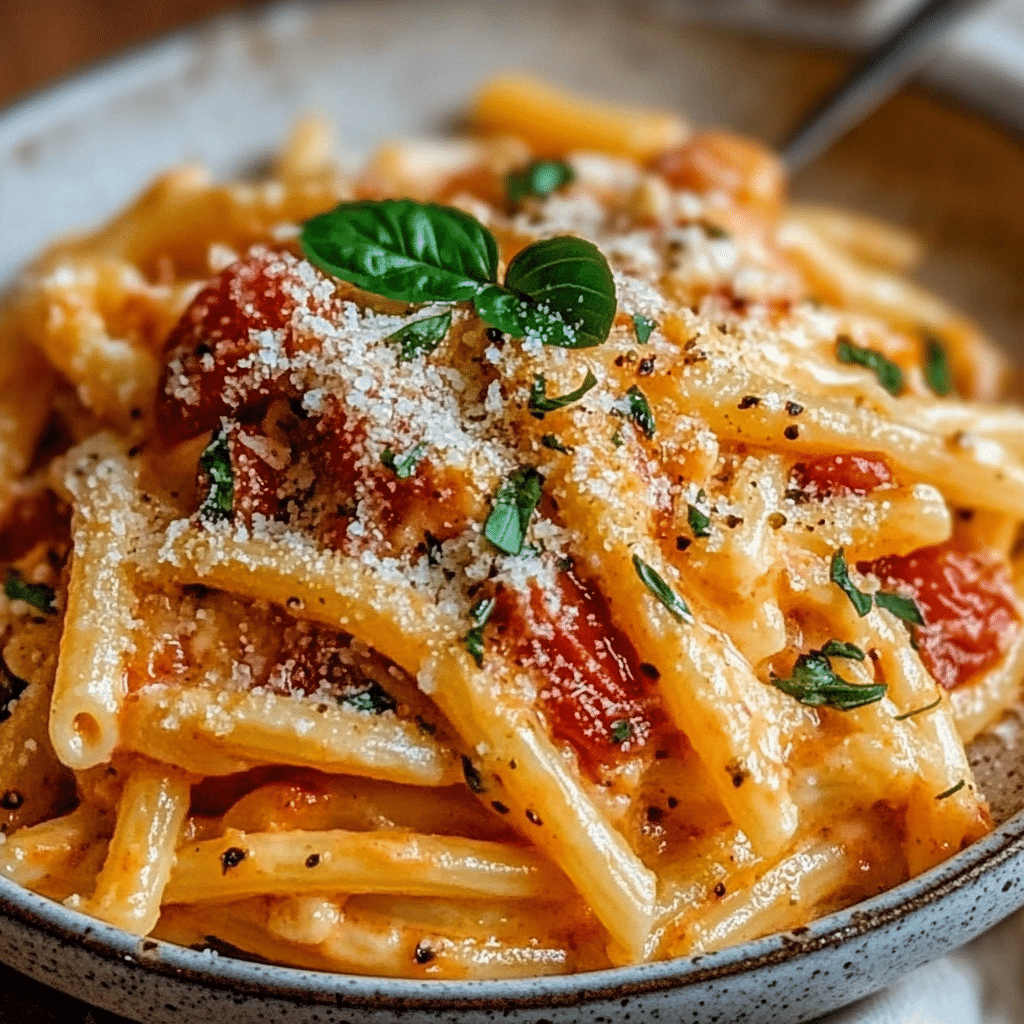
There are some dinners that feel like a warm hug at the end of a long day—simple to make, deeply satisfying, and full of cozy flavor. Creamy Tomato Ricotta Pasta is exactly that kind of dish. It combines the brightness of tomatoes with the luxurious creaminess of ricotta cheese, all wrapped around tender bites of pasta. Every forkful gives you a mix of tangy tomato, silky sauce, and gentle richness, finished with a sprinkle of Parmesan and fresh herbs.
What makes this pasta special is the way it balances comfort and freshness. Instead of a heavy cream-only sauce, ricotta brings a light, cloud-like creaminess that doesn’t weigh you down. Tomato sauce keeps things bright and vibrant, while garlic, onions, and herbs add that classic Italian-style aroma that fills your kitchen as it simmers on the stove.
This recipe is also wonderfully flexible. You can keep it simple for a quick weeknight dinner, or dress it up with extras like crispy pancetta, roasted vegetables, or grilled chicken for a more elaborate meal. It’s the kind of dish that feels restaurant-worthy but comes together with everyday ingredients you probably already have in your pantry and fridge.
Creamy Tomato Ricotta Pasta is perfect for family dinners, date nights at home, or as an impressive yet easy main course when you’re hosting friends. With just a pot of pasta and one pan for the sauce, you can create a meal that tastes like you’ve been cooking for hours—even though it’s on the table in under 40 minutes.
Core Ingredients for Making the Recipe
To prepare this comforting Creamy Tomato Ricotta Pasta, you only need a few simple, accessible ingredients. Each one plays a small but important role in building layers of flavor and creaminess.
For the Pasta
- 12 oz (340 g) short pasta – such as rigatoni, penne, ziti, or fusilli
- Salt – for generously salting the pasta water
For the Tomato-Ricotta Sauce
- 2 tablespoons olive oil – for sautéing and richness
- 2 tablespoons unsalted butter (optional but recommended) – adds depth and a velvety texture
- 1 small yellow onion, finely diced – for sweetness and flavor
- 3–4 garlic cloves, minced – the aromatic backbone of the sauce
- 1/2 teaspoon red pepper flakes (optional) – for a gentle heat
- 1 can (14–15 oz / 400 g) crushed tomatoes or tomato passata – the base of your sauce
- 2 tablespoons tomato paste – intensifies the tomato flavor and adds richness
- 1 teaspoon sugar (optional, to taste) – balances acidity if your tomatoes are very sharp
- 1 teaspoon dried oregano – for classic Italian flavor
- 1 teaspoon dried basil or Italian seasoning – adds herbiness and aroma
- Salt and freshly ground black pepper – to season every layer
- 1/2–3/4 cup (120–180 ml) reserved pasta cooking water – helps create a silky sauce
For the Creamy Ricotta Mixture
- 1 cup (240 g) whole-milk ricotta cheese – the star of the dish, giving a gentle, creamy body
- 1/2 cup (120 ml) heavy cream or whole milk – thins the ricotta into a smooth sauce
- 1/2 cup (50 g) freshly grated Parmesan cheese – salty, nutty flavor and extra creaminess
- Zest of 1/2 lemon (optional) – a bright note that lifts the richness
- A small handful of fresh basil leaves, finely chopped – brings freshness and color
For Serving
- Extra grated Parmesan cheese
- Fresh basil or flat-leaf parsley leaves
- Freshly ground black pepper
Step-by-Step

This dish looks and tastes luxurious, but the process is straightforward. You’ll cook the pasta, build a simple tomato sauce, whisk together a creamy ricotta mixture, and then bring everything together into one luscious, glossy pan of pasta.
1. Cook the Pasta
- Fill a large pot with water and bring it to a boil.
- Generously salt the water—it should taste lightly like the sea. This is your first chance to season the pasta itself.
- Add the pasta and cook according to package instructions until al dente, usually 1–2 minutes less than the full cooking time.
- Before draining, scoop out 1 to 1 1/2 cups (240–360 ml) of the starchy pasta water and set it aside.
- Drain the pasta and leave it in the pot or in a colander while you finish the sauce. You don’t need to rinse it; a little starch on the surface helps the sauce cling.
2. Build the Tomato Base
- In a large, deep skillet or sauté pan, heat the olive oil over medium heat.
- Add the butter if using and let it melt, swirling the pan gently.
- Add the diced onion and cook for 5–7 minutes, stirring occasionally, until soft and translucent. The edges may just begin to turn golden—this sweetness will deepen the flavor of your sauce.
- Stir in the minced garlic and red pepper flakes (if using). Cook for about 30 seconds to 1 minute, just until the garlic is fragrant. Be careful not to let it brown, as that can turn it bitter.
3. Add Tomatoes and Seasonings
- Stir in the tomato paste and cook it in the pan for 1–2 minutes, pressing it into the onions and garlic. This step “toasts” the paste and brings out its full flavor.
- Pour in the crushed tomatoes or passata, scraping up any browned bits from the bottom of the pan.
- Add the dried oregano and dried basil (or Italian seasoning).
- Taste the sauce. If it’s very acidic, add 1 teaspoon of sugar, then season with salt and black pepper.
- Bring the sauce to a gentle simmer. Reduce the heat to low and let it bubble softly for 10–15 minutes, stirring occasionally. The sauce should thicken slightly and become rich and aromatic.
4. Prepare the Ricotta Mixture
While the tomato sauce is simmering, prepare the creamy component that will transform this into a velvety pasta dish.
- In a medium bowl, add the ricotta cheese, heavy cream (or milk), and grated Parmesan.
- Mix with a whisk or fork until completely smooth and creamy. The mixture should be thick but pourable; if it feels too stiff, add a tablespoon or two more of cream or milk.
- Add the lemon zest (if using) and a pinch of salt and pepper.
- Stir in the chopped fresh basil. This mixture should taste rich, slightly salty from the Parmesan, and pleasantly fresh from the herbs.
5. Combine the Sauces
- After the tomato sauce has simmered and thickened a bit, reduce the heat to low.
- Stir in about 1/2 cup (120 ml) of the reserved pasta water to loosen the sauce—you want it to be silky and slightly loose at this stage.
- Remove the pan from the heat for a moment. This step is important because adding ricotta to very high heat can cause it to separate or become grainy.
- Gently stir the ricotta mixture into the warm tomato sauce. Use a spatula or wooden spoon and take your time. You’ll see the sauce transform into a soft, blush-pink creaminess.
- If the sauce looks too thick, add more of the reserved pasta water, a splash at a time, until it coats the back of a spoon and drips off in a smooth ribbon.
6. Toss in the Pasta
- Add the cooked pasta directly into the pan with the creamy tomato ricotta sauce.
- Return the pan to low heat and toss everything together, making sure every piece of pasta is coated. Using tongs or two large spoons can help here.
- If the sauce thickens too much as it clings to the pasta, add another splash of pasta water and continue tossing until you reach your desired consistency—velvety, glossy, and clinging to every curve of the pasta.
- Taste and adjust seasoning: add more salt, a bit more black pepper, or a pinch of red pepper flakes if you like a touch of heat.
7. Serve and Garnish
- Once everything is hot and well combined, remove the pan from the heat.
- Plate the pasta in warm bowls.
- Top each serving with extra grated Parmesan, a few fresh basil leaves, and a generous grind of black pepper.
- Serve immediately, while the sauce is ultra-creamy and the pasta is still steaming.
Flavor Variations and Creative Twists
One of the best things about Creamy Tomato Ricotta Pasta is how easy it is to customize. With just a few additions or swaps, you can create new versions that match your mood, the season, or what you already have in your kitchen.
Add Protein
- Grilled or roasted chicken: Slice leftover chicken breasts or thighs and fold them into the pasta at the end for extra protein.
- Crispy pancetta or bacon: Cook small pieces in the pan first until they’re deeply golden and crisp. Remove them, build your sauce in the rendered fat, then sprinkle the pancetta back in before serving.
- Italian sausage: Brown mild or spicy sausage, crumbling it into small pieces. Add the tomato sauce on top and continue the recipe as written for a heartier, bolder pasta.
Boost the Veggies
- Spinach or kale: Stir in a few handfuls of baby spinach or thinly sliced kale during the last minutes of cooking. They’ll wilt into the sauce, adding color and nutrition.
- Roasted vegetables: Roasted cherry tomatoes, zucchini, eggplant, or bell peppers can be folded into the pasta for a Mediterranean twist.
- Mushrooms: Sauté sliced mushrooms with the onions to add earthiness and extra depth.
Play with Cheese
- Part-skim ricotta: For a lighter version, you can use part-skim ricotta, though whole milk will always be creamier.
- Mozzarella: Stir in small cubes of fresh mozzarella at the very end so they melt slightly but still stay stretchy and gooey.
- Pecorino Romano: Swap some of the Parmesan for Pecorino if you like a sharper, saltier kick.
Change the Pasta Shape
- Short shapes like rigatoni, penne, ziti, or cavatappi are perfect because the sauce can tuck into ridges and curves.
- Long pasta such as fettuccine or tagliatelle also works, creating ribbons coated in creamy sauce.
- Whole wheat or legume-based pasta can add fiber and make the dish more filling while still tasting indulgent.
Make It Spicier or Brighter
- For extra heat, add more red pepper flakes or a pinch of chili powder.
- For a brighter flavor, squeeze in a little fresh lemon juice just before serving or top with a sprinkle of lemon zest.
- A drizzle of good-quality olive oil at the end can enhance the aroma and richness.
How to Serve
Creamy Tomato Ricotta Pasta is satisfying on its own, but pairing it with a few simple sides can turn it into a complete, company-worthy meal.
- With a fresh salad: A crisp green salad with mixed leaves, cucumbers, and a light vinaigrette balances the richness of the sauce.
- Alongside garlic bread or crusty baguette: Perfect for mopping up every last bit of sauce on the plate.
- With roasted or steamed vegetables: Broccoli, asparagus, or green beans make excellent partners for this dish.
- As part of a family-style spread: Serve the pasta in a large shallow bowl and place it in the center of the table, surrounded by bowls of extra Parmesan, crushed red pepper flakes, and fresh herbs so everyone can customize their plate.
This pasta also works beautifully for date night, served in shallow bowls with a sprinkle of basil and a glass of chilled white wine or sparkling water with lemon. It feels special, but not fussy.
Tips & Helpful Tricks
A few simple tips can help you get perfect results every time you make this recipe.
- Salt the pasta water well
Pasta absorbs flavor as it cooks. If the water is under-salted, the whole dish can taste flat, even if the sauce is seasoned well. - Don’t skip the pasta water
The starchy water that pasta leaves behind is liquid gold. It helps the sauce cling to the noodles and allows you to adjust the thickness of your sauce without diluting the flavor. - Keep the heat gentle when adding ricotta
High heat can cause ricotta to split or become grainy. Lower the heat or briefly remove the pan from the burner before stirring in the ricotta mixture. Gentle heat keeps the sauce smooth and creamy. - Taste and adjust seasoning at the end
After combining the pasta and sauce, always taste and adjust. Sometimes all a dish needs is a pinch more salt or a grind of pepper to go from “good” to “incredible.” - Use quality tomatoes and cheese
Since tomatoes and Parmesan are big flavor players here, using good-quality crushed tomatoes and freshly grated Parmesan makes a noticeable difference. - Serve immediately for the best texture
The sauce is at its creamiest right after you toss it with the hot pasta. It will thicken as it sits, so bring it to the table while it’s still silky and glossy.
Final Thoughts
Creamy Tomato Ricotta Pasta is everything we love about comfort food: familiar, soothing, full of flavor, and easy to share. The combination of bright tomato sauce and pillowy ricotta creates a balance between lightness and richness that keeps you coming back for another bite.
This is the kind of recipe that quickly becomes a weeknight favorite because it uses basic pantry ingredients and comes together in under an hour. But it’s also special enough for guests, especially when paired with a salad, some crusty bread, and maybe a simple dessert to finish the meal.
It’s flexible, too—you can keep it vegetarian, bulk it up with protein, or pack it with extra vegetables. You can make it mild for kids or spice it up for heat lovers. Each time you prepare it, you can tweak small details to make it feel new, while still enjoying the same cozy, creamy, tomato-y comfort you fell in love with the first time.
Whether you’re cooking for your family, a group of friends, or just treating yourself, Creamy Tomato Ricotta Pasta brings warmth, ease, and satisfaction to the table. It’s proof that with a handful of simple ingredients, you can create a dish that feels like a little bowl of happiness.
FAQ
Can I use low-fat ricotta instead of whole-milk ricotta?
Yes, you can use part-skim or low-fat ricotta, but the sauce will be slightly less rich and creamy. If you go with low-fat ricotta, consider using heavy cream instead of milk to maintain a silky texture.
Can I make this recipe ahead of time?
This pasta is best when served fresh, but you can prepare parts in advance. The tomato sauce can be made a day ahead and kept in the refrigerator. When you’re ready to serve, reheat the sauce gently, cook the pasta, and then mix in the ricotta mixture right before serving.
How do I store leftovers?
Store any leftover pasta in an airtight container in the refrigerator for up to 3 days. The sauce will thicken as it cools, but it’s easy to revive.
How do I reheat Creamy Tomato Ricotta Pasta?
Reheat gently on the stovetop over low heat or in the microwave. Add a splash of milk or water to loosen the sauce, stirring occasionally until warmed through. Be careful not to overheat, as high heat can affect the texture of the cheese.
Can I make this pasta without heavy cream?
Absolutely. You can use whole milk instead of heavy cream for a lighter sauce. The ricotta will still provide plenty of creaminess. For an even lighter option, use a mix of milk and some reserved pasta water to achieve the right consistency.
Can I make this recipe gluten-free?
Yes. Simply use your favorite gluten-free pasta and cook it according to the package directions. The sauce itself is naturally gluten-free, as long as all canned and packaged ingredients are certified gluten-free.
Can I use fresh tomatoes instead of canned?
You can. Use about 4–5 medium ripe tomatoes, peeled and chopped. Cook them down a bit longer with the onions and garlic to let them break down and thicken into a sauce before adding the ricotta mixture.