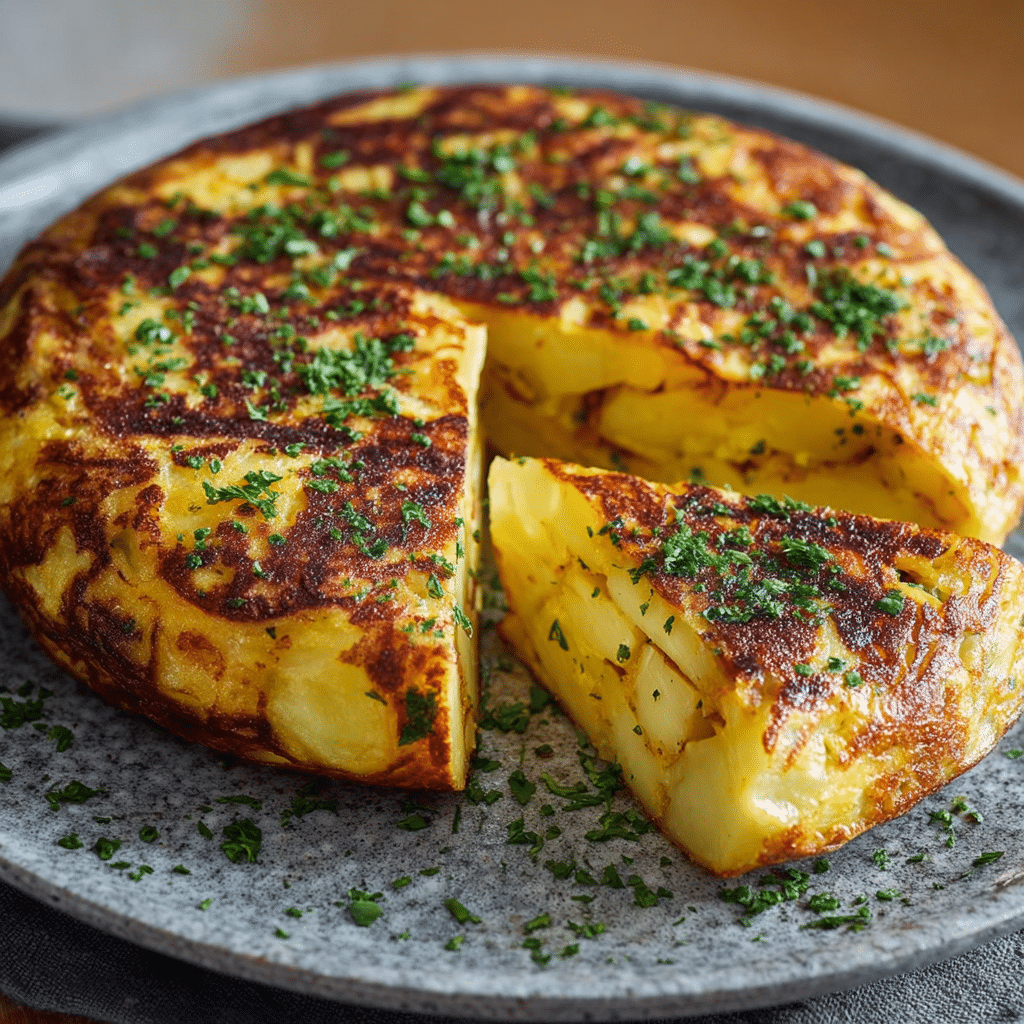
Crispy-edged potatoes • Soft, custardy eggs • Sweet onions • Simple, honest flavors
A Spanish tortilla (also called tortilla de patatas or Spanish omelette) is one of those dishes that proves how magical simple ingredients can be. With just potatoes, onions, eggs, olive oil, and salt, you get a golden, thick omelette that’s soft inside, satisfying, and full of flavor.
This Easy Spanish Tortilla version keeps everything straightforward and beginner-friendly. You don’t need special equipment or advanced skills—just a good pan, a bit of patience, and a gentle hand. The potatoes are tender and lightly crisped, the onions turn sweet, and everything is bound together in fluffy, seasoned eggs.
Spanish tortilla is perfect at any time of day. Serve it warm for a cozy breakfast, at room temperature as a light lunch, or sliced into wedges or cubes for a tapas-style appetizer. It’s delicious hot, warm, or cold, and it packs well for picnics, lunchboxes, or snack trays. Once you learn this base recipe, you’ll find yourself making it again and again.
Core Ingredients for Making the Recipe
To prepare this easy Spanish Tortilla, you’ll use just a few pantry staples. Each ingredient plays an important role in creating a dish that’s both humble and full of character.
Ingredients
- 6 medium potatoes (about 1.3 pounds / ~600 g), peeled
- 1 medium onion, peeled
- 6 eggs
- 2 ounces olive oil (about 60 ml, roughly 4 tablespoons)
- Salt, to taste
That’s it—no complicated ingredients, no fuss. From here, you can keep things classic or add your own twist with herbs, spices, or extra fillings.
Step-by-Step

1. Prepare the Potatoes and Onion
- Peel the potatoes and rinse them under cold water to remove any excess starch from the surface.
- Slice the potatoes into thin rounds or half-moons, about 1/8–1/4 inch (3–5 mm) thick. Try to keep them all roughly the same thickness so they cook evenly.
- Peel the onion and slice it into thin half-moons or small strips.
Even, thin slices of potato and onion help them cook gently and soften without burning, which is key for a good tortilla texture.
2. Start Cooking the Potatoes
- In a medium to large nonstick or well-seasoned skillet (about 9–10 inches / 22–25 cm), add most of the olive oil, reserving just a little for later.
- Heat the oil over medium heat. You want it hot enough to gently sizzle, but not so hot that it smokes.
- Add the sliced potatoes to the pan and sprinkle with a generous pinch of salt.
- Stir to coat the potatoes in oil, then spread them into an even layer.
Cook the potatoes slowly, stirring occasionally, for about 10–15 minutes. The goal is to soften them and lightly fry the edges, not to make them hard and crispy like chips. Adjust the heat as needed so they soften and turn slightly golden without burning.
3. Add the Onion
- When the potatoes are starting to soften but are not yet fully cooked, add the sliced onion to the skillet.
- Stir gently to mix the onion in among the potatoes.
- Continue cooking over medium to medium-low heat for another 10–15 minutes, stirring every few minutes so nothing sticks or browns too deeply.
The onion should soften and become slightly sweet. The potatoes should be tender when pierced with a fork. A bit of light golden color is perfect, but they shouldn’t be deeply browned or crispy all over.
If at any point the pan looks dry, you can drizzle in another small splash of olive oil, even if it’s beyond the 2 ounces listed. The recipe is flexible—just don’t let the potatoes dry out or scorch.
4. Beat the Eggs
While the potatoes and onions are finishing:
- Crack the 6 eggs into a large mixing bowl.
- Add a good pinch of salt.
- Beat the eggs with a fork or whisk until they’re well mixed and slightly frothy.
You want the yolks and whites fully combined so the tortilla sets evenly and has a uniform texture.
5. Combine Potatoes, Onion, and Egg
- When the potatoes and onions are fully cooked and tender, remove the pan from the heat.
- Very carefully, transfer the potato and onion mixture into the bowl with the beaten eggs.
- You can use a slotted spoon to lift them out, letting any excess oil drip back into the pan.
- Gently stir everything together so the potatoes and onions are well coated with egg.
Let this mixture sit for 5–10 minutes. This resting time allows the potatoes to absorb some of the egg, helping create that cohesive, sliceable texture Spanish tortilla is known for.
Taste a tiny bite and adjust the salt if needed before you cook the final tortilla.
6. Prepare the Pan for the Tortilla
- Wipe out the skillet if there are any burnt bits, or simply leave a thin film of the remaining olive oil.
- Add a small drizzle of oil if the pan seems too dry—you want the bottom lightly coated so the tortilla doesn’t stick.
- Heat the pan over medium heat.
7. Cook the Tortilla – First Side
- Pour the egg, potato, and onion mixture back into the hot skillet.
- Use a spatula to gently spread the potatoes so the tortilla is even in thickness and fills the pan.
- Cook over medium-low heat for about 6–10 minutes, depending on your pan and stove.
During this time:
- The edges should start to set and pull away slightly from the sides of the pan.
- The center should still look a bit soft and slightly runny, not completely firm.
Use your spatula to occasionally loosen the edges all around and gently shake the pan. If the tortilla moves slightly as one piece, you’re in good shape.
8. Flip the Tortilla
Flipping is the most “dramatic” part, but it’s easier than it looks if you’re patient.
- Place a large flat plate (larger than the pan’s diameter) over the top of the skillet.
- Carefully hold the plate with one hand and the pan handle with the other (use an oven mitt or towel if the handle is hot).
- In one confident motion, invert the pan so the tortilla lands on the plate, cooked side facing up.
Take a breath—you’ve done the hardest part.
- Return the skillet to the heat and add a tiny bit more olive oil if needed.
- Slide the tortilla back into the pan, uncooked side down, to cook the second side.
Use your spatula to tuck in the edges if needed, helping shape a neat, rounded tortilla.
9. Cook the Tortilla – Second Side
Cook the tortilla over medium-low heat for another 4–7 minutes, depending on how soft or firm you like the center.
- For a softer, slightly creamy center, cook a bit less.
- For a firmer, more fully set tortilla, cook a bit longer on low heat so it sets without burning.
You can gently lift one side with the spatula to check the bottom. It should be a light golden brown.
Once you’re happy with the color and doneness, slide the tortilla onto a plate or wooden board. Let it rest for at least 5–10 minutes before slicing.
Flavor Variations and Creative Twists
The classic Spanish tortilla is beautiful in its simplicity, but you can absolutely personalize it. Here are some ideas to add variety while keeping the soul of the dish intact.
1. Herb-Kissed Tortilla
- Add chopped fresh parsley, chives, or cilantro to the beaten eggs before mixing in the potatoes.
- A small pinch of dried oregano or thyme also works nicely for a Mediterranean touch.
2. Cheesy Tortilla
- Sprinkle a handful of grated cheese (like Manchego, cheddar, or mozzarella) into the egg mixture.
- The cheese melts into the tortilla, making it richer and slightly gooey inside.
3. Veggie-Boosted Tortilla
- Add thin slices of bell pepper, zucchini, or spinach to the onions while they cook.
- Keep the amounts moderate so the tortilla still holds together and the potatoes remain the star.
4. Smoky Paprika Twist
- Add 1/2 teaspoon of smoked paprika to the eggs for a subtle smoky note and a warm golden hue.
- This pairs beautifully with the sweetness of the onions and the earthiness of the potatoes.
5. Spicy Tortilla
- Stir in a pinch of chili flakes, mild chopped chili, or a bit of hot paprika.
- The heat stays gentle but adds a nice kick for spice lovers.
How to Serve
One of the reasons Spanish tortilla is loved around the world is its versatility. You can serve it at almost any meal and in many different ways.
1. As a Main Dish
- Cut the tortilla into pie-shaped wedges and serve warm or at room temperature.
- Pair it with a simple green salad, sliced tomatoes, or a light cucumber salad.
- Add a side of crusty bread or toast for a complete, satisfying meal.
2. As Tapas or Snacks
- Let the tortilla cool completely, then cut it into small squares or cubes.
- Serve each cube on a toothpick for a classic tapas-style presentation.
- Great for parties, buffets, or a casual evening with drinks.
3. In a Sandwich (Bocadillo de Tortilla)
- Slice a wedge of tortilla and tuck it into a crusty baguette or roll.
- Add a drizzle of olive oil, sliced tomato, or a few leaves of lettuce if you like.
- This makes a simple but incredibly satisfying sandwich, perfect for lunch on the go.
4. Warm or Cold
- Spanish tortilla is delicious warm, at room temperature, or cold from the fridge.
- This flexibility makes it ideal for picnics, meal prep, and leftovers.
Tips & Variations
A few small details make a big difference in how your tortilla turns out. Here are some practical tips to help you get it just right.
Choose the Right Potatoes
- Waxy or all-purpose potatoes (like Yukon Gold) hold their shape better and stay creamy.
- Very starchy potatoes can break apart more easily but still work if sliced gently and not over-handled.
Control the Heat
- Keeping the heat medium-low while cooking the potatoes and the tortilla itself is key.
- Too high, and the outside burns before the inside cooks; too low, and it takes a very long time without developing color.
Nonstick Pan is Your Friend
- A nonstick or well-seasoned skillet makes flipping and sliding the tortilla so much easier.
- Using a pan that’s about 9–10 inches (22–25 cm) gives you a nice thickness—not too thin, not too bulky.
Don’t Rush the Resting Time
- Letting the potatoes sit in the eggs for 5–10 minutes before cooking helps them absorb flavor and gives the tortilla structure.
- Also, resting the tortilla for a few minutes after cooking makes slicing neater and keeps the inside tender.
Adjusting the Oil
- The recipe calls for 2 ounces of olive oil, which is a lighter version compared to some traditional tortillas that use more.
- If your potatoes seem dry or are sticking, don’t hesitate to add a bit more oil while cooking.
- Extra oil can be drained off before mixing with the eggs if needed.
Softer or Firmer Center
- For a softer, slightly runny center, reduce the cooking time on the second side and keep the heat gentle.
- For a firmer, fully set tortilla, cook a little longer on low heat, and cover the pan for a couple of minutes if needed.
Final Thoughts
This Easy Spanish Tortilla captures everything beautiful about classic Mediterranean home cooking: simple ingredients, gentle techniques, and a result that feels both comforting and elegant. With just potatoes, onions, eggs, and olive oil, you create a dish that can be breakfast, lunch, dinner, snack, or party food.
The golden outside, the soft and creamy inside, the sweetness of the onion, and the heartiness of the potatoes all come together in every slice. It’s the kind of recipe that becomes a regular in your kitchen—not because it’s complicated or flashy, but because it’s reliable, adaptable, and always satisfying.
Once you’re comfortable with the basic version, you’ll be able to play with herbs, cheese, vegetables, or spices to make it your own. But even in its simplest form, Spanish tortilla is one of those dishes that never really needs anything extra. It’s already complete.
Whether you’re cooking for family, friends, or just yourself, this tortilla brings warmth and simplicity to the table in the most delicious way.
FAQ
Can I make Spanish tortilla ahead of time?
Yes. Spanish tortilla is a great make-ahead dish. You can cook it completely, let it cool, and store it in the refrigerator. It keeps well for 2–3 days. Serve it cold, at room temperature, or gently reheat slices in a pan or microwave.
Can I bake the tortilla instead of cooking it entirely on the stove?
You can. If you prefer:
- Cook the potatoes and onions in the pan as usual.
- Mix them with the beaten eggs.
- Pour everything into a lightly greased oven-safe dish or skillet.
- Bake at 350°F (175°C) until set in the center, about 15–25 minutes depending on thickness.
You won’t get exactly the same stovetop texture, but it’s an easy alternative that some people find simpler.
Can I add other ingredients like ham, vegetables, or cheese?
Absolutely. While the classic tortilla uses only potatoes and onions, you can add:
- Diced cooked ham or chorizo for extra savoriness.
- Bell peppers, spinach, or zucchini for more vegetables.
- Grated cheese for a richer, creamier interior.
Just keep the overall ratio balanced so the eggs can still hold everything together.
How do I keep the tortilla from sticking to the pan?
- Use a good nonstick or well-seasoned skillet.
- Make sure there’s a thin layer of oil in the pan before adding the egg mixture.
- Cook over medium-low heat, and loosen the edges gently with a spatula while it cooks.
These steps help the tortilla slide and flip more easily.
Can I use fewer eggs or fewer potatoes?
Yes, but keep the egg-to-potato balance in mind.
- If you use fewer eggs, the tortilla might be more fragile and crumbly.
- If you use fewer potatoes, the tortilla will be thinner and more eggy, like a regular omelette.
For a classic, hearty texture, keeping the 6 eggs to 6 medium potatoes ratio works very well.