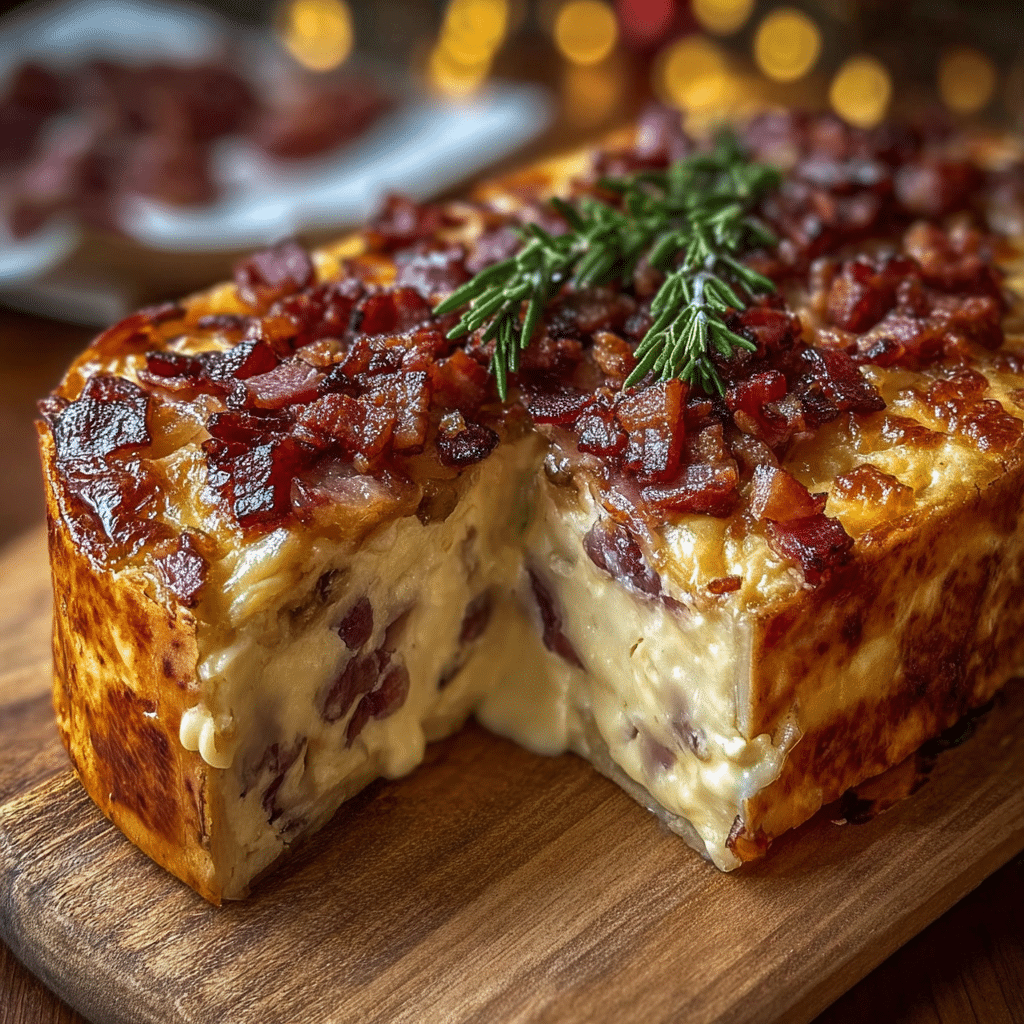
There’s something irresistibly cozy about a savory cake. It has all the charm of homemade bread, the richness of a quiche, and the satisfaction of a full meal wrapped in one golden, sliceable loaf. This Camembert & Bacon Cake – Rustic and Delicious is exactly that kind of recipe: simple to make, generously comforting, and perfect for sharing.
Imagine a tender, moist crumb infused with smoky bacon, pockets of creamy melted Camembert, and a buttery aroma that fills your kitchen as it bakes. Each slice is rich yet not heavy, rustic yet elegant enough for a brunch table or a holiday spread. It’s the kind of recipe you can serve warm or at room temperature, making it ideal for picnics, buffets, potlucks, or a simple evening with a salad and a glass of wine.
Unlike fancy layered cakes or delicate pastries, this savory cake is wonderfully forgiving. It comes together in one bowl, uses basic pantry and fridge ingredients, and doesn’t require any special decorating skills. A few folds, a quick bake, and you’re rewarded with a golden loaf that looks and tastes like something straight from a cozy French countryside kitchen.
Whether you’re looking for a new brunch centerpiece, a snack to impress guests, or a make-ahead lunch option, this Camembert & Bacon Cake will quickly become one of those recipes you find yourself craving again and again.
Core Ingredients for Making the Recipe
To prepare this rustic Camembert & Bacon Cake, you only need a handful of simple ingredients that work together to create a rich, flavorful loaf.
Here’s what you’ll need:
For the Savory Cake Batter
- 200 g flour (all-purpose or plain flour)
- 4 eggs
- 80 g melted butter, cooled slightly
- 100 ml milk (whole or semi-skimmed)
- 1 packet baking powder (about 10–12 g, or 2–2½ tsp)
- 1/2 tsp salt (adjust if your bacon is very salty)
- 1/4 tsp black pepper
- 1/2 tsp dried thyme or Herbes de Provence (optional, for an aromatic touch)
For the Camembert & Bacon Filling
- 200 g Camembert, cut into small cubes (rind on or off, as you prefer)
- 120–150 g bacon (diced bacon, lardons, or chopped streaky bacon)
Optional Add-Ins (for extra flavor and texture)
These are not required but can elevate the cake:
- 50–70 g grated cheese (Gruyère, Comté, Emmental, or cheddar)
- 1–2 green onions (spring onions), finely sliced
- A small handful of chopped walnuts or hazelnuts for crunch
- 1 tbsp chopped fresh parsley or chives for freshness
Step-by-Step

This savory cake comes together in just a few simple steps. Once you’ve prepared the ingredients, most of the work is done by the oven.
1. Prepare Your Pan and Preheat the Oven
- Preheat your oven to 350°F (175°C).
- Lightly grease a loaf pan (about 9×5 inch / 23×13 cm) or a small rectangular/bundt pan.
- For easy removal, you can line the pan with parchment paper, letting some overhang on the sides to lift the cake out once it’s baked.
2. Cook the Bacon
- Place a skillet over medium heat.
- Add the diced bacon and cook until it turns golden and slightly crisp, releasing its fat and smoky aroma.
- If the bacon releases a lot of fat, you can drain off some of it on a paper towel, but leave a little for extra flavor.
- Set the cooked bacon aside to cool slightly.
This step not only improves the flavor but also ensures the bacon is fully cooked and won’t release too much liquid into the cake.
3. Prepare the Camembert
- Cut the Camembert into small cubes, about 1–1.5 cm.
- You can leave the rind on for extra flavor and a rustic look, or trim it off if you prefer a smoother texture.
Keep the cheese chilled until you’re ready to fold it in—it holds its shape better when it starts cold.
4. Mix the Wet Ingredients
- In a large mixing bowl, crack in the 4 eggs.
- Whisk the eggs until they are well combined and slightly frothy.
- Pour in the 100 ml milk and whisk again.
- Add the 80 g melted butter (make sure it’s warm but not piping hot so it doesn’t scramble the eggs), whisking until you have a smooth, unified mixture.
This forms the base of your savory cake, giving it moisture and richness.
5. Add the Dry Ingredients
- In a separate bowl, combine the 200 g flour, baking powder, salt, pepper, and dried thyme or herbs.
- Whisk lightly to distribute the baking powder and seasonings evenly.
- Add the dry ingredients to the wet mixture in two additions, gently folding with a spatula or whisk until just combined.
You should have a thick, smooth batter—not too runny, but not dry. Avoid overmixing at this stage; it can make the cake dense.
6. Fold in the Bacon and Camembert
This is the step where your cake becomes truly irresistible.
- Add the cooled bacon to the batter and fold gently until evenly distributed.
- Add the Camembert cubes and fold very carefully, trying not to break them down too much.
- If using, fold in grated cheese, green onions, or nuts.
You want the cheese to be dotted throughout the batter so every slice has little pockets of melty, creamy goodness.
7. Fill the Pan
- Pour the batter into the prepared pan, smoothing the top with a spatula.
- For a rustic look, you can lightly press a few extra Camembert cubes or bacon pieces into the top.
- Tap the pan gently on the counter to remove any large air bubbles.
8. Bake the Cake
- Place the pan in the preheated oven.
- Bake for about 35–45 minutes, depending on your oven and the shape of your pan.
- The cake is ready when:
- The top is golden and slightly domed,
- A skewer or toothpick inserted into the center comes out mostly clean (a little melted cheese is fine, but no raw batter).
If the top browns too quickly, you can loosely cover it with foil during the last 10 minutes of baking.
9. Cool and Slice
- Remove the cake from the oven and let it cool in the pan for about 10–15 minutes.
- Use the parchment overhang (if using) or run a small knife along the edges, then gently turn the cake out onto a wire rack.
- Let it cool for another 10–15 minutes before slicing.
Warm slices will have pockets of gooey Camembert and a soft crumb. As the cake cools completely, it firms up and becomes perfect for slicing and packing.
Flavor Variations and Creative Twists
The beauty of this Camembert & Bacon Cake is that it’s endlessly adaptable. Small changes in herbs, add-ins, or cheese can transform it into something new each time you bake.
1. Herb Garden Version
- Replace or complement the dried thyme with fresh herbs like parsley, chives, or rosemary.
- Add 1–2 tbsp of finely chopped fresh herbs to the batter.
- The result is a vibrant, aromatic cake that pairs beautifully with salads or grilled vegetables.
2. Mushroom & Camembert Cake
- Sauté 100–150 g sliced mushrooms (button, cremini, or wild) in a bit of butter until they release their moisture and brown slightly.
- Fold them into the batter along with the bacon and Camembert.
- This adds a deep, earthy flavor that works wonderfully with the creamy cheese.
3. Nutty Rustic Loaf
- Add a small handful of chopped walnuts or hazelnuts to the batter.
- The nuts bring crunch and a slightly sweet, toasty flavor that balances the richness of the cheese and bacon.
4. Bacon-Free Veggie Version
- Skip the bacon and replace it with:
- Sun-dried tomatoes, chopped
- Olives, sliced
- Or roasted red peppers, chopped
- You still get a deeply flavorful cake, now suitable for guests who don’t eat pork.
5. Extra Cheese Lover’s Cake
- Along with the Camembert, add grated Gruyère, cheddar, or Emmental to the batter.
- The grated cheese melts throughout, giving a stretchy, cheesy crumb while the Camembert stays in creamy pockets.
How to Serve
This rustic Camembert & Bacon Cake is incredibly versatile when it comes to serving.
Serve Warm for Maximum Comfort
- Fresh out of the oven or gently rewarmed, slices are soft, fragrant, and rich.
- Serve with:
- A simple green salad with a tangy vinaigrette
- A bowl of soup such as tomato, vegetable, or pumpkin
- A few cornichons or pickles to cut through the richness
Perfect for Brunch or Aperitif
- Cut the cake into small squares or slices and serve as part of a brunch spread with eggs, fruit, and other breads.
- Or serve it at an apéritif or party, alongside cheese, cured meats, olives, and dips. It pairs beautifully with a chilled white wine or a light red.
Ideal for Picnics and Lunchboxes
- Once cooled, this cake travels well and doesn’t need to be reheated.
- Pack slices in lunchboxes, picnic baskets, or for road trips.
- It holds together nicely and tastes delicious at room temperature.
Delicious the Next Day
- Like many savory bakes, this cake’s flavors deepen and blend after resting.
- Lightly reheat a slice in the oven or toaster oven if you want the cheese melty again.
Tips & Variations
A few practical tips can help you get the best texture and flavor every time:
Choose Good Camembert
- Use a ripe but not overly runny Camembert. It should be soft and creamy, with a pleasant aroma.
- If it’s very strong, you may want to reduce the amount slightly or balance it with milder cheese.
Balance the Salt
- Bacon and Camembert can both be salty.
- Taste your cooked bacon and consider the saltiness of your cheese before adding the full 1/2 tsp of salt to the batter. You can reduce it if needed.
Don’t Overmix the Batter
- Once the flour is added, mix just until combined. Overmixing can make the cake heavy.
- Folding gently keeps the crumb tender and soft.
Cool Slightly Before Slicing
- Cutting the cake too hot can cause it to crumble and the cheese to ooze excessively.
- Let it rest at least 10–15 minutes so it firms up but remains pleasantly warm.
Make It Ahead
- This cake is excellent for meal prep:
- Bake it a day ahead and store it once cooled.
- Reheat slices in the oven for a few minutes to refresh the crust and melt the cheese.
Final Thoughts
This Camembert & Bacon Cake – Rustic and Delicious is more than just a recipe; it’s a cozy, shareable experience. It brings together creamy cheese, smoky bacon, and a soft, buttery crumb in a way that feels both homely and special.
It’s the kind of bake you can bring to a family gathering, serve at a casual brunch, or slice for a quiet night in. There’s no complicated technique, no fussy decoration—just real, honest comfort in every slice. With a few pantry basics and a wheel of Camembert, you can create a loaf that looks like it came from a countryside bakery and tastes even better.
Once you’ve tried this version, you’ll start imagining your own twists—different cheeses, added vegetables, new herbs. But the heart of the recipe remains the same: rustic, generous, and deeply satisfying.
Whether you’re baking for loved ones or simply treating yourself, this cake is proof that simple ingredients can become something unforgettable.
FAQ
Can I use a different cheese instead of Camembert?
Yes. While Camembert gives a distinctive creamy, slightly earthy flavor, you can substitute it with Brie, Reblochon, or even a mild, soft-ripened cheese. The texture will remain similar, though the aroma and taste may be slightly different.
Can I make this cake without bacon?
Absolutely. If you prefer a meat-free version, simply leave out the bacon. You can replace it with sautéed mushrooms, sun-dried tomatoes, olives, or roasted vegetables. Just be sure to keep the overall volume of add-ins similar so the texture of the cake stays balanced.
How should I store leftover Camembert & Bacon Cake?
Once the cake has cooled completely:
- Wrap it tightly in plastic wrap or place it in an airtight container.
- Store it in the refrigerator for up to 3–4 days.
- For the best texture, reheat slices briefly in a warm oven or toaster oven before serving.
Can I freeze this cake?
Yes, this savory cake freezes very well.
- Let it cool completely.
- Wrap the entire loaf or individual slices in plastic wrap, then place in a freezer-safe bag or container.
- Freeze for up to 2–3 months.
- To serve, thaw in the refrigerator and then warm in the oven to restore its texture and bring back the melty cheese.
Can I bake this in muffin tins instead of a loaf pan?
Yes. For single-serve portions:
- Grease a muffin tin or line with paper liners.
- Divide the batter evenly between the cups (fill about 2/3 full).
- Bake at the same temperature but reduce the baking time to 18–25 minutes, or until golden and set in the center.
This is perfect for parties, lunchboxes, or buffets.