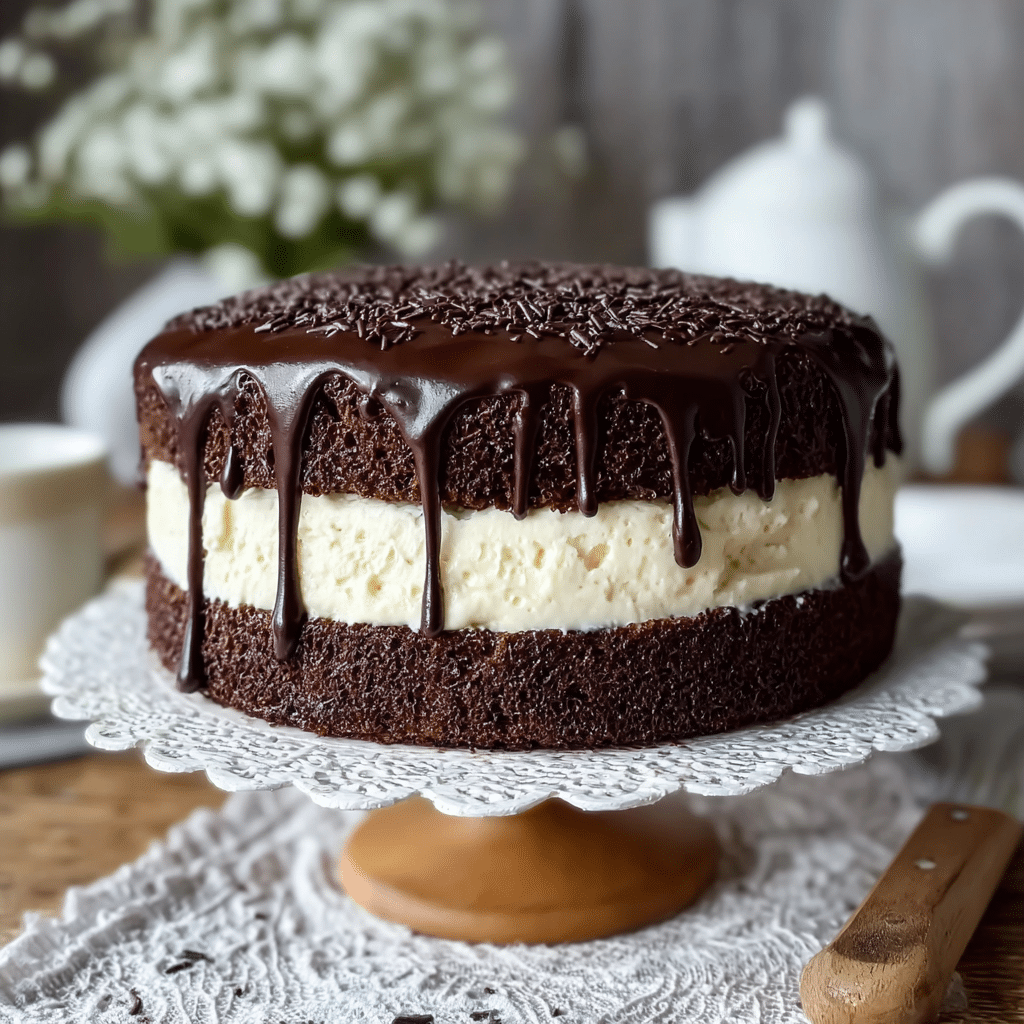
Everyday Chocolate Cake with Vanilla ButtercreamA soft, fluffy chocolate sponge layered with creamy vanilla buttercream — your go-to teatime indulgence!
Yield: 8–10 slices
Oven Temperature: 350°F (175°C)
Total Time: About 45 minutes (including mixing and baking)
Chocolate cake is one of those timeless treats that fits every occasion — from casual afternoon tea to family celebrations and cozy evenings at home. This Everyday Chocolate Cake with Vanilla Buttercream is designed to be exactly what its name promises: simple enough for any day of the week, yet delicious and impressive enough to serve to guests.
Instead of being dense or overly rich, this cake is light, moist, and tender, with just the right balance of cocoa flavor and sweetness. The vanilla buttercream adds a creamy, smooth contrast, turning each slice into a comforting combination of chocolate and vanilla in perfect harmony. It’s a cake you can whip up without special tools or complex techniques — just a bowl, a whisk, and a baking pan.
What sets this recipe apart is how approachable it is. You don’t need to be an experienced baker to get great results. The batter comes together in minutes, the ingredients are pantry staples, and the buttercream is forgiving and easy to adjust. Whether you’re baking for a birthday, a weekend treat, or simply to satisfy a chocolate craving, this cake will quickly become your reliable, go-to recipe.
Core Ingredients for Making the Recipe
To make this Everyday Chocolate Cake with Vanilla Buttercream, you’ll use simple ingredients you probably already have at home. Each one plays a role in creating a moist crumb and a silky, flavorful frosting.
For the Chocolate Cake
- 1 ½ cups (190 g) all-purpose flour
- ¾ cup (65 g) unsweetened cocoa powder
- 1 ½ teaspoons baking powder
- ½ teaspoon baking soda
- ½ teaspoon salt
- 1 cup (200 g) granulated sugar
- ½ cup (100 g) light brown sugar, packed
- ½ cup (115 g) unsalted butter, melted and slightly cooled
- 2 large eggs, at room temperature
- 1 teaspoon vanilla extract
- 1 cup (240 ml) milk (whole or semi-skimmed)
- ¼ cup (60 ml) hot water or freshly brewed hot coffee (enhances the chocolate flavor, but optional)
Pan recommendation: One 9-inch (23 cm) round cake pan or an 8-inch (20 cm) pan for a slightly thicker cake. You can also use a square 8×8 inch pan if you prefer neat slices.
For the Vanilla Buttercream
- 1 cup (230 g) unsalted butter, softened to room temperature
- 3–3 ½ cups (360–420 g) powdered (confectioners’) sugar, sifted
- 2–3 tablespoons milk or heavy cream
- 2 teaspoons vanilla extract
- Pinch of salt (to balance sweetness)
These ingredients come together to create a cake that’s chocolatey but not heavy, and a buttercream that’s sweet, fluffy, and full of vanilla flavor. You can easily adjust the amount of sugar in the frosting to suit your taste — more for a sweeter, thicker buttercream, or less for a lighter, softer finish.
Step-by-Step

1. Prepare Your Pan and Oven
- Preheat your oven to 350°F (175°C).
- Grease your cake pan with butter or non-stick spray, then line the bottom with parchment paper. This helps the cake release cleanly and prevents sticking.
- Lightly dust the sides of the pan with cocoa powder or flour, tapping out any excess.
Taking a minute to prepare the pan properly ensures your cake bakes evenly and comes out in one beautiful piece.
2. Mix the Dry Ingredients
- In a large mixing bowl, whisk together:
- Flour
- Cocoa powder
- Baking powder
- Baking soda
- Salt
- Make sure the cocoa powder is well broken up with no lumps. If needed, you can sift everything together to get a lighter, smoother mixture.
This step guarantees that the leavening agents are evenly distributed throughout the batter, so your cake rises uniformly and has a consistent texture.
3. Combine the Sugars, Butter, and Eggs
- In a separate bowl, add the granulated sugar and brown sugar.
- Pour in the melted, slightly cooled butter and whisk until the mixture looks smooth and glossy.
- Add the eggs, one at a time, whisking well after each addition.
- Stir in the vanilla extract.
You’re building the flavor base here. The combination of granulated and brown sugar adds both sweetness and a subtle caramel depth, while the eggs help bind the batter and contribute to the soft crumb.
4. Bring the Batter Together
- Pour the sugar–butter–egg mixture into the bowl with the dry ingredients.
- Add the milk.
- Gently whisk or use a spatula to fold the mixture together until you see no streaks of dry flour.
- Finally, pour in the hot water or coffee, stirring just until combined. The batter will be slightly thin — this is normal and helps create a moist cake.
Avoid overmixing at this stage. Stir only until everything is incorporated. Overworking the batter can lead to a tougher cake because the gluten in the flour develops too much.
5. Bake the Cake
- Pour the batter into your prepared pan, smoothing the top with a spatula.
- Place the pan on the middle rack of your preheated oven.
- Bake for 25–30 minutes, or until:
- A toothpick inserted into the center comes out with a few moist crumbs (not wet batter).
- The top springs back lightly when touched.
Every oven is a bit different, so start checking a few minutes before the minimum time. It’s better to slightly underbake than to dry the cake out.
6. Cool the Cake Completely
- Remove the cake from the oven and set the pan on a wire rack.
- Let it cool in the pan for about 10–15 minutes.
- Run a knife gently around the edges, then invert the cake onto the rack, peeling off the parchment paper.
- Allow the cake to cool completely before frosting.
If you frost a warm cake, the buttercream will melt and slide off, so patience here really pays off.
7. Make the Vanilla Buttercream
- In a large bowl, beat the softened butter with a hand mixer or stand mixer fitted with a paddle attachment for 2–3 minutes, until pale and fluffy.
- Gradually add the sifted powdered sugar, about ½ cup at a time, mixing on low speed to avoid a sugar cloud.
- When the mixture starts to thicken, add 1–2 tablespoons of milk or cream, the vanilla extract, and a pinch of salt.
- Continue beating for another 2–3 minutes until the buttercream is smooth, light, and airy.
- If the frosting is too thick, add a tiny splash of milk. If it’s too thin, add a bit more powdered sugar.
You’re aiming for a texture that’s easy to spread but firm enough to hold soft peaks.
8. Frost and Finish the Cake
- Once the cake is completely cool, transfer it to a serving plate or cake stand.
- Spoon the vanilla buttercream onto the top of the cake.
- Use an offset spatula or the back of a spoon to spread it evenly, swirling the top to create a simple, rustic pattern.
- If you like, you can:
- Dust the top with cocoa powder or chocolate shavings.
- Add sprinkles for a fun, festive look.
For a layer-cake effect, you can slice the cake horizontally into two thinner layers, spread buttercream between them, and then finish with frosting on top.
Now your Everyday Chocolate Cake is ready to slice and enjoy!
Flavor Variations and Creative Twists
One of the biggest strengths of this recipe is how flexible it is. With just a few small changes, you can create different versions to match your mood or occasion.
1. Mocha Chocolate Cake
Replace the hot water with strong hot coffee and add ½ teaspoon of instant espresso powder to the dry ingredients. The cake won’t taste like coffee, but the flavor of the cocoa will become richer and deeper.
2. Chocolate-Orange Cake
Add 1 tablespoon of orange zest to the batter and ½ teaspoon of orange extract to the buttercream. The combination of citrus and chocolate creates a bright, elegant flavor that’s perfect for brunch or special gatherings.
3. Chocolate Chip Buttercream
Stir in a handful of mini chocolate chips into the finished buttercream. This adds a fun texture and tiny bursts of chocolate to every bite of frosting.
4. Salted Caramel Drizzle
For a more indulgent version, drizzle warm salted caramel sauce over the frosted cake. The contrast between the sweet buttercream, the caramel, and the soft chocolate sponge is irresistible.
5. Lightly Sweet Version
If you prefer a less sweet dessert:
- Reduce the powdered sugar in the buttercream by ½ cup.
- Or leave a part of the cake unfrosted and simply dust with powdered sugar and cocoa as a “snack cake” option.
These variations let you use the same reliable base recipe while creating different flavor experiences for your family and guests.
How to Serve
This Everyday Chocolate Cake with Vanilla Buttercream is incredibly versatile when it comes to serving.
- For everyday teatime: Slice the cake into modest wedges and serve with a cup of coffee, tea, or a glass of cold milk. The light texture makes it ideal as an afternoon pick-me-up.
- For celebrations: Decorate the top with fresh berries, chocolate curls, or colorful sprinkles. Adding a simple cake topper or candles instantly turns it into a birthday or celebration cake.
- For dessert after dinner: Serve slightly chilled slices with a dollop of whipped cream or a scoop of vanilla or chocolate ice cream. The combination of cold ice cream and soft cake feels luxurious without being complicated.
- For lunchboxes or picnics: Cut the cake into squares instead of wedges if baked in a square pan. A thinner layer of frosting makes it easy to pack and eat on the go.
Whether you dress it up with toppings or keep it simple, this cake fits almost any moment when you want something sweet and comforting.
Tips & Variations for Best Results
Choose Good Cocoa Powder
Using a high-quality unsweetened cocoa powder makes a big difference. Natural cocoa works perfectly, but you can also use Dutch-process cocoa for a deeper, smoother chocolate flavor. Just keep the measurements the same.
Room Temperature Ingredients
For the best texture, try to ensure that your eggs, milk, and butter are at room temperature before you start. This helps them blend together more easily, creating a smoother batter and a more even crumb.
Don’t Overmix the Batter
Once you combine the wet and dry ingredients, mix only until no flour streaks remain. Overmixing can make the cake dense or tough, whereas gentle mixing keeps the crumb tender and soft.
Check for Doneness Early
Every oven heats slightly differently. Begin checking the cake at around 23–25 minutes. If a toothpick comes out with just a few moist crumbs, it’s done. Baking too long is the most common reason chocolate cakes turn dry.
Adjusting the Buttercream
- If your kitchen is very warm, pop the buttercream in the fridge for 10–15 minutes if it becomes too soft to spread.
- If it’s stiff, beat in a bit more milk or cream, just a teaspoon at a time, until it loosens to your liking.
Final Thoughts
This Everyday Chocolate Cake with Vanilla Buttercream is the kind of recipe that quickly becomes a household favorite. It’s reliable, flexible, and forgiving — you can bake it on a busy weekday or prepare it calmly for guests and know it will turn out well.
The moist, tender chocolate sponge combined with the creamy vanilla buttercream hits that perfect balance of comforting yet special. It’s not fussy, doesn’t require advanced skills, and uses basic ingredients you already know and love.
Once you’ve made it a couple of times, you’ll probably find yourself experimenting with add-ins, toppings, and flavor twists, making the recipe truly your own. Whether you serve it as a simple snack cake, a frosted birthday centerpiece, or a cozy weekend treat, this cake has a way of turning an ordinary day into something a bit more delightful.
FAQ
Can I make this cake ahead of time?
Yes, you can. The cake actually keeps its moisture very well.
- Bake the cake, let it cool completely, then wrap it tightly in plastic wrap.
- You can store the unfrosted cake at room temperature for up to 2 days, or in the refrigerator for 3–4 days.
- The buttercream can be made a day in advance and stored in an airtight container in the fridge. Let it come back to room temperature and re-whip briefly before using.
You can also fully assemble the cake, cover it, and keep it in the fridge for a day before serving.
Can I use a different pan size?
Absolutely. This recipe is flexible:
- 8-inch round pan: The cake will be slightly thicker and may take a couple of extra minutes to bake.
- 8×8 inch square pan: Great for snack-style slices.
- Two 6-inch round pans: Perfect for a small two-layer cake (baking time will be shorter, so start checking earlier).
Just remember to adjust baking time and keep an eye on the cake near the end.
Can I make this recipe as cupcakes?
Yes! This batter works well for cupcakes.
- Line a muffin tin with paper liners.
- Fill each liner about two-thirds full.
- Bake at 350°F (175°C) for around 16–20 minutes, or until a toothpick comes out with a few moist crumbs.
Let cool completely before piping or spreading the vanilla buttercream on top.
Can I reduce the sugar?
You can reduce the sugar slightly, especially in the buttercream.
- For the cake, you can cut 2–3 tablespoons of sugar without heavily affecting texture.
- For the frosting, start with 2 ½ cups powdered sugar and taste as you go, adding more only if you want a sweeter, firmer buttercream.
Just remember that sugar affects not only sweetness but also moisture and structure, so large reductions can change the texture.
Can I make the cake dairy-free?
Yes, with a few substitutions:
- Use a neutral oil or dairy-free margarine instead of butter in the cake.
- Replace milk with unsweetened almond milk, oat milk, or soy milk.
- For the buttercream, use a dairy-free butter substitute that is solid at room temperature and a plant-based milk.
The flavor and texture may vary slightly, but you’ll still get a tender chocolate cake topped with creamy frosting.
How should I store leftovers?
- At room temperature (if not too hot): Store the frosted cake in an airtight container for up to 2 days.
- In the refrigerator: Store for up to 4–5 days. Let slices sit at room temperature for 20–30 minutes before serving so the buttercream softens.
- For longer storage, you can freeze slices: Wrap each slice in plastic wrap, then place in a freezer-safe container for up to 2–3 months. Thaw at room temperature and enjoy.
This Everyday Chocolate Cake with Vanilla Buttercream is meant to be your reliable, easy, and always-welcome chocolate fix. Once you’ve tried it, you’ll have a simple recipe you can trust whenever you want a homemade treat that feels both familiar and special.