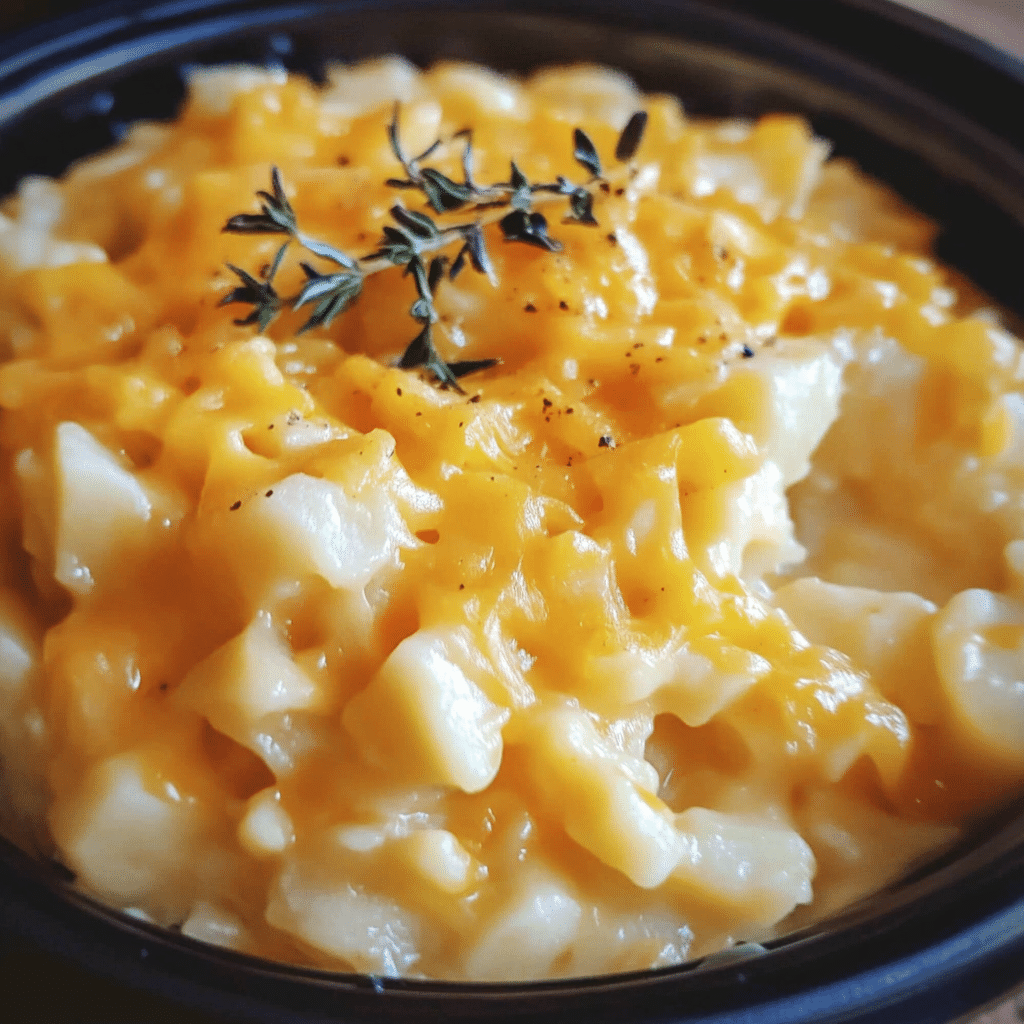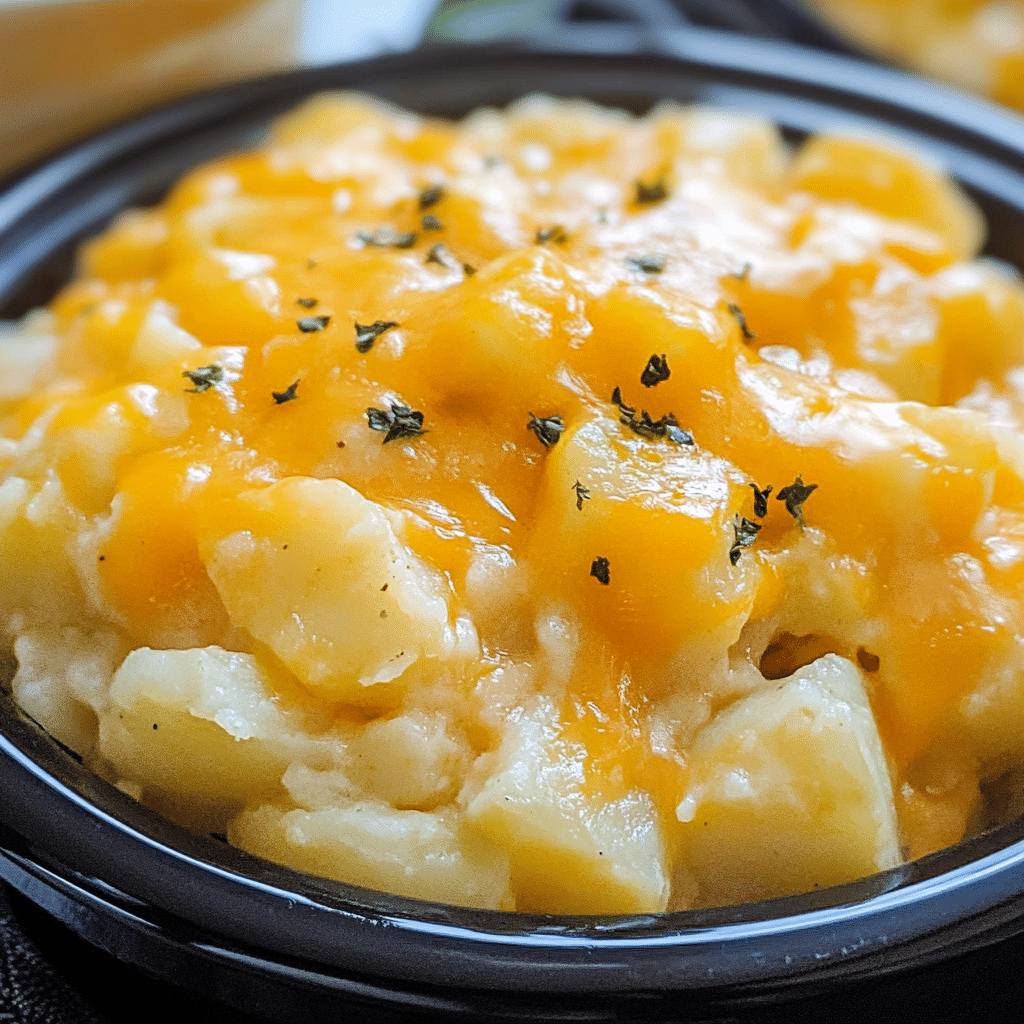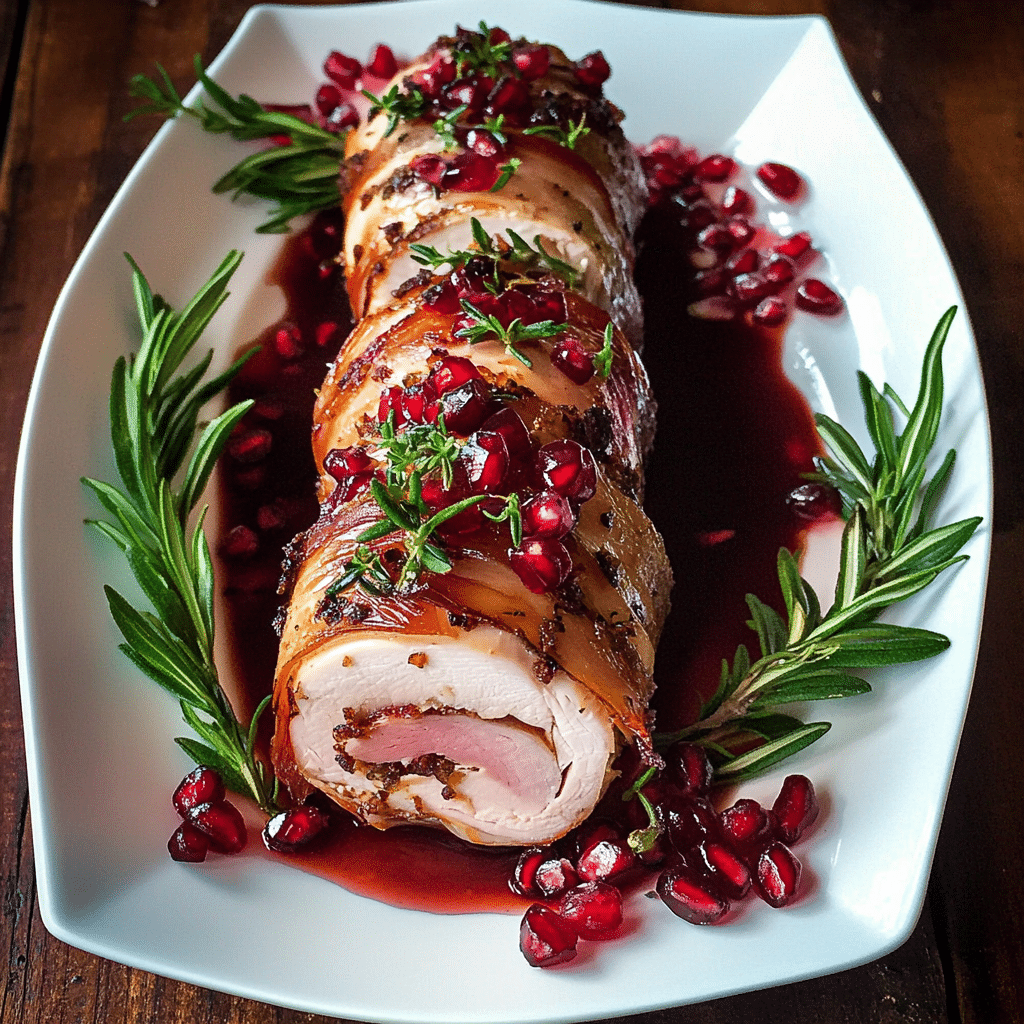
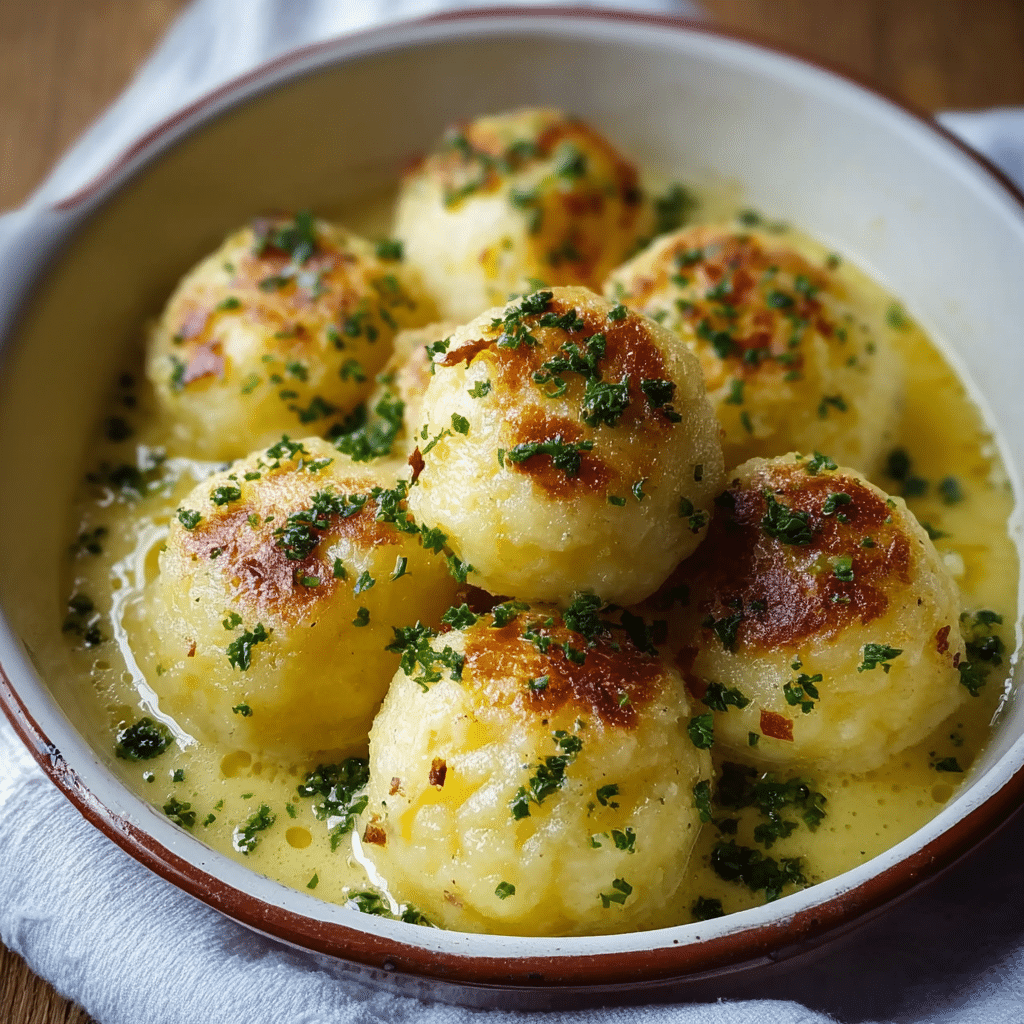
German potato dumplings are the kind of dish that turns a simple meal into something deeply comforting and memorable.
Soft, tender, and subtly seasoned with nutmeg, these dumplings are classic “grandma food” — the kind of recipe that makes the whole kitchen feel warm and inviting.
In many German homes, potato dumplings (Kartoffelklöße or Kartoffelknödel) sit proudly next to roast meats, rich gravies, and braised vegetables. They’re humble, made from just a few pantry staples, yet they have a way of transforming basic ingredients into something special. Every bite is pillowy and satisfying, with a gentle flavor that soaks up sauces beautifully.
What makes these dumplings so appealing is their versatility. You can serve them with a Sunday roast, a hearty mushroom sauce, or even just with melted butter and fresh herbs. They’re substantial enough to be the star of the plate, yet mild enough to pair with almost anything. And while they look impressive, they’re actually quite straightforward to make once you understand a few key techniques.
Whether you’re exploring German cuisine for the first time or recreating a beloved family tradition, these German Potato Dumplings are a recipe you’ll come back to again and again. They’re simple, comforting, and endlessly adaptable — true comfort food with a European soul.
Core Ingredients for Making the Recipe
To prepare these classic German Potato Dumplings, you’ll need just a handful of simple ingredients. Each one plays an important role in achieving that characteristic texture: firm, yet tender; comforting, yet not too heavy.
For the Dumplings
- 2 pounds russet potatoes, peeled and cubed
Russet potatoes are starchy and fluffy, which helps the dumplings hold together without becoming gummy. - 1 cup all-purpose flour
The flour binds the mashed potatoes, giving the dumplings structure and helping them stay intact as they simmer. - 1 large egg
The egg adds richness and helps the dough come together smoothly, acting as a natural binder. - 1 teaspoon salt
Essential for seasoning the dumplings from within so they don’t taste bland. - 1/4 teaspoon ground nutmeg
Nutmeg is a classic flavor in German dumplings. It adds warmth and a subtle, aromatic note that pairs beautifully with potatoes and gravy.
Optional (for Serving – Not Required but Highly Recommended)
These are not part of the basic dough, but they make serving the dumplings even more delicious:
- Melted butter for drizzling
- Fresh chopped parsley or chives
- Rich gravy (beef, chicken, or mushroom)
- Caramelized onions or sautéed mushrooms
With just the core ingredients, you can create dumplings that taste authentically German, satisfying, and cozy. The optional toppings and sides let you dress them up according to the occasion — weeknight dinner or special holiday feast.
Step-by-Step

Making German Potato Dumplings involves a few simple steps: cook the potatoes, turn them into a dough, shape the dumplings, and simmer them gently until they’re firm and tender. Take your time and follow each step, and you’ll be rewarded with dumplings that taste like they came from a traditional German kitchen.
1. Cook the Potatoes
- Place the peeled, cubed potatoes in a large pot and cover them with cold water by about 1–2 inches.
- Add a small pinch of salt to the water.
- Bring the pot to a boil over medium-high heat, then reduce to a gentle simmer.
- Cook for about 15–20 minutes, or until the potatoes are very tender when pierced with a fork.
Tender potatoes are crucial here. If they’re undercooked, they won’t mash smoothly and the dumpling dough will be lumpy.
2. Drain and Dry the Potatoes
- Once the potatoes are soft, drain them thoroughly in a colander.
- Return the drained potatoes to the still-warm pot and place it back on low heat for 1–2 minutes, gently shaking the pot.
This extra step helps evaporate excess moisture from the potatoes. Dry potatoes make better dumplings: the dough will be firmer, easier to shape, and less likely to fall apart while cooking.
3. Mash or Rice the Potatoes
- Transfer the potatoes to a large mixing bowl.
- Mash them until they are very smooth, without large chunks. You can use a potato masher, ricer, or even a food mill if you have one.
The goal is a smooth, lump-free mash. Any chunks can break the dumplings as they cook or create weak spots in the dough. Let the mashed potatoes cool slightly — they should be warm, not hot, when you add the egg.
4. Season and Add the Egg
- Sprinkle the salt and ground nutmeg evenly over the warm mashed potatoes.
- Crack the egg into the bowl.
- Stir everything together until the egg is fully incorporated and the potatoes are evenly seasoned.
At this point, your mixture should look like a smooth, seasoned potato mash. The egg gives the dumplings a soft, cohesive texture when cooked.
5. Add the Flour and Form the Dough
- Sprinkle about two-thirds of the flour (roughly 2/3 cup) over the potato mixture.
- Gently fold the flour into the potatoes using a spatula or your hands.
- Add more flour as needed, a spoonful at a time, until a soft, slightly sticky dough forms that you can shape without it falling apart.
You’re looking for a dough that holds together easily when you press it into a ball, but isn’t dry or crumbly. The exact amount of flour can vary slightly depending on how moist your potatoes are.
6. Test the Dough
Before shaping all the dumplings, it’s helpful to do a quick test:
- Bring a small pot of salted water to a gentle simmer.
- Shape a small ball of dough (about the size of a walnut).
- Carefully drop it into the simmering water.
- Let it cook for 10–12 minutes. If it holds its shape and stays intact, your dough is ready.
If the test dumpling starts to break apart, gently work a little more flour into the dough and test again. This small step can save the entire batch.
7. Shape the Dumplings
- Fill a large pot with water, add a generous pinch of salt, and bring to a gentle simmer (not a rolling boil).
- Lightly flour your hands.
- Take portions of the dough and roll them into smooth balls about the size of a small lemon or golf ball, depending on how large you want your dumplings.
Try to make the dumplings roughly the same size so they cook evenly. A perfectly smooth ball helps them cook uniformly and look beautiful on the plate.
8. Cook the Dumplings
- Carefully lower the dumplings into the simmering water. You can do this with a slotted spoon or simply slip them in gently.
- Make sure the water stays at a gentle simmer — not a hard boil, which can break the dumplings apart.
- The dumplings will sink first; as they cook, they’ll slowly rise toward the surface.
- Once they float, let them cook for another 5–10 minutes to ensure they’re cooked all the way through. Overall cooking time is usually around 15–20 minutes, depending on size.
You’ll know they’re done when they feel firm but yielding if you press them very gently with a spoon.
9. Serve Warm
- Use a slotted spoon to lift the dumplings from the water.
- Let any excess water drip off.
- Transfer them to a warm serving dish.
Serve immediately with gravy, melted butter, or your favorite sauce. The dumplings are at their best when they’re warm, soft, and ready to soak up flavors.
Flavor Variations and Creative Twists
The beauty of German Potato Dumplings lies in their adaptability. With just a few variations, you can create different versions that suit your tastes, the season, or the dish you’re serving alongside them.
1. Herb-Infused Dumplings
Stir fresh chopped herbs such as parsley, chives, or dill into the dough before shaping. The herbs add color and a fresh, aromatic flavor that pairs wonderfully with roasted chicken, fish, or vegetable dishes.
2. Cheese-Enriched Dumplings
For a richer, slightly more indulgent dumpling, add a small handful of finely grated cheese—like Parmesan, Gruyère, or Emmental—into the dough. The cheese melts subtly inside, giving a deeper, savory note without overpowering the classic potato flavor.
3. Crispy Breadcrumb Coating
Once the dumplings are cooked and drained, you can roll them in butter-toasted breadcrumbs:
- Melt a few tablespoons of butter in a pan.
- Add breadcrumbs and cook until golden and fragrant.
- Gently roll the hot dumplings in the buttery crumbs.
This gives the outside a delicate crunch and makes the dish feel extra special, perfect for festive meals or Sunday dinners.
4. Stuffed Dumplings
For a heartier version, you can tuck a small surprise into the center of each dumpling:
- Lightly toasted bread cubes
- Sauteed onions and bacon bits
- A small piece of cheese
Seal the filling tightly within the potato dough so it doesn’t leak out while cooking. When guests cut into the dumpling, they’ll discover a warm, flavorful center.
5. Spiced Variations
Nutmeg is traditional, but you can gently experiment with spices:
- A tiny pinch of white pepper for a mild heat
- A hint of garlic powder for more savory depth
- A mix of nutmeg and a touch of paprika for a warm, rustic note
Keep the spices subtle so the potatoes remain the star of the dish.
How to Serve German Potato Dumplings
These dumplings are wonderfully versatile and can turn many meals into something comforting and complete. Their mild, comforting flavor makes them the perfect partner for all kinds of main dishes.
1. With Rich Gravies and Roasts
The most classic way to serve German Potato Dumplings is with:
- Roast pork or beef
- Roast chicken or duck
- Braised meats like goulash
Place a dumpling on the plate, spoon rich gravy over the top, and let it soak into the tender potato. Every bite becomes a combination of fluffy dumpling and savory sauce — pure comfort.
2. With Mushroom or Cream Sauces
For a vegetarian or lighter option:
- Serve dumplings with a creamy mushroom sauce filled with sautéed mushrooms, onions, and herbs.
- Pair them with a simple cream sauce seasoned with nutmeg and pepper.
The dumplings act as a comforting base, turning a simple sauce into a full, satisfying meal.
3. Alongside Braised or Stewed Vegetables
You can also pair dumplings with hearty vegetables:
- Red cabbage (Rotkohl), lightly sweet and tangy
- Sauerkraut
- Braised carrots, leeks, or root vegetables
The dumplings balance out the tanginess and sweetness of these sides, making each bite rounded and satisfying.
4. As a Main Dish with Butter and Herbs
Sometimes, the simplest serving idea is the best:
- Drizzle the hot dumplings with melted butter.
- Sprinkle generously with chopped parsley chives, or dill.
- Add a pinch of flaky salt on top.
This version is humble, comforting, and perfect when you want something warm and filling without a lot of fuss.
5. Leftovers Reimagined
If you have leftover dumplings, you don’t have to let them go to waste:
- Slice them into thick rounds.
- Pan-fry them in a bit of butter or oil until golden and crisp on the edges.
They become delicious potato “cakes” that pair beautifully with eggs, salad, or leftover vegetables.
Tips & Variations for Perfect Dumplings
A few small details make the difference between heavy, dense dumplings and light, tender ones. Here are some key tips to help you succeed every time.
Choose the Right Potatoes
Starchy potatoes like russets are ideal because they’re:
- Fluffy when cooked
- Less watery
- Better at binding with flour and egg
If your potatoes are too waxy or moist, you’ll need more flour, which can make the dumplings heavy.
Let the Potatoes Dry Out
After boiling and draining, returning the potatoes to the warm pot for a minute helps steam away excess moisture. This step might seem small, but it has a big impact: drier potatoes mean firmer, more stable dumplings.
Don’t Overwork the Dough
When you add the flour, mix just until the dough comes together. Overworking the dough can make the dumplings tough. A gentle hand keeps them soft and light.
Keep the Water at a Gentle Simmer
Resist the urge to let the water boil hard. A rolling boil can jostle the dumplings too much, causing them to crack or fall apart. A calm simmer is perfect — just enough movement to cook them evenly without breaking them.
Adjust the Flour if Needed
Every batch of potatoes is a little different, so consider the flour amount flexible. If the dough feels too sticky to shape, add a bit more flour. If it feels very stiff and dry, you may have added a bit too much; you can fold in a spoonful of warm mashed potato (if available) or a tiny splash of water.
Serve Them Fresh
German Potato Dumplings are at their very best shortly after cooking. Serve them warm from the pot, when their texture is soft and comforting. While leftovers are delicious when reheated or pan-fried, fresh dumplings have a unique, pillowy charm.
Final Thoughts
German Potato Dumplings are a celebration of simple ingredients transformed with care and tradition. Just potatoes, flour, an egg, salt, and a touch of nutmeg come together to create something greater than the sum of their parts.
They’re the kind of dish that invites you to slow down: to mash the potatoes by hand, to gently shape each dumpling, to watch them rise to the surface of simmering water, and finally to sit down to a warm, satisfying plate of food. There’s a sense of comfort and connection in every step, echoing generations of home cooks who served similar dumplings at family tables.
Whether you ladle rich gravy over them, pair them with mushroom sauce, or simply drizzle them with melted butter and herbs, these potato dumplings bring warmth and heart to any meal. They’re ideal for holidays, Sunday dinners, or any day when you crave something cozy and homemade.
Once you’ve made them a time or two, they’ll become a reliable favorite — the kind of recipe you can pull out whenever you want to feed both body and soul. German Potato Dumplings remind us that comfort doesn’t require complicated techniques or fancy ingredients. Sometimes, all you need is a pot of potatoes, a little patience, and the joy of sharing a simple, satisfying meal.
FAQ
Can I use a different type of potato instead of russet?
Yes, you can, but the results will vary slightly. Starchy potatoes like russet are ideal because they’re dry and fluffy, which helps the dumplings hold their shape with less flour. If you use a waxy potato (like red or some yellow varieties), the dumplings may be denser and you’ll likely need more flour. If you substitute, aim for potatoes labeled as “all-purpose” or “starchy” rather than “waxy.”
Can these dumplings be made ahead of time?
Yes, you have a few options:
- Prepare the dough ahead: You can form the dumpling dough, shape the dumplings, and refrigerate them for a few hours before cooking. Place them on a tray, lightly dusted with flour, cover, and keep chilled.
- Cook and reheat: You can also cook the dumplings earlier in the day, then gently reheat them in hot (not boiling) water or steam them briefly before serving.
Just be careful not to refrigerate the raw dumplings for too long, as the dough can dry out or become sticky. Same-day preparation works best.
Can I freeze German Potato Dumplings?
Yes, these dumplings freeze well if prepared correctly:
- Let the cooked dumplings cool completely.
- Arrange them on a baking sheet in a single layer and freeze until firm.
- Transfer the frozen dumplings to a freezer-safe bag or container.
They can be stored for up to about three months. To serve, reheat them gently in simmering water or steam them until hot throughout. Avoid aggressive boiling, which may cause them to crack.
My dumplings fell apart in the water. What went wrong?
If your dumplings broke apart while cooking, it’s usually due to one of these reasons:
- The dough was too soft and needed a bit more flour.
- The water was boiling too hard, causing the dumplings to knock against each other.
- The test dumpling step was skipped, so the consistency wasn’t adjusted beforehand.
Next time, test one small dumpling first. If it holds together, proceed with the rest. If not, add a little more flour to the dough and try again. Also, keep the water at a gentle simmer rather than a full boil.
Can I make these dumplings without egg?
The egg helps bind the dumplings and gives them a smoother texture, but some people prefer egg-free versions. You can try omitting the egg and adding a bit more flour or a tablespoon of potato starch to help hold the dough together. Keep in mind the texture may be slightly different — a bit more delicate — so be especially gentle when simmering.
Can I make them gluten-free?
Yes, you can experiment with a gluten-free substitute:
- Use a high-quality gluten-free all-purpose flour blend in place of the regular flour.
- Follow the same steps, but be mindful that gluten-free dough can behave differently.
The dumplings may be a bit more fragile, so keep the water at a very gentle simmer and avoid overcrowding the pot. With a little care, you can create gluten-free potato dumplings that are still soft, comforting, and delicious.
German Potato Dumplings are all about comfort, tradition, and making the most of simple ingredients. Once you master the basic recipe, you’ll find endless ways to make them your own — and plenty of reasons to bring them back to your table again and again.
Print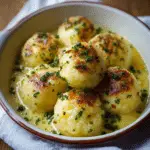
German Potato Dumplings
Ingredients
For the Dumplings
- 2 pounds russet potatoes, peeled and cubed
Russet potatoes are starchy and fluffy, which helps the dumplings hold together without becoming gummy. - 1 cup all-purpose flour
The flour binds the mashed potatoes, giving the dumplings structure and helping them stay intact as they simmer. - 1 large egg
The egg adds richness and helps the dough come together smoothly, acting as a natural binder. - 1 teaspoon salt
Essential for seasoning the dumplings from within so they don’t taste bland. - 1/4 teaspoon ground nutmeg
Nutmeg is a classic flavor in German dumplings. It adds warmth and a subtle, aromatic note that pairs beautifully with potatoes and gravy.
Optional (for Serving – Not Required but Highly Recommended)
These are not part of the basic dough, but they make serving the dumplings even more delicious:
- Melted butter for drizzling
- Fresh chopped parsley or chives
- Rich gravy (beef, chicken, or mushroom)
- Caramelized onions or sautéed mushrooms